Christmas Comes Early: My Advance Copies Have Arrived

My husband lifted two boxes inside the front door when he came from work on Friday. “Something for you,” he said. My mom had warned that she’d sent presents and not to open them so I paid little attention to the boxes and left them sitting by the door. Until the next morning when I happened to glance at the return address, fully expecting to see my mom’s name but instead saw: Beacon.

My books!!

The official publication date isn’t until January 7 but here’s some visual proof that this thing is real. At this time last year, I was tearing my hair out finishing the draft, rewriting, deleting, questioning everything, undoing that previous deletion, writing, deleting, repeat. Repeat.

This year is much better.

Books

Lutefisk, Torsk and other Seafood Traditions Abound

Forget turkey, ham, or even the traditional goose. For many families, the holiday season is not complete without lye-soaked cod drenched in melted butter. Every December diners decked in colorful patterned Nordic sweaters line up at St. Olaf’s Lutheran Church in the Town of Ashippun, one of the oldest Norwegian Lutheran churches in the state, to indulge in the annual lutefisk feast.

Lutefisk is far from the only holiday fish dish. On Christmas Eve, southern Italians celebrate the Feast of Seven Fishes; Poles consume a meatless Wigilia of fish, soup, sauerkraut, pierogi, and noodles; carp and herring often appear on German tables; and many Mexicans and Spaniards eat the salted cod known as bacalao. These holiday fish feasts are products of both faith and geography.

Read the rest of my story in the new issue of Edible Milwaukee.

Winter2013cover-789x1024

Before MOOCs, There Was Radio

Waiting for a coworker for lunch today, I happened to take a closer look at a display case that I pass every day without really looking. Inside are pieces of Wisconsin Public Radio history, including a brief description of the education programs that WHA (today’s WPR) offered to listeners starting in the 1930s. Full classes, many taught by professors and other experts in their fields, covering a range of subjects and delivered over the latest technological marvel – radio – that its creators hoped to use to reach and educate people with limited access to education? Sounds like a MOOC to me.

MOOCs, or massive open online courses, are the latest thing in education, promising unlimited participation and access via the technological marvel of our time – the internet. Professors at dozens of universities are teaching online courses and nearly every other university that hasn’t joined in is seriously considering their options. It’s new and hip and marketed as the way to reach people in the modern world.

But isn’t this just what the radio was doing in Wisconsin nearly a century ago?

In 1930, WHA began offering music and discussion of current events to students in rural schools in Dane County. The ten-week trial program proved a tremendous success and the station planned to incorporate classroom instruction into the regular broadcast schedule the following year.

Debuting in October of 1931, the “Wisconsin School of the Air,” as it was called, was designed for use in elementary and high school classrooms around the state.  Wisconsin’s Department of Public Instruction assisted with the creation of lessons that they hoped would be particularly valuable to the students attending the state’s more than 6,000 one- and two-room schools. Producers believed that the radio curriculum would increase exposure to new ideas, enhance the learning experience, and most importantly of all, help to close the very real gap in educational resources and quality that existed between rural and urban areas.

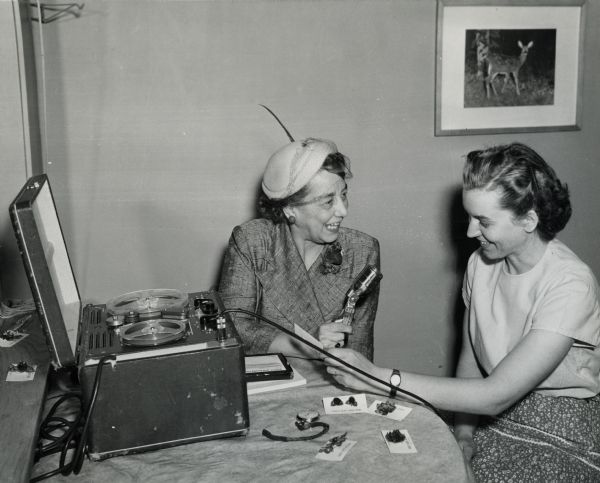
Aline Hazard interviewing a guest on the Homemaker Program Source: Wisconsin Historical Society

Aline Hazard interviewing a guest on the Homemaker Program
Source: Wisconsin Historical Society


Radio lesson topics included government, history, music, art, nature, health, and English. The series included programs like “Let’s Draw” (an art appreciation course where students mailed their artwork to Madison for grading) and “Afield with Ranger Mac”(a nature program hosted by Wakelin McNeel) that ran for decades. Teachers received study guides and educational suppliers offered higher quality radios to schools.

WHA also initiated the Wisconsin College of the Air to extend and improve adult education across the state. One of the most popular programs on the college slate was the Homemaker Program hosted by the affable Aline Hazard. She offered tips for cleaning, cooking, childcare, gardening, and introduced the latest tools and science of home economics. Together, the Wisconsin School and College of the Air brought useful information and education into homes and schools across the state on a technological platform that was relatively accessible to anyone.

At the end of the first semester in 1931, WHA reported nearly 11,000 regular listeners. By the next year, the regular audience had more than doubled to 23,000. The audience only continued to grow so that by 1960, roughly 290,000 students used the programs.

Other states followed Wisconsin’s lead in the 1930s and 1940s, particularly as commercial networks cut back on children’s programming. Nearly all were linked to universities or colleges, just like MOOCs today.

It seems to me that MOOCs are just a modern incarnation of the School of the Air, an attempt to give everyone a quality education using technology, whether on the air or online.


New Book! Marketplace of the Marvelous: The Strange Origins of Modern Medicine

Self promotion is not something at which I excel. When my first book came out in 2007 (Odd Wisconsin), some of my friends only learned I was even writing a book when I invited them to my book launch at Barnes and Noble. Epic writer fail.

I’m much better now.

Marketplace

I have a new book coming out! In January! And even though you have to wait just a little bit longer to get your hands on it, some of the first reviews are starting to come in, including this gem from Publishers Weekly:

Janik (Apple: A Global History), series producer for Wisconsin Public Radio’s Wisconsin Life, offers a particular perspective on 19th-century medicine with this survey of “irregular” treatments that Americans embraced as they turned away from standard medicine. Little changed for two centuries, standard medicine’s “heroic” and often deadly offerings were eschewed for practices like heat and herb therapy, hydrotherapy, phrenology, and homeopathy. Janik reveals the significant role women played in the development of these treatments and spread of do-it-yourself medical books, almanacs, and family recipes for healing salves, prophylactics, and popular herbal remedies. Americans loved anything that “gave them the power to treat themselves,” Janik notes—and 19th-century alternative systems did just that. Bottles of ready-to-use homeopathic remedies came in home kits, and Lydia Pinkham’s medicinal brews not only brought neighbors flocking to her door in the 1870s, but her secret vegetable compound is still on the market in at least two variations. Janik argues that “complementary” and “alternative” therapies are just a 20th-century update of irregular medicine—and recognition by Congress, the Mayo Clinic, and major universities proves “the willingness of regular medicine to consider or at least tolerate the merits of their competitors, an almost unimaginable idea less than a century ago.” She’s delivered a must-read for medical history buffs, whether mainstream or maverick.


A “must read?” How awesome is that?

In the dark depths of researching and writing, it can be hard to stay mindful of the big picture. Your inner critic (mine is really, really mean and just never shuts up) can’t see beyond the clunky sentence that’s far from poetry or the argument that could be so much stronger if only… if only you had made a different choice. Or were smarter. Or had any talent at all. There’s so many of those. But you have to keep going and believing in your project despite what your inner critic says. She does keep you humble but then when the book finally comes out, it’s time for that critic to be quiet and celebrate a bit.


Teddy Roosevelt’s Milwaukee Assassin

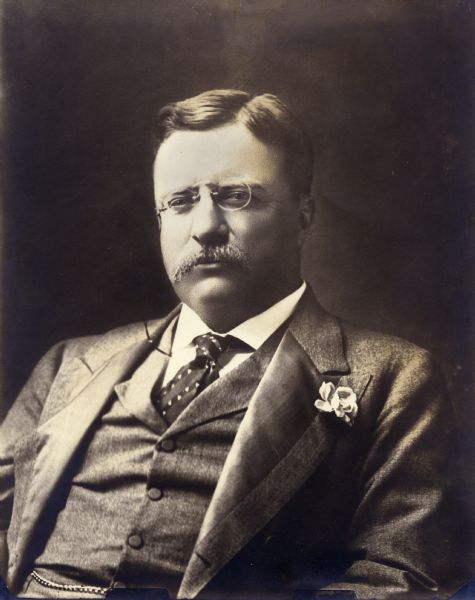
On the night of October 14, 1912, Theodore Roosevelt spoke to a crowd in Milwaukee despite having been shot by a would-be assassin.

Milwaukee was a campaign stop for Roosevelt who was running for president as the candidate of the newly independent Progressive Party. Roosevelt had already served two terms as president but his unhappiness with his successor, William Taft, led him to seek office on a progressive platform.


Unbeknownst to Roosevelt, New York bartender John Schrank had been stalking him for three weeks and across eight states. Obsessed with the thought of a third Roosevelt term, breaking the two term precedent set by George Washington, Schrank was convinced that Roosevelt’s election would lead to civil war so he decided he had to act. Schrank finally managed to get off a shot from his .38-caliber revolver as Roosevelt departed the Hotel Gilpatrick for his speaking engagement at the Milwaukee Auditorium. Unwilling to miss his speech, Roosevelt trivialized the wound and insisted on speaking. He even opened his vest at one point, revealing the wound, and declared, “It takes more than one bullet to kill a Bull Moose.”

Fortunately, Roosevelt had poor vision and was long-winded. The metal case for his glasses and the thick folded pages of his speech absorbed much of the force of the bullet lodged in the right side of his chest.

Following his speech, Roosevelt was rushed to the hospital. An X-ray confirmed the presence of the bullet in his chest but doctors decided to leave the bullet in place as it posed no threat to his organs and surgery could be risky. Roosevelt carried the bullet for the rest of his life.


Footnote – I realized only recently that the site of the shooting was on Old World 3rd Street near Kilbourn Avenue, the current home of the Hyatt, where I have stayed several times. I hear there are even photos and a plaque! I should be more observant.

A Pirate Who Roved the High Inland Seas

Yesterday was International Talk Like a Pirate Day (that’s September 19th in case you want to mark your calendar for next year), a day to practice your “arrrrrrrrrs” and “ahoys” and maybe adopt a pirate name.

While we tend to think of pirates as tropical characters (at least in popular lore), pirates (lumber thieves, privateers, rum – runners) roamed the Great Lakes as well. Only one, however, was actually branded a pirate and formally charged for his actions. Dan Seavey – or “Roaring Dan” as he was known – was guilty of everything from poaching to running a floating brothel aboard his Lake Michigan schooner, the Wanderer. 

Roaring Dan Seavey Source: Wikimedia

Roaring Dan Seavey
Source: Wikimedia

Born in Maine in 1865 and the son of a schooner captain father, Seavey took to the seas as a teenager, first working aboard local vessels and then for a stint in the U.S. Navy. He came to Wisconsin in the 1880s where he met and married 14-year-old Mary Plumley, the first of his three wives. The couple moved to Milwaukee in the 1890s where Seavey had a small farm and operated a tavern with a partner on the waterfront.

Seavey soon met Milwaukee beer king Frederick Pabst who encouraged Seavey to invest in a mining company in Alaska. Seavey took his advice and pulled the first of what would become several disappearing acts. He sold his business and deserted his family to seek his fortune in the Klondike Gold Rush. The company went bust within a few years and Seavey came back to Wisconsin but not to his family. He soon disappeared again, resurfacing in Escanaba, Michigan, in 1900.

There, Seavey married Zilda Bisner. Four years later, Bisner filed for divorce, claiming domestic abuse, and Seavey fled once again onto the lake.

Seavey ran many different businesses in Michigan, both legitimate and not. He tried trapping, logging, lumber milling, and marine transporting. On the side, he also practiced the pirate-y arts of bootlegging, poaching, smuggling, and pimping. All of these activities made Seavey a recognizable character throughout the Lake Michigan port cities. Not to mention the fact that he was nearly 6 and a half feet tall and weighed 250 pounds.

And like any good pirate, Seavey was notorious for his barroom brawls and prize fights. One fight occurred on a frozen harbor in Frankfort, Michigan, in 1904. Seavey fought pugilist Mitch Love bare fisted for two hours before cleaning the ice with Love and collecting his winnings.

Seavey also made a significant fortune off his floating brothel. It was a brilliant move considering that the jurisdiction of local authorities ended at the water’s edge. Crafty schooner captains like Seavey would load their boats with alcohol and ladies and travel from port to port. Weekends and paydays were, unsurprisingly, especially profitable in port towns.

On June 11, 1908, Seavey and two accomplices stole a schooner in Grand Haven, Michigan, and headed south to Chicago intending to sell the ship’s cargo on the black market. The theft initiated a chase with federal authorities. The federal ship Tuscarora steamed after Seavey carrying U.S Deputy Marshal Tom Currier and a warrant for Seavey’s arrest. The Tuscarora eventually spotted Seavey’s ship near Frankfort and gave chase, firing a cannon that ended Seavey’s run. Seavey was arrested and arraigned for mutiny and sedition on the high seas.

Seavey’s luck had not run out, though. Despite the government’s best efforts to prosecute him, the grand jury did not indict him and Seavey was set free. How he got off when he clearly stole the ship is a matter of speculation but the act and the case forever branded Seavey a pirate.


Fashions on the Face: Beards in American History

[I recently appeared on the Wisconsin Public Radio show “Central Time” to talk about the history of beards and the current urban lumberjack fashion. Here’s a taste of what we talked about.]

Facial hair is contentious business.

Joseph Palmer became a martyr to his own whiskers, a long flowing beard that he insisted on wearing long in contravention of the current style. One day in 1830, Palmer was attacked by four men outside a hotel in Fitchburg, Massachusetts. His crime? Wearing a beard.

Source: Wikimedia

Source: Wikimedia

Palmer fought back, and despite being a large man, he was thrown to the ground. He managed to escape only by stabbing two of his assailants in the leg with his knife. He was later arrested and fined for causing an unprovoked assault. Although Palmer could easily have paid the fine, he refused on principle and went to jail for his facial hair crime. Even jail couldn’t protect Palmer from those who wanted to unshorn him – twice other prisoners and jailers attempted to shave his face. Palmer wrote letters from jail publicizing the case, and he was eventually released. His tombstone features a man wearing a long beard and the words “Persecuted for wearing the beard.”

A transcendentalist, reformer, and utopian, Palmer’s beard marked him as immoral and suspicious, clearly an outsider. Beards, mustaches, and goatees had been out in the United States since at least the 18th century. During the Enlightenment, a clean face signaled a mind that was open to new ideas. The nation’s founding fathers wore no beards – think of Thomas Jefferson, John Adams, James Madison, and George Washington. In fact, no president from Washington through James Buchanan had facial hair.

During the American Revolution, soldiers were expected to keep themselves clean shaven, though judging by the number of times orders to do so appear in wartime records and letters, the men were not listening.

Views on facial hair began to change by the mid-19th century, though. As the nation became more urban and industrialized, many Americans worried about what all of these transformations would do to men and women’s characters, their essential natures. Not to mention the fact that women were gaining more of a public role. Beards were one way men could clearly demonstrate their difference from women. By the Civil War, beards signaled virility, strength, independence, and masculinity. Look only at photos from the Civil War to see a whole range of mutton chops, mustaches, and wooly beards (Smithsonian had a great feature on the facial hair of the Civil War). All the winningest generals had facial hair: Grant, Lee, Sherman, Jackson.


And look to the Oval Office where the first bearded president, Abraham Lincoln, took office in 1861. Lincoln, it should be noted, did not have a beard during the majority of his campaign. He supposedly grew one in the weeks before the election at the suggestion of 11-year-old Grace Bedell who suggested he might look better with a little hair on his face. By the time of his inauguration, Lincoln’s famous bearded face had taken form.

Beards remained popular for the next several decades but the winds of fashion changed course again by the 20th century. Beards gave way to mustaches in the early 20th century and finally the clean shaven face reappeared. No president has had facial hair since William Howard Taft.

A Taste of Milwaukee in an Apple

A century ago, Milwaukee had its own apple. The seedling found growing beneath a Duchess apple tree and developed by George Jeffrey in the 1890s yielded a yellowish-green apple with a tart flavor that was a local specialty, one of thousands of varieties of apples known, grown, and beloved in North America.

Apples are one of the most widely grown and eaten fruits in the world. In North America alone, some 14,000 varieties have been named and nurtured over the last four centuries.

The industrialization of agriculture changed that world. By the mid-20th century, the Milwaukee apple along with many other Wisconsin apples had largely disappeared. The apple industry settled on a handful of varieties to promote and distribute worldwide, transforming the fruit from a local specialty into a global commodity. Today’s industrial food system has left us with only a meager sampling of the richness and diversity of the bygone apple world.

Read the rest of the story in Edible Milwaukee.

Past and Present in the Wisconsin Dells

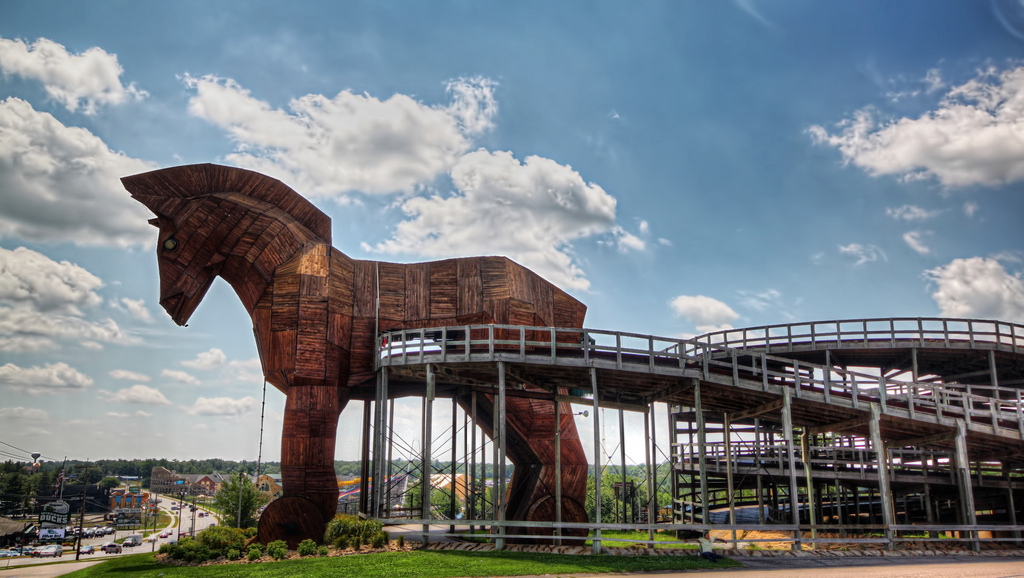
The Wisconsin Dells is a funny place. Like Wall Drug, its attractions scream at you from billboards all over the state – magic shows, water parks, thrills, terror (the amusement park kind), music (often cheesy or popular several decades ago – or if you’re really lucky, both), it’s all there.

As a kid, Wisconsin Dells was one of the many Wisconsin places my family visited in the summer. But not for the water parks that often draw people there today. No, we came to ride the Ducks, those amphibious boat vehicles that apparently saw action in World War II before finding a new life patrolling the woods around the Wisconsin River and Lake Delton (And in more recent years, taking tourists around big cities with some kind of duck whistle and/or silly hat. The Dells had them first). Or to take the boat cruise or visit the H.H. Bennett photography studio, Parson’s Indian Trading Post (open since 1914), or one time, to take the horse-driven canyon tour. Only once did I convince my mom to fork over the money for the wax museum.

We ate at Paul Bunyan’s cook shanty, a circus-y restaurant, and the supper club Ishnala; and we slept in motels straight from the 1950s and 1960s with holiday-themed rooms, see-saws and merry-go-rounds out back, or plastic palm trees beside pastel shades more at home in Florida or the tropics than south central Wisconsin.

Did I mention that I loved it?

Wisconsin Dells holds very specific and place-based memories for me, a mythical childhood-and-vacation Wisconsin that bares little resemblance to the Wisconsin I actually live in now.  My adult self cringes at the artificiality of the whole place with its fake Greek columns, pyramids, enormous wave pools, and log structures, and instead longs to see the striated bluffs and rock formations that first drew people to the area in the mid-19th century. And really, a dog jumps across Stand Rock in imitation of that great Bennett photo of his son leaping across the chasm from 1886, purportedly the first stop-action photo taken in the world? A trained dog?

And yet, I can’t help but smile at the sight of a green-and-white Duck driving down the parkway, and sigh with relief that the deer park is still there even though I’ve never been there to actually pet a deer and I frankly don’t like the whole petting zoo concept in any format. And phew, waterskiing shows.

What?

Maybe it’s the place and maybe its nostalgia. It’s both horrifying and fascinating to see the gaudy and destructive infrastructure atop a place so rich in natural beauty and history. But I also remember the delight of being a kid in a place so unlike anywhere else I’d been. It’s one place where my younger and older selves collide, where one idea of Wisconsin meets another, reminding me that I still have a lot to learn about this place and my place in it.

“Neuro” hype and 21st Century Phrenology

brain

Is the brain the hottest organ in the body? That’s the argument made in a recent Slate story “The End of Neuro-Nonsense” that argues that brain hype reached its peak in 2008 and is now on the decline for a variety of reasons. Quoting from the new book Brainwashed that details the perils of brain-centrism: “Naïve media, slick neuroentrepreneurs, and even an occasional overzealous neuroscientist exaggerate the capacity of scans to reveal the contents of our minds, exalt brain physiology as inherently the most valuable level of explanation for understanding behavior, and rush to apply underdeveloped, if dazzling, science for commercial and forensic use.”

Maybe so.

But I’d argue that we’ve been living a “neurocentric,” to quote the term used in the article for our brain obsession, world for nearly 200 years. We just had a different name for it in the past: phrenology.

Phrenologists posited that the brain was made up of individual organs with specific functions and attributes. The size and shape of these organs, as read on the skull, revealed our character. Many argued that these organs – and thus our personalities – were changeable, improvable. With a little exercise, we could make ourselves better by strengthening positive traits and weakening others. With phrenology, doctors could easily determine not only how but why someone thought, felt, and coped with life in a particular way. It provided comfort and insight into our seemingly unknowable depths, a way to understand behavior and personality with seemingly scientific precision. Who wouldn’t like that?

Like the 19th century, many of us hope today, as the phrenologists did, that mapping the brain will reveal the secrets of our natures. And once known, this information will allow us to manipulate and transform ourselves into something better. We just call it “neuro” this and “neuro” that now, from neuromarketing to neuroeconomics, a transmutation of language strikingly similar to what occurred in the 19th century as phrenological terms (high brow, low brow, shrink, well rounded) passed from the lab to daily conversation. Colorful fMRI images of the brain on TV encourage us to think of almost everything through its effect on the brain, the modern equivalent of the phrenological charts that adorned the walls of pharmacies and general stores and were featured in the pages of magazines and books. Just as in the past, popular neuroscience suggests that the way to make us smarter, happier, and even more beautiful is through concentrated efforts to improve the brain regardless of how little we actually know about how the brain works. It seems to me that popular brain science is the phrenology of the 21st century, and we’re just as ravenous for that knowledge today as they were in the 19th century.

So maybe 2008 marks the most recent crest of a brain obsession with more than two centuries of history behind it that seems bound and determined to rise again.