Making Radio

Most of my work days look like this:

I sit for hours cutting a word from here and a phrase from there; deleting the sound of swallows and licked lips (you’d be amazed how loud they are in a microphone – and perhaps once you do know, how self-conscious you become about them); searching for the perfect music and then fitting it in to complement but not overpower the voice, to emphasize a point and then fade away; and trying to make sentences I’ve cut from 10 different places sound like they flow naturally from one into the next. It’s the glamorous world of radio.

But if maybe not glamorous – there’s nothing stylish about the enormous black headphones strapped to my head – it’s certainly magical. Even after hours listening to the same paragraph over and over and over… and over… to the point that I have memorized the entire essay or interview answer (or more recently, a song), it never fails to excite me when it finally falls together. It’s just like writing the perfect sentence or finding just the right word to describe a moment, a scene, a person. It just feels… right.

Creating radio is an intimate experience, too. Radio is itself the most intimate of mediums – a voice talking to you, the listener, over the airwaves. Voices you know in a second but couldn’t identify the face of its owner. And yet you somehow feel connected. You feel that you know her.

The same thing happens in my headphones as the subject tells me a story, over and over, that I just have to get right. I owe it to her, I think, as I make the painful decisions of what is essential and what can be left behind. The soundwaves may not look so personal on my screen but most special things are hard, if not impossible, to see.

I can’t imagine the day when this will ever get old – when I’ll stop getting excited about someone’s story and determining how to share it. Sure, my ears throb after hours encased in headphones and my pointer finger aches from endless mouse clicking, but even so, the end result always sounds like magic to me.

Here a few recent radio pieces I’ve produced* for Wisconsin Life on Wisconsin Public Radio:

Count This Penny – songs based on letters of Wisconsin Civil War soldiers (love them, love this)

Stand-Up Paddleboarding (I can’t wait to try it!)

Distill America (I did the recording for this one, too)

Sugaring Season

* Many people ask me what a producer actually does. Good question. In radio, producers do a variety of things but generally book guests for talk shows, find music and sound clips, sometimes write questions for interviews, conduct interviews, and edit audio. Essentially everything but take to the microphone themselves.

Where the Old Fashioned is Always in Fashion

A few days ago, I read in The New York Times that the old-fashioned (the hyphen is matter of choice) is back. For those of us who live in Wisconsin, the natural response to such a story was: when did it go away?

Photo: Caro Scuro

The old fashioned is Wisconsin’s drink of choice, the official unofficial state cocktail, drunk anytime, but especially on fish fry Friday. Heck, we even have a restaurant called the Old Fashioned, and the drink can be found in bars all over the state. Wisconsinites prefer theirs with brandy rather than bourbon, though recipes for the drink vary considerably. Sweet or sour. Seltzer or 7-Up. Bourbon or rye whiskey. Some contain a veritable fruit salad of garnishes – a cherry, orange slices, pineapple – while others omit the fruit entirely.

Old fashioneds date to the 19th century and were first described as a combination of spirits, sugar, water, and bitters. Some called for lemon and cherries in place of the sugar. The drink reached its height of popularity in the late 19th and early 20th centuries, before Prohibition did the old fashioned, like many other cocktails, in.

Wisconsinites have preferred brandy since the 1893 World’s Fair in Chicago where the Korbel Brothers first introduced their drink. It spread throughout the Midwest, gaining a following in Wisconsin it never lost. Korbel is still the most common brand in a Wisconsin old fashioned.

Wisconsin’s version of the drink may not be the one that’s become suddenly fashionable in craft cocktail bars all over the country. But it is a drink with a long history and tradition here that the rest of the country just seems to be waking up to again.


An Ode To Bloomers for Women’s History Month

March is women’s history month, and in honor of the month (though really, every day is about women’s history for me), I recorded an essay about Amelia Bloomer and her bloomers for Wisconsin Life. 

The World Underfoot

“To know the world, some people need to travel the globe; others simply examine their own piece of ground entirely.” – Tom Montag, The Idea of the Local

Can your backyard ever be as exciting as the Alps? Your city streets as fascinating as Paris?

I knew I loved history early. Way early. Like elementary school early, decades before some kind of historical trigger seems to twitch in middle aged adults that transforms many of them into history buffs (and my readers, thank you!). Teachers matter (thanks Mr. Bloomhuff, Mr. Clay, Mr. Meyers, Ms. Engdahl). Have you ever loved a subject taught by a teacher you hated?

But for me, growing up in the Northwest, history was always something that happened over there. Over there and way back when because the history I loved was colonial, filled with tricorn hats, and dotted with perfect New England towns. I knew next to nothing about my home state. A few names and dates but little else. History was all around me but I couldn’t see it.

Then I moved to Wisconsin, got a job at the Wisconsin Historical Society, and started learning state history, like it or not. And suddenly my new home took on new dimensions. The hill up to the capitol was no longer just the cause of my sweatiness at work on humid summer days, but was a drumlin left by the massive glacier that covered two-thirds of the state 15,000 years ago. When my beloved Puritans were setting up households, negotiating with Indians, and fending off witches in 17th century New England, the French were trading and exploring in Wisconsin. Learning this history, this local knowledge, made my experience of living in Wisconsin so much richer and my connection deeper than any place I had ever lived before.

This is the power of local. Knowing a place so well that you begin to see yourself reflected back in it. Understanding that the history and stories of your place are just as important as – and connected to – the history and stories of another place.

This certainly doesn’t mean that I don’t continue to long to travel the world – I can barely keep myself from dreaming of hikes in the Alps or of the highlands of Scotland. Or that I’ve lost my love of colonial America. But it does mean that I try to lavish at least the same attention to place at home as I do abroad. Because there’s a lot I can learn about the world here, too. It’s why I walk as much as I do, thousands of miles down the same streets every year. And why my husband and I are now visiting all the county and city parks, part of an effort to know my own ground entirely.


Eating Out of Season

Some people feel guilty about eating too much. Others about eating “bad” foods – you know, the ones that taste delicious usually because they are too fatty, too salty, too sugary, or some combination of all three. “Bad” is, of course, relative.

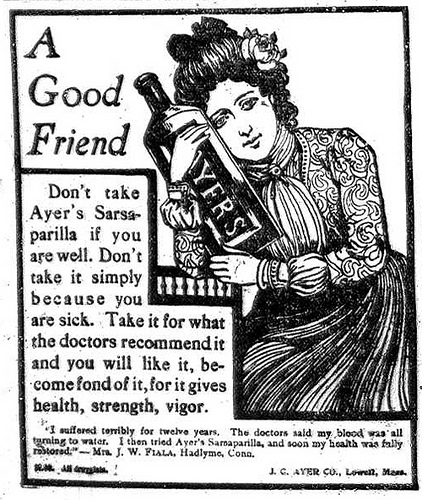
For me, my letter A of shame comes from eating out of season. Or perhaps worse still – eating foods that will never have a season here in Wisconsin. Foods from thousands of miles away. Bananas. Avocados. I hide them away when company comes, outwardly virtuous to my local seasonal eating plan but hiding a terrible damning secret.

It’s a foolish worry. Food shouldn’t inspire guilt. That’s part of what makes eating so pleasurable. Not to mention the dozens – literally dozens – of bunches of kale and pounds and pounds of winter squash, potatoes, carrots, parsnips, and rutabagas I’ve virtuously eaten (and loved) this winter. My mettle is proven – a real medal, perhaps one made from a massive slice of carrot, should hang ’round my neck.

Even so, it’s one I think about every time I go to the grocery store or order from a menu. What’s in season? What’s possibly local? How will that asparagus really taste in February as opposed to the tender bundle I can barely keep out of mouth in June? Is it worth it? Sometimes the answer to that last question is “yes.”

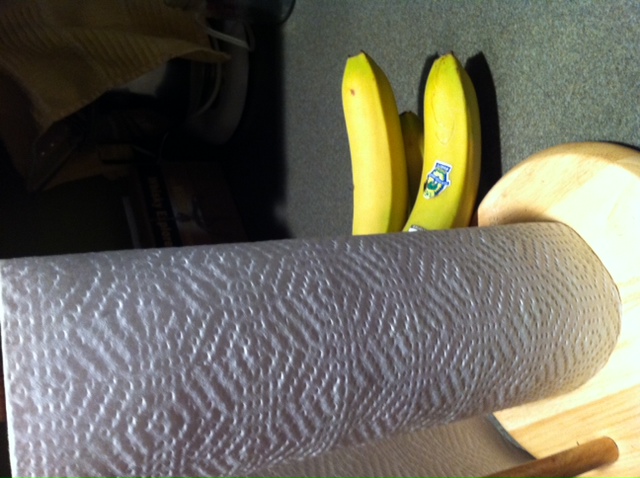
Bananas cower in fear of being discovered behind the paper towels

In some ways, I feel less remorse eating those never seasonal foods than the ones that are just out of season. I know what a really ripe, really delicious tomato tastes like so it’s wan, well-traveled winter cousin is a poor substitute. Even the apple I ate today tasted off – my fall apples finally ran out a month ago so this store-bought apple from South America tasted of a season that didn’t match the view out my window. An avocado, on the other hand, is always foreign – at least until I move somewhere with an avocado season – so I have no comparisons, no trade-offs for a potential pleasure now over the benefits of waiting until spring or summer.

I’m trying to let the guilt pass. You’ll know how well I’ve succeeded if you see a bunch of bananas on my counter.

Cross-Country Skiing on the Radio

My essay on cross-country skiing was featured this morning on Wisconsin Public Radio’s “Wisconsin Life.”

And last week, I had a great conversation with CSA farmer Kristen Kordet about planning for the farming season. We looked at seed catalogs and talked about her favorite varieties. She’s a delight to talk to and I think the edited piece turned out really well.


Lessons of Adulthood

Have you ever looked at your life – really stopped everything and took a good look around – and thought, “how did I get here?” It can be disorienting in some ways, if you think back on where you thought you’d be when you were 8 years old or 15 or even two weeks ago when I was only 31 and do a real evaluation.

This thought passes through my mind nearly every time I give a talk. A talk. Me. Where I stand up in front of people and speak about history (usually) for 45 minutes. Into a microphone. The lights down low. With people staring at me. And I actually like it.

Growing up, I did everything I could to avoid public speaking. And when I did have to give talks, I gripped the podium (if there was one) until my knuckles turned white and my fingers ached from the strain, my knees shaking, my face buried in my notes, and my words tumbling out on par with that guy from the Micromachine commercials. I hated it. I hated being on display even if really, no one was really listening or frankly, cared all that much in school. I just needed to get out of school, get through this class, and then I would never have to give a speech again. Never!

But then I became a professional writer.

And I learned the cold, hard truth about the writing life: there’s speaking involved. You can’t just sit in your garret all day, turning out pages of prose for the world to lap up in eager anticipation. Readers want to see you. Or more accurately, readers learn they want to be your readersby seeing you and hearing you speak. And so you speak. And hopefully with time, you get better at it and maybe even start to enjoy it.

Five years on of fairly steady speaking engagements, I’ve discovered something earth-shattering: I like to speak publicly. The realization came slowly, so slowly that at first I didn’t recognize it. One day, in the middle of a talk, I found myself walking up and down the aisle with a microphone in hand. Who was I, Phil Donahue?! I felt suddenly disembodied, like I was watching someone who looked a lot like me but couldn’t possibly be me because I hate public speaking, talking, laughing, smiling, having a great time. But it was me and it is me.

I never thought I’d be up there, much less by choice. Wasn’t the great promise of adulthood as a child the freedom to do what you wanted?

I’m still surprised every time I stand up to give a talk. Surprised at who I’ve become but pleased to know that I could do it all along.


Curing the (Historic) Common Cold

Toads for colds? It sounds like a joke. Or a witch’s brew. But in the mid-19th century, Madison doctor Hugh Greeley recommended a powder of toads for fever. “Take toads as many as you will, alive, [and] put them in an earthen pot,” he instructed. The toads were then set over an open flame. Once sufficiently cooked, they were cooled and then ground to a dark powder, mixed with a liquid – hopefully something strong and alcoholic – and drunk. For prevention, “half a dram will suffice,” counseled the good Dr. Greeley.

Winter in Wisconsin means snow, ice, and frigid temperatures. But it’s also the peak of the cold and flu season. The case was just the same more than a century ago, though the remedies were a little different.

George Howard, the first pharmacist in La Crosse, mixed many of his own special medicinal blends in the 1850s. He had remedies for everything from runny noses and headaches to something far more exciting: love potions. The lovelorn sent Howard letters begging for help. In return, he sent them powders to match a popular 19th century nursery rhyme. Women got “sugar and spice” and all that’s nice, while men got “snips and snails” (no one is quite sure what “snips” mean, though, the original line may have been “snips of snails” with “snips” meaning a little bit). Howard claimed to have received nothing but grateful “thank yous” in return.

A few decades later, Fond du Lac resident Wyman Towns began selling bottles of his special Cold Killer to cold sufferers through the mail. It wasn’t his only offering. He also sold Towns’ Healing Snuff and Towns’ Rheumatic Liniment among other patent medicines. The ingredients of these remedies were kept secret – that’s what made them patent medicines – so we don’t know if Towns shared Dr. Greeley’s affection for powdered toads.

In the early 20th century, reporter Marcelia Neff remarked in the pages of the Milwaukee Journal that traditional Indian remedies could be very effective in curing what she called “neurotic white people.” Most of these remedies were made of native plants ground into powders or pastes or drunk as tea. A poultice of sumac leaves could relieve a sore throat: as could a mixture of bloodroot juice and maple syrup. Headache relief came with a tincture of aster leaves. The boiled bark of red maple did wonders for sore, red eyes.

Botanical cures had a long history in American medicine. European colonists relied on herbal remedies. They cultivated local plants for their healing powers often with the help of Native Americans. So important was the need for medicinal plants that the British crown ordered the 17th century Virginia colony to cultivate gardens of native plants for relief of coughs, colds, and worse.

And if none of those worked, there was always alcohol. Appleton resident Alfred Galpin recalled that his grandfather kept a healthy supply of brandy in his settler’s cabin in case of colds. While the alcohol surely didn’t cure, it could certainly dull or at least distract from sinus pain and pressure.

Sure, many of these remedies may seem ridiculous to us today, but the answer to the common cold still alludes us. So if you get a cold this winter, just know you have lots of company, both in the past and today.


Embracing Winter

Before I moved to Wisconsin, I’m not sure I’d ever even seen a cross-country ski. As a kid growing up near Seattle, winter was a destination, not a season.  On Monday mornings, my classmates returned to school with creased lift tags dangling from the zippers of their coats, and their red, sunburned faces raccoonishly imprinted with goggles. But my parents, Chicagoans by birth, didn’t ski, had never skied, and certainly weren’t about to start downhill skiing in their late 30s. So winter remained more of an abstraction to me, a snowy realm I could see on the flanks of the Cascades – far off in the distance.

Things were different in Wisconsin. Winter was unavoidable, an elemental part of life. Even so, I often overheard people talking about how they “got through it” as if it were a messy divorce or a one-hundred-year flood rather than an annual occurrence. I learned to “get through” winter on cross-country skis.

Once you get the motion right – the kicking and gliding, riding the driving ski with your body floating above – you discover the grace of skimming through still air and snow. Sliding and poling your way along, cross-country skis make no more noise than a kayak slipping through flat water.

Even the first awkward tries can have grace. My first cross-country skis were rentals. Stepping onto the strips of what seemed to me unimaginably thin plastic, my feet slid forward and I fell backward. Three falls later, I was off, shuffling and jerking my arms and puffing the arctic air. Despite myself, I soon fell into a rhythm, sloppily syncopated but forward marching, punctuated by my growing elation.

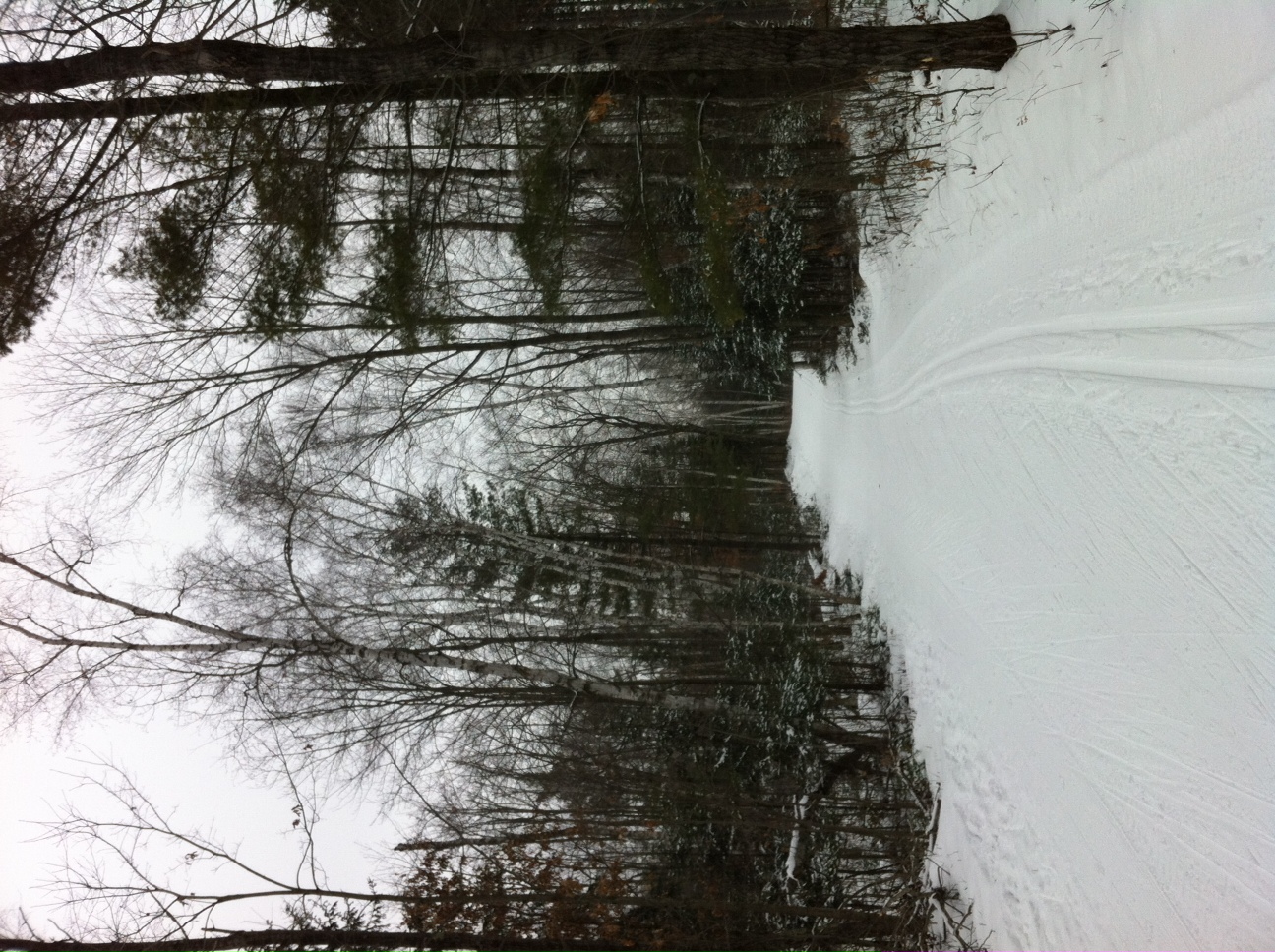
With snow and skis, I can go anywhere, over a frozen pond and through the interior of the woods. In the spring and summer, I’d worry about my path, anxious to find a trail map to keep from getting lost. But in the winter, my ski tracks are reassurance, guiding me back to my start.

When Lake Mendota freezes, I glide out onto its surface, a wide expanse of flat, snow-covered ice that feels eerily empty yet magical before the packed shoreline of the city. Part of the spell is skiing past the ghosts of summer – boathouses, sections of dock, lawn chairs, a life preserver. The Memorial Union Terrace, the center of summer in Madison, sits unobtrusively under a blanket of snow.  The bright paint of upturned boats now splotched with snow seem a bit more solemn in the stark winter light. Yet at the same time, the sky rarely feels so large or so vivid.

There’s peace on two skis. The muffled quiet of the snow seems to magnify every other sound. The rustle of dried branches, bird calls, the swirl of my thoughts. Now I’m the one with the weekend winter stories, of quiet wonders found skiing in snowy woods and fields. It’s not showy but more exhilarating than anything I could imagine.

A Thousand Miles on a Single Street

Marcel Proust once said “The real voyage of discovery consists not in seeking new landscapes but in having new eyes.” It’s a line I sometimes tell myself as I walk roughly the same route to work that I’ve walked for the last nine years. Sometimes it’s an admonishment – a jolt back from a daydream of some imagined land and life – as quotes, even good ones that you totally agree with, often become when thrown in your face by family members, coworkers, or Oprah. And other times it’s a reminder to notice even the small changes visible all around every day.

Saturday morning broke numbingly cold – 9 degrees and who even wants to know about the wind chill. Yet I ventured out anyway, earnestly admonishing myself with another quote, but this one from a friend rather than a dead Frenchman: “You can’t let the weather determine your life – or your wardrobe.” So I headed out, suitably bundled, on a route I walk fairly often. But this time I saw things I’d never seen before.

Maybe there was a clarity to the frigid air that made everything more visible.  Or maybe my brain was too numb to throw up its usual distractions, but how had I never noticed the Art Deco beauty of the State Office Building? Or the stark white trunks of birch trees at the back entrance to a bar?

The more I looked and saw new things, the more I thought about how many times I’ve walked some of these streets – how many miles I’ve walked without seeing. The most shocking one I came up with was State Street, which I walk at least 200 times (conservatively) up and down every year. It’s a mile each way from top to bottom. That’s 400 miles each year on a single street. Factor in my nine years living here and I’ve walked 3,600 miles on State Street alone, more than the width of the continental United States.

And yet despite all these miles, that well-trod path is still littered with new discoveries.