Lefse in the Family

“It just isn’t Christmas without lefse.” It’s a phrase I’ve been known to say many times over the years as I eagerly tear into the foil wrapped package of lefse sent express from my grandma’s kitchen in Illinois to my childhood home near Seattle.

Growing up, the tortilla-like Norwegian flatbread (often made with potatoes, especially in Scandinavian-American communities, but not necessarily in Scandinavia itself) was a special treat – even if my uncle often compared it to a cloth napkin in flavor and texture. He just didn’t get it.

Like her Norwegian ancestors, my grandmother usually makes lefse once, maybe twice, a year, freezing small packets of lefse to last throughout the year. Truth be told, lefse making is chaos incarnate, which perhaps explains why a year’s supply is made in one fell swoop. The sticky, gummy dough sticks like library paste to the grooved rolling pin and counter tops, while a thin layer of flour covers every horizontal surface in addition to your face, hair, clothes, and the inside of your eyelids.

The dough is no match for my grandmother, though, whose slight frame masks a fierce rolling skill. The dough quickly becomes thin enough to “read the newspaper through,” her constant refrain as she rolls and watches my feeble attempts to match her dexterity. Good lefse requires careful discernment of the right amount of flour, the proper temperature of the griddle or pan, and the perfect temperature of the dough, neither too warm nor too cold.

I helped her some years, though I may have messed it up more than I helped. The grilling is one area that I’ve managed to master with aplomb, lifting the dough in one swift swoop of my sword-like stick, laying down the edge, and rolling it out quickly so it lies flat on the round lefse griddle. Thirty seconds or so later, the lefse needs to be flipped. Timing is everything in achieving the perfect balance of knobby brown flecks and bubbles on the pale rounds. A whole batch can take all day.

Moving to Wisconsin, I was shocked to learn you can buy lefse in the grocery store – nearly all of them in Madison have at least one brand. As with all things, though, homemade – grandma-made -is best.

It turns out lefse skill runs in my family. While scanning some newspaper articles my grandma had saved, I found an article in a Minnesota paper featuring my great-grandmother and her lefse recipe. It turns out, according to the article, that she, too, didn’t think it was “Christmas without lefse.”

My great-grandmother, Anne Anderson, lefse superstar


 

A Thousand Miles on a Single Street

Marcel Proust once said “The real voyage of discovery consists not in seeking new landscapes but in having new eyes.” It’s a line I sometimes tell myself as I walk roughly the same route to work that I’ve walked for the last nine years. Sometimes it’s an admonishment – a jolt back from a daydream of some imagined land and life – as quotes, even good ones that you totally agree with, often become when thrown in your face by family members, coworkers, or Oprah. And other times it’s a reminder to notice even the small changes visible all around every day.

Saturday morning broke numbingly cold – 9 degrees and who even wants to know about the wind chill. Yet I ventured out anyway, earnestly admonishing myself with another quote, but this one from a friend rather than a dead Frenchman: “You can’t let the weather determine your life – or your wardrobe.” So I headed out, suitably bundled, on a route I walk fairly often. But this time I saw things I’d never seen before.

Maybe there was a clarity to the frigid air that made everything more visible.  Or maybe my brain was too numb to throw up its usual distractions, but how had I never noticed the Art Deco beauty of the State Office Building? Or the stark white trunks of birch trees at the back entrance to a bar?

The more I looked and saw new things, the more I thought about how many times I’ve walked some of these streets – how many miles I’ve walked without seeing. The most shocking one I came up with was State Street, which I walk at least 200 times (conservatively) up and down every year. It’s a mile each way from top to bottom. That’s 400 miles each year on a single street. Factor in my nine years living here and I’ve walked 3,600 miles on State Street alone, more than the width of the continental United States.

And yet despite all these miles, that well-trod path is still littered with new discoveries.

Learning to Eat

“Food is to be feared” is the mantra I absorbed as a child. Though my mom never said those exact words aloud, nearly every meal we consumed screamed “Caution!” or “Are you really sure about that?”

Salad dressing of all kinds – forget the varieties in which it came — was disgusting and never to touch a leaf of my lettuce. And that salad? Don’t even think of mixing anything more wild and flavorful than Iceberg in there.  Sandwiches, hamburgers, and pasta ordered in restaurants were all carefully inspected, layers separated and noodles pulled back and apart, before even a single bite could be taken. I’m not sure a tangy drop of mustard even crossed my lips until I was in college.

My mom has particular tastes – aversions really – and as a kid who didn’t know any better, I followed my mom’s lead. I figured she’d been around the food block and knew how to sort the good from the bad. No mayo, mustard, or dressing of any kind. No basil, parsley, or any other visible herb or spice.  Forget about olive oil. Her dislike of beans and rice meant no ethnic food save for the occasional visit to the most American of Chinese restaurants (a real tragedy growing up in Seattle) where she ordered cashew chicken for us both. I mimicked her careful sorting of the chicken pieces and cashews from the dish, leaving islands of onions (terrible, ruin everything), peppers (too spicy), and other wan vegetables in an oily clear ocean of sauce. Our mounded bowl of white rice grew cold with our neglect and disdain.

In high school, a revolution occurred: I began eating dinner at friends’ houses. Worried about the food potentially served but also too shy to make a scene, I ate my first tentative bites of Caesar salad. I didn’t die. Not only did I not die, I actually liked it. Glistening Romaine lettuce, damp with dressing was actually good, delicious even. Soon, I had pesto, sweet potatoes, and carrots dressed with a white sauce that my friend’s mom called “company carrots.”

Over the next few years, I began trying all kinds of foods I’d always thought must be avoided at all costs. And I loved nearly all of them. For the first time, eating out wasn’t fraught with peril and caution. Dish dissections occurred only to add more mustard or to straighten a tomato threatening to slither out from between my bread slices.

By the time I graduated from college and moved 2,000 miles away from home, I finally understood those photos I’d seen in magazines of people, families, laughing and smiling as they passed mysterious steaming bowls around a table. I could see myself in those photos now, and I wanted to know what was in those bowls not to request that something be removed but to savor each bite. It was corny but the power of food to bring people together in shared enjoyment – rather than suspicion – at last made sense.

An Apple for Teacher

When did we start giving teachers apples as a way of thanks or appreciation or, perhaps more likely, sucking up? And why apples?

After the Garden of Eden, apples came to be associated with knowledge and information. Early Christian scholars depicted the fateful tree, known as the Tree of Knowledge, as an apple tree early on. Apples grew well in Europe and were a popular fruit so it made sense to them that the tree in question was an apple… even if it didn’t really make sense climactically since apples wouldn’t grow well in the Middle East. But that’s a story for another day.

In the 18th century, poor families in Scandinavia paid for their children’s schooling with a basket of apples. They may not have had money but they had plenty of apples to share. Over time, the amount of apples given decreased to one since apples tended to spoil quickly.

Americans picked up on the tradition during the Great Depression in the 20th century. Farm kids brought apples for their teachers to keep them satiated and in good spirits so they would keep doling out good grades.

The practice stuck and so, too, the association of apples with teachers. It’s hard to walk into any academic supply store (my mom was a teacher – I spent hours of my childhood in Academic Aids in Bellevue, WA) and not see dozens of apple posters, stickers, borders, erasers, and just about anything else you could imagine adorned with apples.

Ghosts of my Ancestors

Growing up, I never knew much about my family or its history. Family trees for school projects were always hasty, improvised affairs that rarely extended beyond my grandparents no matter how much I badgered my parents for information. Somehow, it never seemed strange at the time that my parents sometimes couldn’t even tell me the names of my great-grandparents – their own grandparents! I knew immigration was somehow involved but I wasn’t sure of the countries or even when it happened.

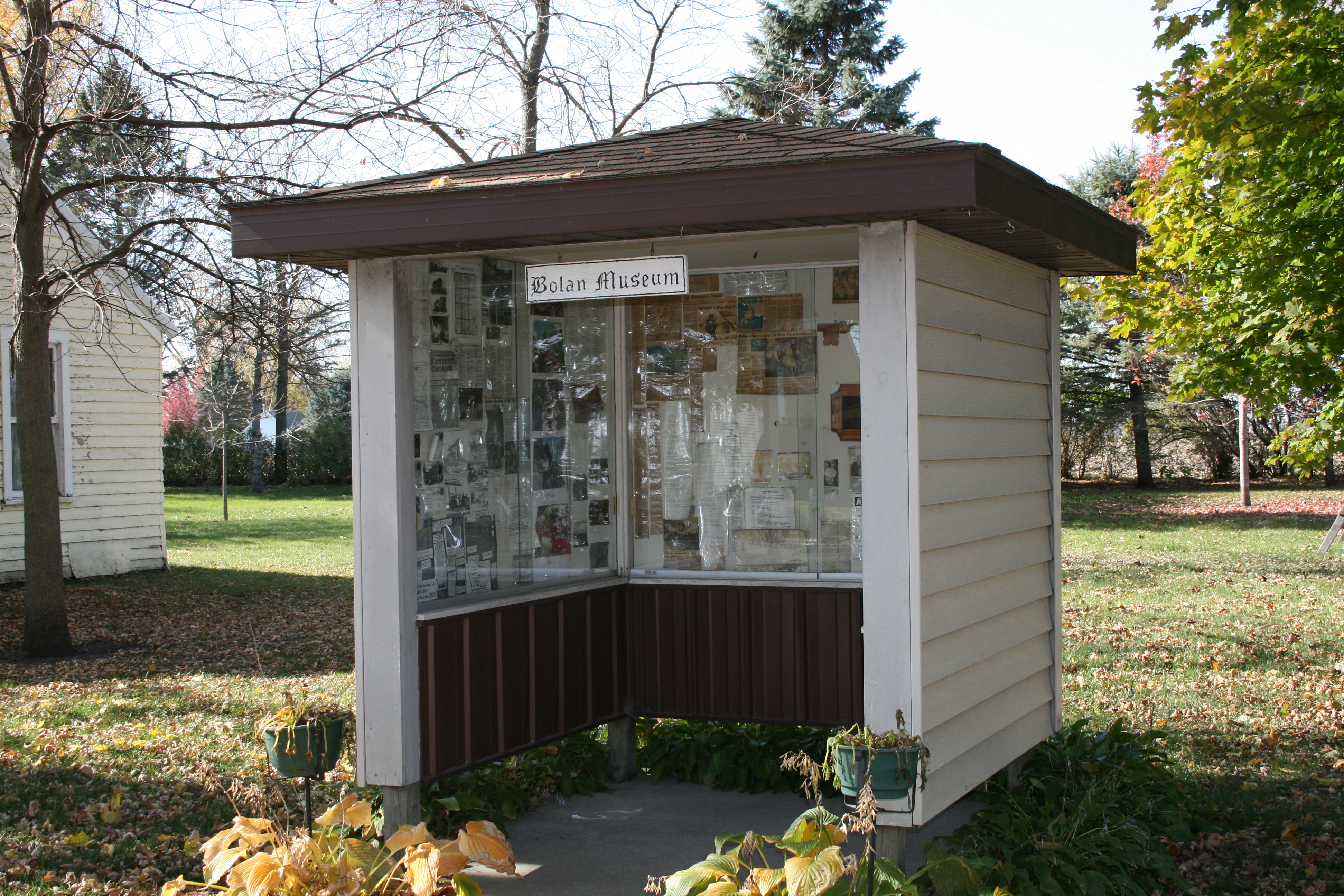
Last weekend I walked the streets of Bolan, Iowa, my great-grandfather’s birthplace for the first time. The town is a single street set amidst fields of corn rich with stands of electricity-generating windmills. It’s a small town – currently a population of 9 – and probably always has been. My great-great-grandparents came to Bolan from Sweden, Scandinavians drawn to the Midwest like so many before them.

I never met my great-grandfather but visiting his town made me feel like I had. The street, buildings, and landscape made this long unknown part of my history tangible, more real than I ever thought possible. Bolan was somehow my hometown, too.

It’s a funny thing for someone like me who writes about history and cares deeply about the past to know so little of my own story. There’s a deep connection that comes from understanding history and the forces that shaped a time and a place. It’s a feeling that once found is hard to shake. When I talk to people about history and why it matters, I often say that you can’t know where you are until you know where you’ve been.

I’m just now figuring out where I’ve been.

Probably the cutest museum ever


Lutefisk Season

LutefiskFall is lutefisk time in the Midwest. Lutefisk is dried cod that has been rehydrated in a lye solution and then boiled or baked. The finished fish, served with butter, salt, and pepper, has the consistency and jiggly-ness of Jell-O. Needless to say, it’s an acquired taste.

Every fall, churches throughout the Upper Midwest hold special lutefisk dinners where Norwegian – Americans (though not exclusively – these dinners attract a wide fan base) get in touch with their heritage. In some families, lutefisk even takes the place of the holiday turkey. Fortunately, most of these dinners also include meatballs, mashed potatoes, lefse (the best part if you ask me), and salad for the lutefisk averse.

Norwegians probably didn’t invent lutefisk but they certainly have a long history of making and eating it. Various stories and legends tell of Vikings Salting and drying fish was an efficient way to preserve food, and many Scandinavians brought their lutefisk with them to America when they emigrated.

Today, nostalgia plays a big role in the annual lutefisk dinner. More lutefisk is probably eaten in Wisconsin and Minnesota than in Scandinavia where most people have moved on from the gelatinous fish. But it plays an important role in Midwestern culture, both as an emblem and connection to a past shared by many of this region’s first European immigrants and as a social and community event.

I know I’ll be there.

Apple Cures

Thomson's Home Healing Guide

American physician Samuel Thomson was a big fan of apples. The founder of his own 19th century medical system, a method of natural, botanic remedies known as Thomsonianism, Thomson prescribed apples for stomach aches and advised mixing emetics with cider for those who needed a little something sweet to help the medicine go down. His medical journal, the Thomsonian Recorder, included articles on planting and tending apple orchards. For cholera, though, apples should be avoided at all costs warned Thomson.

Apples have long played a role in medicine. Even when people wouldn’t eat the raw fruit, they were more than willing rub some apple pulp on their skin or to swallow a tincture containing apples. Apples were prescribed for disturbances of the bowels, lungs, and nervous systems in 12th century Italy. In the 14th century, apple cures often called for apples cooked with sugar and spice, a kind of medical apple pie. Seventeenth century English doctors advised cider for depression, though it may have been the alcohol rather than the healing power of apples that did the cheering.

Thomson likely championed apples because they were natural, not to mention easily accessible to most Americans. Nearly everyone had an orchard in the yard. They also had a long history in medicine. Thomson’s ideas of the healing power of plants and herbs weren’t necessarily new – but he managed to capitalize them so successfully as to present the first serious challenge to regular medicine in the 19th century.

An October Fruit Surprise

Living in Wisconsin, you resign yourself to eating from the small stream of local fruit. Apples, sure. Pears? Check. We have berries – strawberries, blueberries, blackberries, and raspberries – but the season is short and they are often expensive and available in limited supply at the farmers market. There’s a few others (and many wild fruits for foraging if you know where and when to look) but let’s face it: we aren’t Michigan.

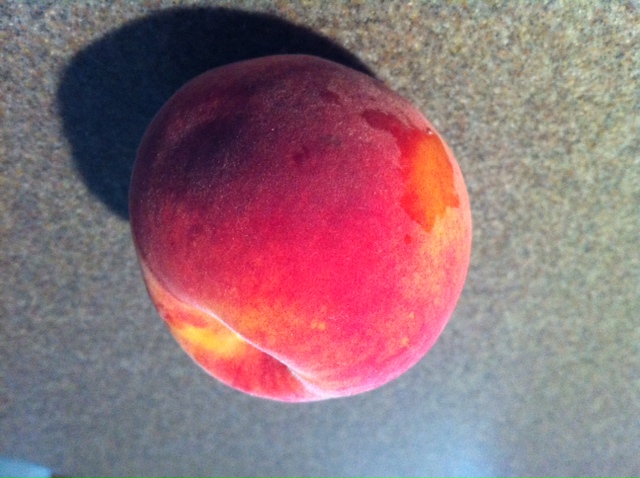
So it was a pleasant surprise to run across bags overflowing with Wisconsin peaches at the farmers market this last weekend. Not only peaches but peaches in October, a month that I tend to associate with the emergence of hardy greens, cabbages, potatoes, beets, and squash. I eagerly bought a sack – and may have elbowed a few people aside in my hurry and delight (sorry, folks) – and rushed back home to dig in.

While I often think of peaches reaching their apogee in southern climates, peaches and apples actually have similar life stories. Peaches are believed to have originated in north China, not all that far from the mountains of Kazakhstan that birthed apple trees. They traveled east, west, north, and south with people and animals. The Romans learned about peaches from the Greeks who had learned about them from the Persians who had first introduced them to the West. In conquering Persia, Alexander the Great took many things from the Persians but one of the most valuable was their love and knowledge of fruit, including apples and peaches.

The Romans even called them “Persian Apples” for the Persians who loved them and likely “apples” for their round shape (many round fruits and vegetables have been called “apples” at some point, from cherries and avocados to eggplant). The Spanish fell particularly hard for the peach and brought it to the Americas, where Native Americans are widely credited with spreading peaches across the continents… and even to Wisconsin, I suppose.

Known Brussels Sprouts Lover

I’ve certainly never hid my devotion to brussels sprouts. But I hadn’t realized how widely word had spread until I crossed paths with the friendly owner of a local restaurant I happen to love. He smiled, said “nice to see you,” and then: “the brussels sprouts salad will be back on the menu very soon.”

Caught.

Lunch today. I may have a problem.


All Cider was Hard Cider

Before refrigeration, all apple cider was hard cider. Apples crushed to the point of releasing their juices quickly become a fizzing, cloudy fermented brew.  What we think of as apple juice had a limited lifespan – drink it now or face it’s alcoholic dark side.

But that was okay because most people wanted cider. Cider was the drink of choice for men, women, and children for centuries. It was easy to make at home and provided a way for families to store the apple harvest without spoilage. Cider was also safer than water in many places, and could be made into vinegar for preserving vegetables and fruits for the winter. It really was a useful liquid.

Apple juice only became common with refrigeration in the late 19th and early 20th centuries. The sweet juice was helped along by temperance advocates who decried the dangers of drinking fiendish cider, demon rum’s evil, fruity cousin.

Americans only began calling alcoholic cider “hard” in the 20th century when the sweet juice ascended to the apple drink of choice. Today, cider and apple juice are used almost interchangeably in the United States (some people do have specific beverages in mind with each word but there’s no consensus on what each mean), while alcoholic apples get the moniker “hard.” In most other countries, cider – without qualifiers – still refers to fermented apple juice.