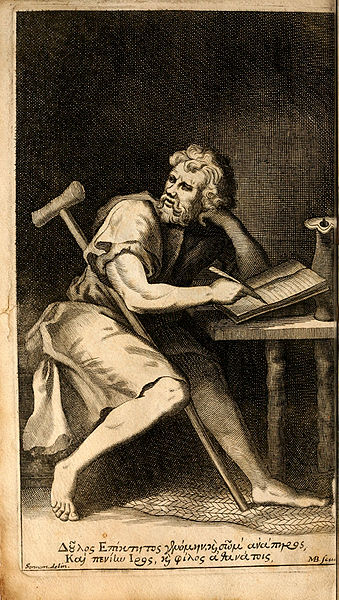
Thought for the Month (Thanks, Epictetus!)

Source: Wikipedia

Source: Wikipedia

“Take care not to casually discuss matters that are of great importance to you with people who are not important to you. Your affairs will become drained of preciousness. This is especially dangerous when you are in the early stages of an undertaking. Most people only know how to respond to an idea by pouncing on its shortfalls rather than identifying its potential merits. Practice self-containment so that your enthusiasm won’t be frittered away.”
– The Art of Living: The Classical Manual on Virtue, Happiness, and Effectiveness  by Epictetus

Epictetus is my kind of guy. Besides accurately summing up something I think about all the time far better than I could roughly 2,000 years ago, he believed philosophy should serve the practical purpose of leading people to better lives. I love that idea, even if applying a universal definition of “better” to individuals seems inherently problematic.

Even so, I’ll take it. Our passions and enthusiasms are precious things worthy of protection and celebration.


Self Perceptions, Past and Future

A few weeks ago, I read John Tierney’s story “You Won’t Be The Person You Expect To Be.” As a historian, I’m often asked to predict the future of [insert contentious issue of the day] during talks. I generally demur, proclaiming my devotion to the PAST and not to the future, though I certainly believe the past has much to teach us about the present and days to come. Even so, the future feels like scary ground to me. I’ll continue to happily cling to my yellowed papers and remark on how some current event “reminds me of the time…” and then launch into some historical story that I’ll hope you’ll find interesting.

But forget about the fate of the world for a second. How much can I predict about myself? I’d certainly like to think, as we all do (wrongly) according to the article, that I haven’t changed and won’t change all that much as I age.

A few days ago, my mom gave me a paper she found while cleaning my old room. It was a time capsule, written as a class assignment on September 24, 1992, when I was 12 years old. In it, I predicted my future life at 32. I’m only a few hours out of 32 and into 33 as I write this, but to put it bluntly: I was so very wrong. Here we go:

Description of myself in 20 years:

Age: 32

Height: 6’2”

Residence: A house with 700,000 square feet and 23 bedrooms and a pool 8 times the size of the Olympic pool in England.

In twenty years, Erika will… I will be playing 1st chair clarinet for the London Philharmonic and be internationally known. Since I will be filthy rich, the first thing I will buy after my house is a red Miata for my dad and another for my mom. I will also buy my own side paddle boat that my big band will play on.

The whole thing made me laugh. I don’t even recognize the person who wrote this. I do remember wanting to be taller than my dad; I was really into playing the clarinet; and I’m an Anglophile from way back. But the rest? I don’t know. This is not the person I’ve become and it’s hard for me to imagine wanting all this. I’m a bit shorter, my house is many magnitudes of square footage smaller, my boat is a kayak, and I have, alas, put aside my clarinet.

It’s strange to think what assumptions my 12-year-old self had about my path, what I knew about myself then and what I thought would still be (or become) important to my adult self. I can laugh at my greed and materialism (though come on, I was going to give each of my parents a sports car) but there’s also something comforting in seeing how much I’ve grown, changed, and learned in the last 20 years. I’m not at all on the path I predicted, at 12 years old or even 30 years old. And I think that’s pretty great.

So next time anyone asks me to predict the future, I may refer them back to my tween prognostication. I’ll stick to the past, thanks, and leave the predicting to someone else.


A Toast to a Poet

There’s something kind of wonderful about a place that celebrates a long-dead and, frankly, difficult to understand poet with a feast. But that’s Scotland for you.

It’s true that I’m a bit of a Scotland obsessive (sorry to those who have endured my carrying on) so perhaps my accolades mean little. But seriously, a poet?! And one who died in 1796? I just can’t get over it. But celebrate people do. And not just in Scotland.

Every January, people around the world pay tribute to Scotsman Robert Burns through the Burns’ Night Supper on or around his birthday of January 25th. Among his many works are that old New Years’ chestnut “Auld Lang Syne so even if you don’t think you know the name, you probably know his work.

You can find Burns’ Night Suppers everywhere. We went to one here in Wisconsin. And there’s one in Vancouver that combines Burns’ Night with Chinese New Year to make probably the most amazing food event ever: Gung Haggis Fat Choy.

The centerpiece of a Burns’ Night meal is haggis (or the veggie haggis that I made), or as Burns called it the ‘great chieftain o’the puddin’-race.’ The haggis isn’t just set on the table. No, it is “piped in” on a platter to the music of bagpipes during a procession. Then someone reads “Address to a Haggis” followed by a toast to the haggis. Seriously, everyone keeps a straight face (well, mostly).

Besides haggis, there’s neeps and tatties, soup, and dessert. This year for dessert, I made a clootie dumpling, a fruit-studded pudding boiled in a cloth. Sound strange? It is but it tastes delicious.

clootie dumpling

clootie dumpling

The whole thing is delicious really. Food, prose, and piping, and all in tribute to a poet.


Applejack Season

Source: Wikipedia

Source: Wikipedia

A few months back, the editor of a new drinks magazine out of Scotland called Hot Rum Cow contacted me to talk applejack for the next issue of his magazine. How could I refuse him? Apples? Scotland? I’m in. We had a great chat and the issue is now out (preview here).

Seeing the story (in an issue dedicated to cider) reminded me that winter is prime applejack season. Applejack is hard cider’s burly cousin, the one with an edge that breathes fire, particularly in its colonial American incarnation.

Early Americans made applejack at home. In the winter. They would fill a barrel with cider in the fall and then leave the barrel outside to freeze. As the water froze, they would skim off the slush leaving the alcohol behind. A few times through this freezing process yielded a highly potent and potentially dangerously impure drink behind. How dangerous? Some referred to applejack as “the essence of lockjaw.”

Applejack like hard cider was vital to colonial life. Apples grew where grains and grapes did not. Everyone had an orchard, and turning apples into alcohol was an efficient and easy way to preserve a harvest too large to consume as whole fruit. Applejack even helped to fuel revolution as Laird (the oldest commercial distillery in the U.S.) supplied George Washington and his troops with applejack.

Today, of course, distillers use more controlled methods of making applejack so we can drink without fear. And thankfully, there’s more of it to drink as applejack seems to be benefiting from the cocktail boom.

There are so many places that brag that George Washington rested his ponytail on their beds – it seems far cooler to me to say you drank what George drank.


Snake oil

You’ve heard of snake oil, right? It’s one of those phrases I heard and read for years without giving much thought. Snake oil means fake, fraudulent, bad – I took it in without really taking it in. I mean, what is snake oil exactly? And why snakes? Why not pig or frog oil? Fish oil? Now that’s a good oil. But snakes? That’s just bad medicine.

Popular lore equates patent medicines with snake oil. Most patent medicines did not literally contain this reptilian liquid. But some did.

Stanley's snake oilSource: Wikipedia

Stanley’s snake oil
Source: Wikipedia

Clark Stanley, better known as “The Rattlesnake King,” likely inspired the association with his “Snake Oil Liniment,” which cured everything from rheumatism and sciatica to lumbago, frostbite, and sore throat. Stanley claimed to have learned of snake oil’s healing powers from his years as a cowboy out west with the Hopi Indians in the 1870s and 1880s. He shared his discovery with the public at the 1893 World’s Columbian Exposition in Chicago where he pulled live snakes out of a sack, slit them open, and plunged their bodies into boiling water. As the fat from the snakes rose to the top of the pot, Stanley skimmed it off, mixed it with his previously prepared oils, and sold his liniment freshly prepared to the crowd that gathered to watch the spectacle.

A few years later, in 1897, he published The Life and Adventures of the American Cowboy: True Life in the Far West by Clark Stanley, Better Known as the Rattlesnake King, which explained cowboy life, contained lyrics to cowboy songs, and of course, promoted the healing wonders of his snake oil liniment. Stanley’s liniment became so successful that a reporter who visited his office in Beverly, Massachusetts, found it filled with snakes, some more than seven feet long. He claimed to have killed 3,000 snakes in 1901 alone to meet demand for his product.

Stanley’s was not the only snake oil remedy on the market. Consumers could also find Tex Bailey’s Rattle Snake Oil, Tex Allen’s Rattlesnake Essential Oil Compound, and Monster Brand Snake Oil, among others, that capitalized on American fascination with cowboys, the Wild West, and Indians.

Snake oil itself had an even longer history in Chinese medicine where people had rubbed the fat of the Erabu sea snake, not rattlesnakes, on aching joints for centuries. Stanley may actually have learned about snake oil from Chinese laborers in the West rather than the Indians as he professed. [1]

Either way, Stanley (and others like him) made snake oil a popular fixture in both the pharmacy and our language.


[1] James Frank Dobie, Rattlesnakes (Austin: University of Texas Press, 1982), 75-76; Dan Hurley, Natural Causes: Death, Lies and Politics in America’s Vitamin and Herbal Supplement Industry (New York: Broadway Books, 2006), 1-2; Gene Fowler, Mavericks: A Gallery of Texas Characters (Austin: University of Texas Press, 2008), 97-100; Joe Schwarcz, “Why are snake-oil remedies so-called?” The Gazette [Montreal] (23 February 2008), http://tinyurl.com/d7tcfbc


Out on the Ice

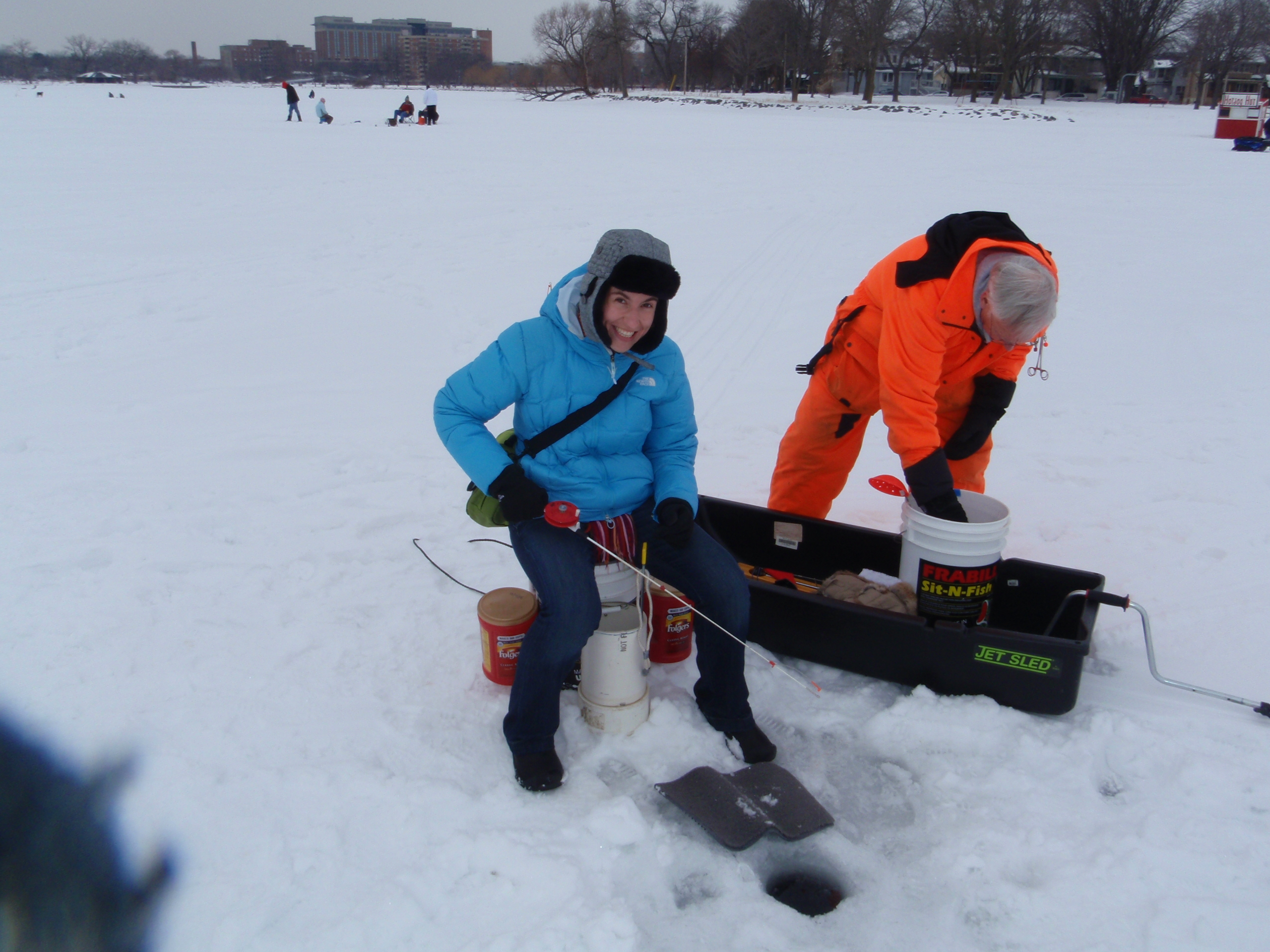
My first step is cautious and distrustful. In front of me are dozens of fishing shacks. Even more fishermen – and they are mostly men – casually stroll around as though they walk on solid earth rather than the frozen top of Lake Monona. The blinding glare from the snow and ice in the winter sun is matched by the glow of the blaze orange snowsuits that constitute ice fashion. Swallowing hard, I step out to join my husband in the crowded metropolis atop Monona Bay.

OLYMPUS DIGITAL CAMERA

In the winter, a city-within-a-city forms in Madison, a kind of wintery Christiania fueled by cans of Miller Lite and cases of Leinenkugels. Ice fishermen take to the bay as soon as the ice forms and remain there long after it seems safe to do so. It’s not unusual to take John Nolen Drive on an odd 70-degree weekend in early April and see fishermen wading through the melt of winter’s remains, clinging to their poles and swinging a 5-gallon bucket. With your car windows down breathing deeply of the warm air, the sight of ice fishermen shatters the reverie, reminding you that spring rarely arrives in Wisconsin before late May.

That morning, our friend John had pulled up to our downtown condo in a blaze orange snowsuit behind the wheel of a Jeep. I’d never seen him in anything but his white doctor’s coat. Originally from Hawaii, John had taken to Wisconsin with gusto, and he was eager to show us the ins-and-outs of his favorite winter pursuit.

Like any city, the ice shack community offers its own amenities. Not the least of which is the camaraderie built of hours staring into a hole and jiggling a fishing line. Portable televisions trick out the more luxurious shacks while other people, usually sitting on buckets or in camp chairs, make-do with a scratchy radio signal. But there’s also a hot dog stand.

John helps me find a spot, and I hand-auger a hole through the ice. It’s just as hard as you imagine, and despite the cold, I find myself red-faced, sweaty, and quickly passing the device on to my husband to finish. He also threads the still-wiggling maggot on my hook, his normally placid – despite – what – his -wife – thinks – are – disgusting – bugs – and – critters face screwing up at the task.

The view from atop my overturned bucket is among Madison’s finest. The whole of downtown spreads before me  – the soaring capitol dome topped with the gold Lady Wisconsin statue that so many people mistake for our other lady, Lady Forward, at the capitol’s base; an early 20th century minty-colored boathouse; and the Jetsons-meet-Frank Lloyd Wright Monona Terrace  – strung out along the shoreline of Lake Monona. A similar cityscape is visible from the car on John Nolen Drive and is the one you take new visitors to see, but it passes too quickly to really enjoy at 45 miles per hour.

The real prize, though, is the open expanse of ice. It stretches for a few miles in each direction, broken only by sections upheaved by ice quakes. In a city of familiar streets, a new piece of terrain to explore, albeit temporary and often bitterly cold, is the real magic of the season.

After two hours on the ice, I’m freezing. Walking back toward shore, I smile at the hardier fishermen who got there before me and will leave long after. Nothing about ice fishing seems urban yet here I am, in the middle of Madison clinging to a pole and swinging my bucket.


The End of the World

Some believe the world is coming to an end today.

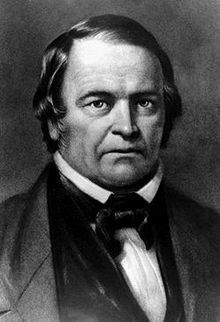
We’ve thought this before. In 1844, William Miller saw the apocalypse predicted in scriptures. A farmer in upstate New York (a center of the revivalist spirit), Miller used Biblical prophecies to calculate the second coming. He offered a new interpretation of the Book of Revelation, arguing in contrast to others that the events it described had yet to happen (earlier readings had seen these events happening in the past). Further reading led him to believe that Christ’s Second Coming was “near, even at the door, even within twenty-one years, – on or before 1843” (Sylvester Bliss, Memoirs of William Miller, Boston: Joshua V. Himes, 1853, 79).

Miller gained a following through his book, Evidence from Scripture and History of the Second Coming of Christ, About the Year 1843,  and lectures. At its peak, his followers, known as Millerites, numbered more than 50,000. Some of his most zealous followers fixed a precise date for Christ’s return: March 21, 1844. When that date passed uneventfully, they recalculated and put forth a new date: October 22, 1844. That day, too, passed anticlimactically and came to be known as “The Great Disappointment.”

The Millerite movement mostly broke up after these events. Many returned to their former churches while still others formed the new Advent Christian and Seventh Day Adventist churches. And another group under the leadership of Benjamin Hall migrated west from Massachusetts and founded a successful religious colony

William MillerSource: http://en.wikipedia.org/wiki/William_Miller_(preacher)

William Miller
Source: Wikipedia

in Germania (Marquette County), Wisconsin. It thrived for more than fifty years.

Why Your Ancestors Settled in Cold Places

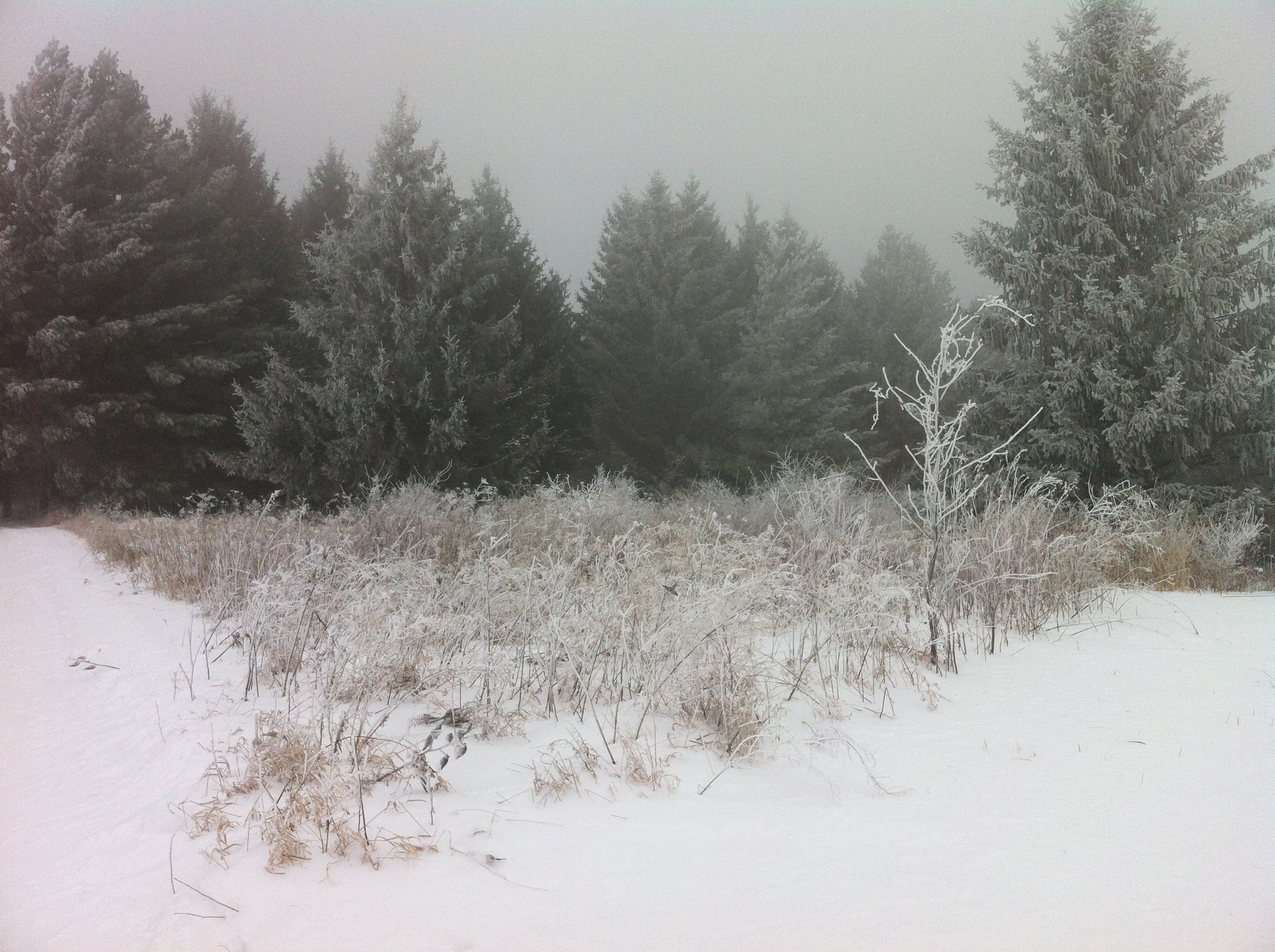
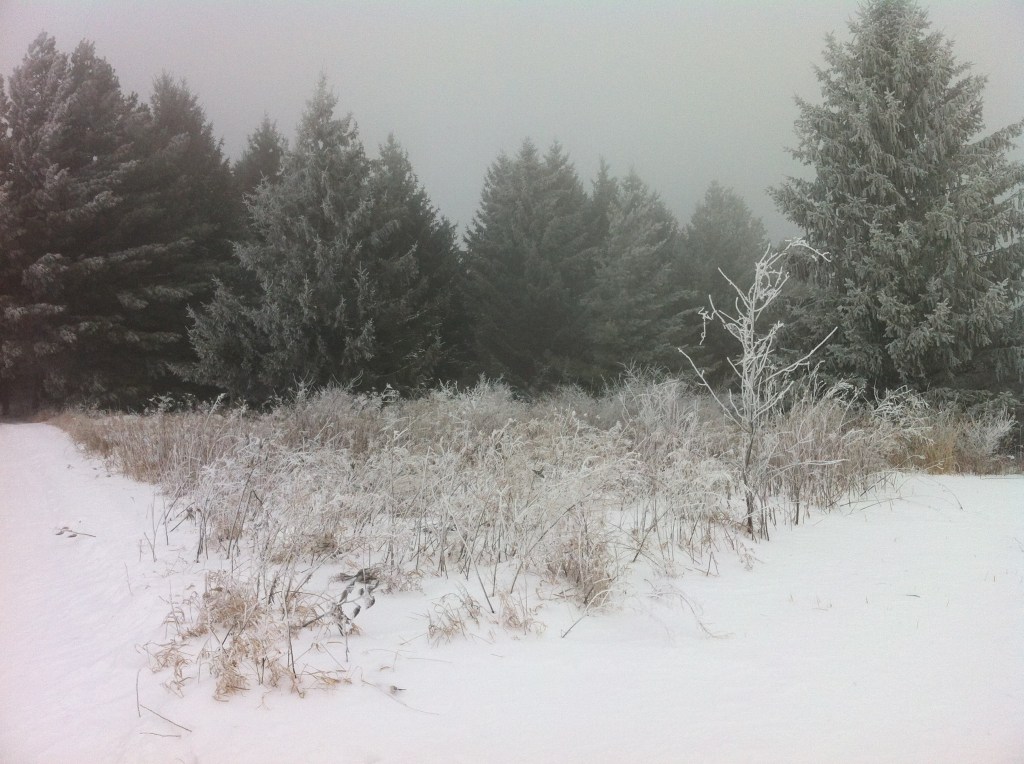
Hoar frost at Blue Mounds State Park last winter

Hoar frost at Blue Mounds State Park last winter

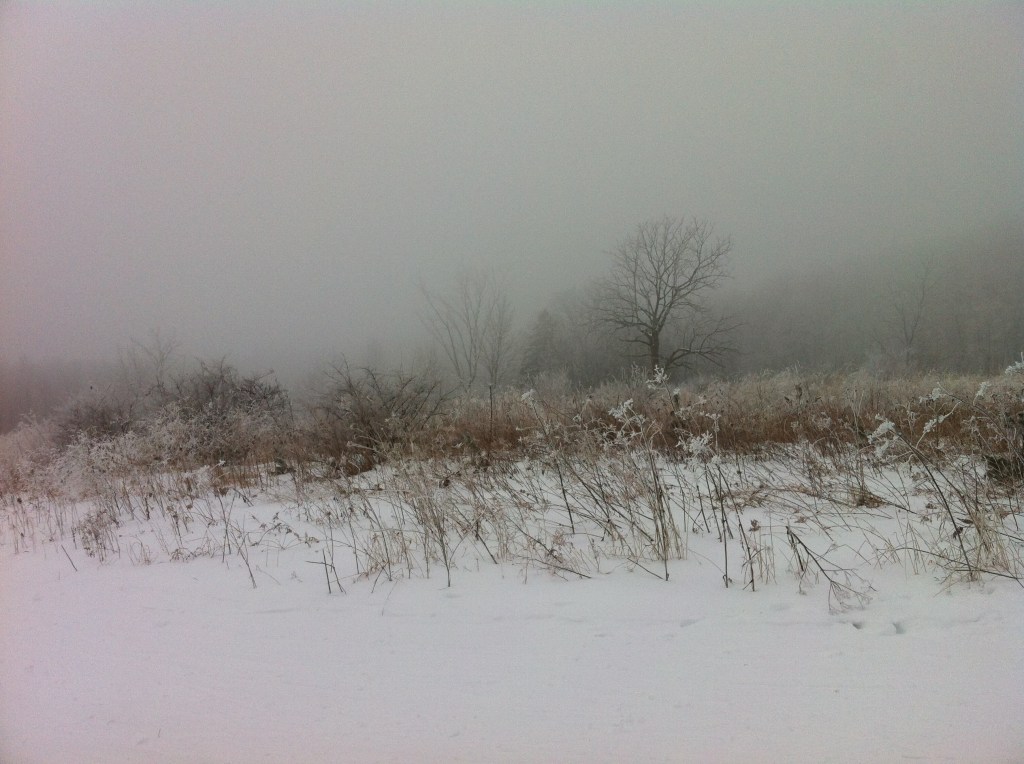
The earliest account of a Wisconsin winter was written by fur traders. In 1659, Pierre Esprit Radisson and his brother-in-law Sieur de Groseilliers spent the winter near Lac Court Orielles with the Hurons and the Ottawas. With the ground frozen solid and the snow six feet deep, food was scarce. They first ate tree bark that they boiled for 2 hours to make it soft. Then, they ate their dogs. It was so cold that several of them died from exposure. Ten years later, Jesuit Father Claude Allouez complained of bitter cold that he said literally almost froze his nose off. This certainly wasn’t Wisconsin’s first – or last – harsh winter, though.

The winter of 1881 was also really bad. That’s the year Laura Ingalls Wilder made famous in her book The Long Winter. In February, train service in and out of Milwaukee stopped, stranding city residents for four days. Snow cut Pewaukee off from the rest of the state for two weeks and snow in New Berlin reached 11 feet in open fields. The only people who got in or out were hardy young men known as the “Snowshoe Express” who carried news on foot from town to town.
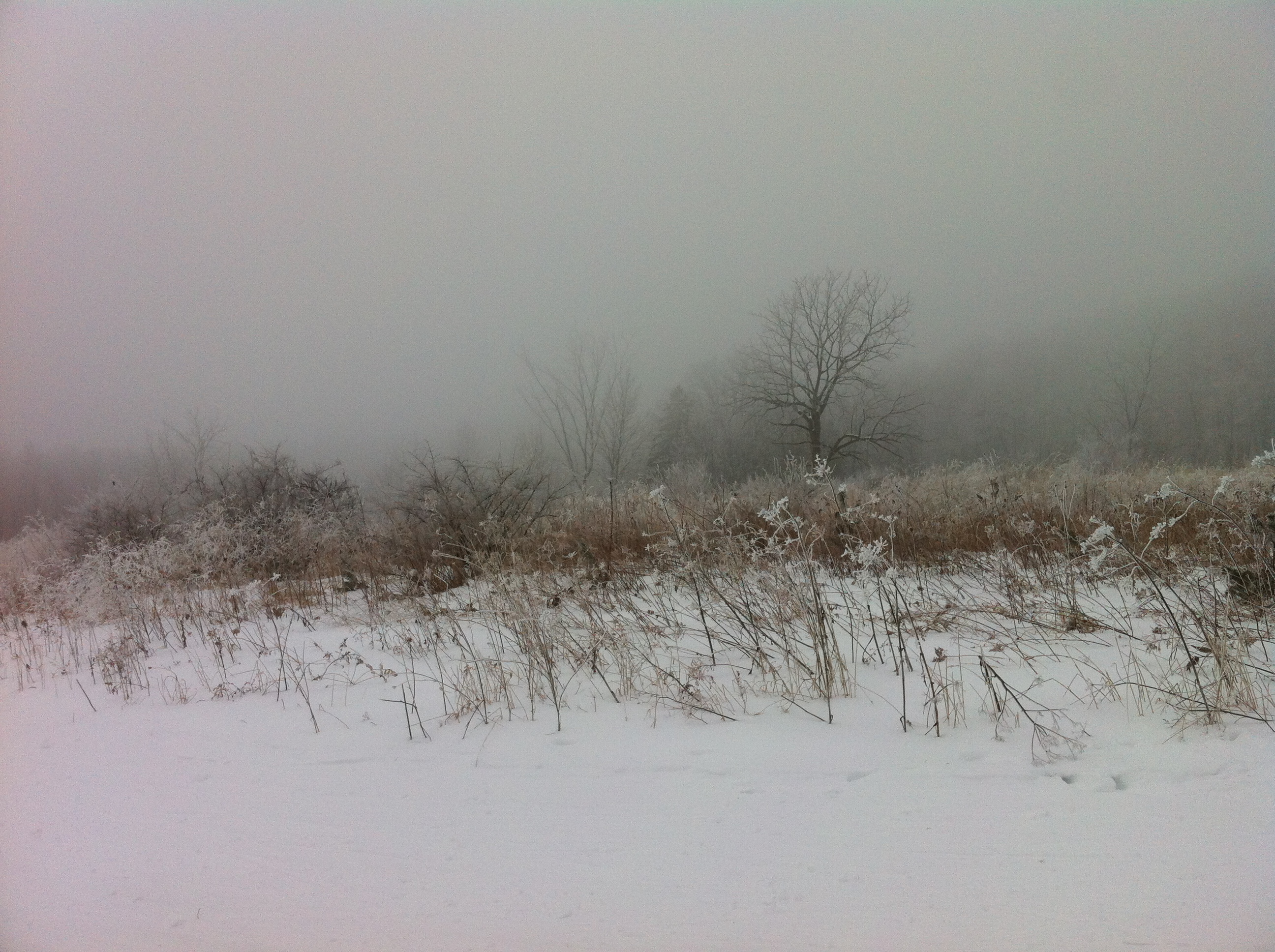
2012-01-22 13.54.45

And yet despite all this, people still came to Wisconsin to live. Hundreds of thousands of them. After one winter, wouldn’t you have kept going?

It certainly helped that most of Wisconsin’s early settlers and immigrants came from cold places themselves. Was the winter in Wisconsin really any worse than the winter in Norway or Germany? Or how about upstate New York?

The warmer options were also a bit more limited until the late 19th century. Arizona, that favorite state of snowbirds, didn’t even become a U.S. territory until 1863. Texas wasn’t sure if it wanted to be a state or an independent republic until the mid-19th century. Things were a bit more settled in the north.

And the south had its own dangers, too.  You might freeze your nose off in Wisconsin, but at least you wouldn’t die of yellow fever or malaria. So there were actually a few advantages to living in a climate cold enough to kill off the mosquitoes that carried deadly diseases.

Most important of all, though, Wisconsin had the right look. The rolling hills west of Madison attracted Norwegians who were struck by the area’s resemblance to southern Scandinavia. The Swiss loved the green hills of what is today Green County.  Of course, anyplace might look inviting to people who’d been crammed on the lower decks of a ship for six weeks. But countless letters home described a new Wisconsin place that recalled a beloved landscape back home.

Some immigrants were foolishly optimistic about the weather, though. In 1848, German immigrant Dr. Bock predicted that since Wisconsin was at the same latitude as Italy, he was sure the sun would melt all the snow in his new home in just a few days.  Bock’s illusions were quickly shattered his first winter.

Others, like Albert G. Tuttle of Connecticut, who came to investigate Wisconsin for a possible move, found January to be bitterly cold but assured his wife that December had been the “pleasantest month of that name he had ever seen.”

And maybe that optimistic view of winter—that this one won’t be so bad—is part of what brought people here and why they stay. Winter is part of what it means to live in Wisconsin (and all northern places). We take a certain amount of pride in our ability to survive it. We thrill in our experiences getting home in blinding snow. And laugh at other places in the country where an inch or two of snow incites panic and citywide shutdowns (looking at you, my hometown of Seattle).

So thank your ancestors for settling somewhere cold. They may have kept your bloodline safe from yellow fever, and they’ve given you plenty of reasons to feel superior to those who live in wimpier climates.
 

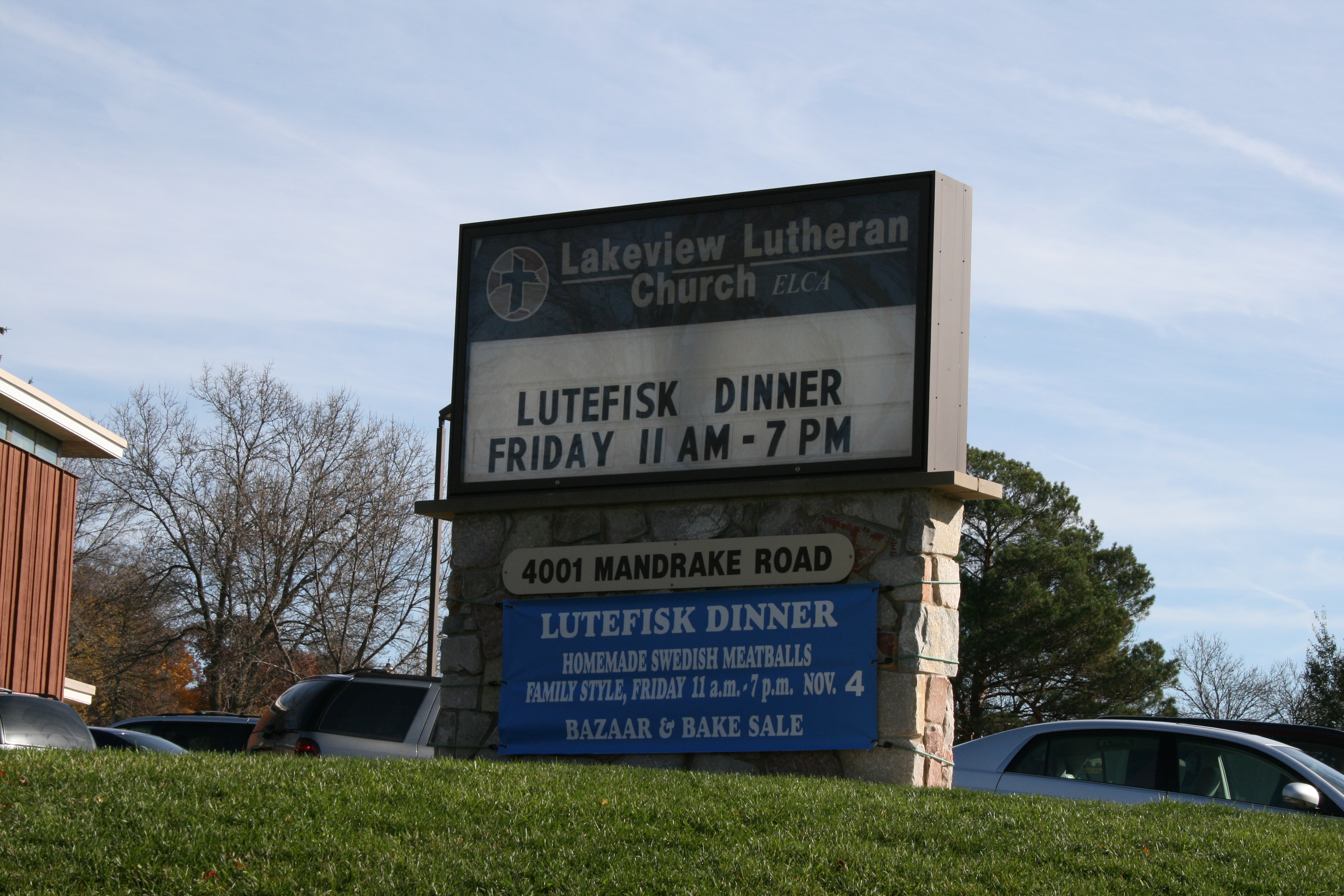
Feasting on Lutefisk

You may think there’s only one traditional fall feast … but you’d be wrong. Meet the lutefisk supper, a fall and early winter tradition in the Upper Midwest. You can find these pungent fish meals in church basements, community centers, and unsurprisingly, at Sons of Norway lodges all over Wisconsin and Minnesota.

2011 Madison-102

Lutefisk chef - a very smelly job

Lutefisk chef – a very smelly job (note the plastic-covered walls – this is a smell you don’t want to linger)

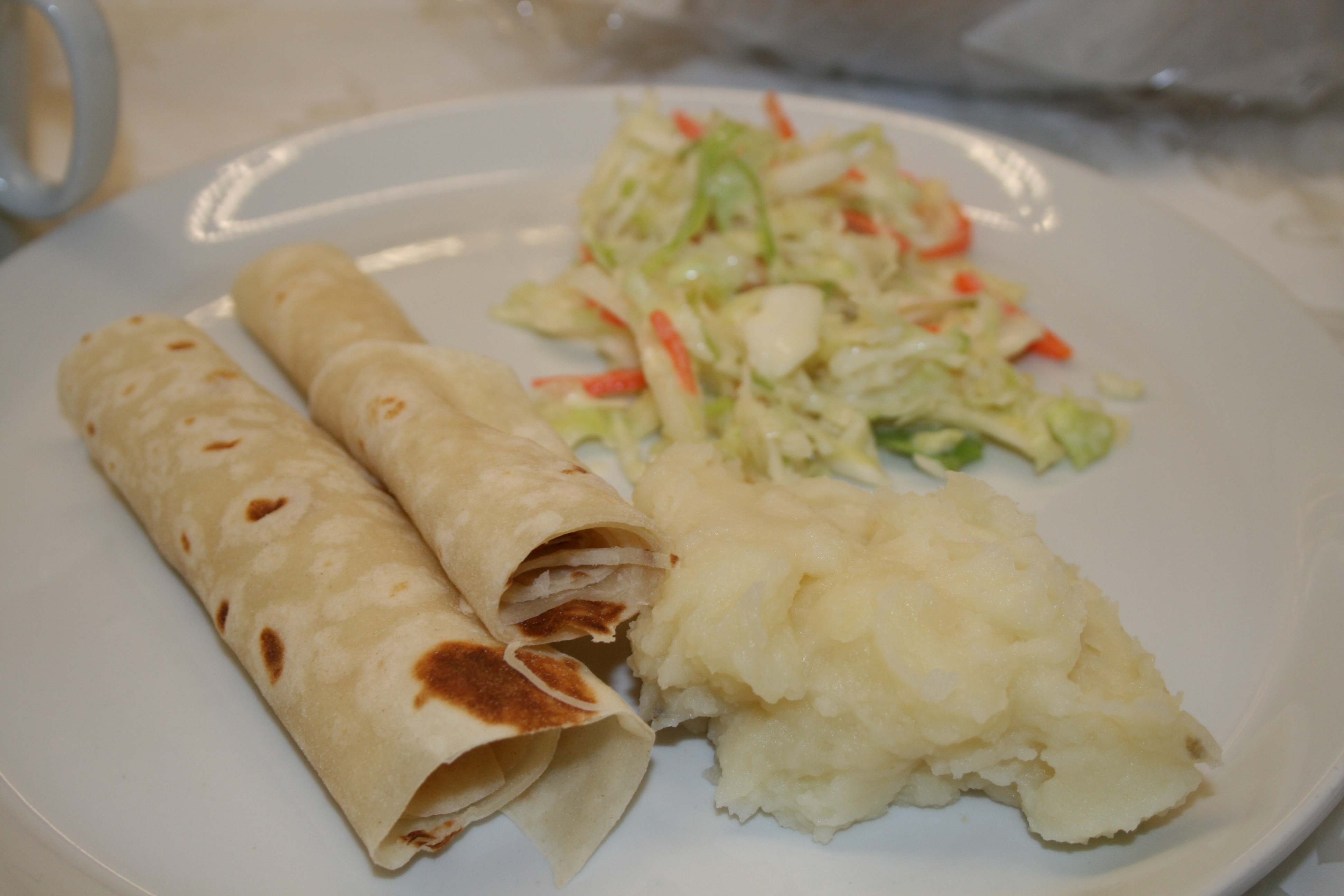
Personally, and despite my Scandinavian heritage (don’t tell anyone), I don’t go in for the jiggly lye-soaked cod drenched in butter. Some might say it’s an acquired taste. I’m just there for the lefse. Rolls of it, piled high in pyramids on plates at both ends of the table. A little cranberry sauce spread inside or some butter and sugar, and I’ve got all the tradition I need.

Lefse! Now we're talking!

Lefse! Now we’re talking!

Read my story on the culinary tradition of the lutefisk supper on Smithsonian.com

Little Free Libraries

A Little Free Library in Canada

Have you seen one? Have you used one? Found anything you treasure? The Little Free Library project is the subject of my latest piece in the current issue of On WisconsinIt’s an inspiring project that has taken the world by storm. There’s at least one on every continent save Antarctica (and who knows – maybe there will be on there soon!), and what seems like nearly every street in Madison. These boxes never fail to make me smile – and have become real neighborhood builders all over the world.

[Apologies for the short shrift on the blog of late – book deadline approaching!]