Taste Lost and Found

One Memorial Day weekend, I lost my sense of smell.  Bad colds sometimes do that to you. But this was different. Two weeks later, my cold was gone but it had apparently delivered a knockout punch to my nose.
A ten-beer sampler at a local microbrewery tasted like ten variations of faintly flavored water. Ice cream was cold but nothing more.
A month later.  Still nothing.
There’s no good time to lose your sense of smell, but summer is the worst. I’d waited all year for the short window that yields tender stalks of my favorite vegetable, asparagus. Juicy corn and chin-dripping tomatoes awaited me finally, after months of what I refer to each year as our “orange period:” dinners consisting of sweet potatoes, squash, rutabagas, and carrots, the upper Midwestern winter staples, in dozens of iterations.
For me, summer is a smorgasbord of flavor and variety. Our weekly CSA box brims with vegetables that appear, like a Broadway star, for but a few weeks only. But without my nose, it became the year without summer.
Anosmia is the medical name for loss of smell. It affects millions of Americans, some temporarily and others permanently.
Taste is dependent on smell. When food is chewed, odors travel to the back of the mouth where a properly functioning olfactory system translates them into flavor. A malfunction can cause taste to remain intact—that is, the mouth can distinguish temperature, texture, and among sweet, salty, sour, and bitter. What’s missing is flavor—the sense that lets you savor the chocolaty undertones of your stout beer and the tang of tomato salsa. Sometimes the smell and taste loss can be restored if it is linked to a specific problem like diabetes. But if the loss resulted from olfactory-nerve damage from a head trauma or, in my case, a viral infection, there is no reliable cure, save for time and hope that the nerves will regenerate.
Slowly, my sense of smell came back. An overall blandness yielded to subtle shades of salty and sour. By early fall, eating had become almost fun again.
But not everything was right. The rewiring of my olfactory nerves had a faulty connection.
Washing my hair with some orange-scented shampoo one morning, I felt nauseated by the smell. Citrus, but particularly oranges, had become disgusting in my newly reordered brain. After months of not smelling them at all, oranges came rushing back at me with a vengeance.
I avoided them at first. It’s easy to do when you live in Wisconsin and try to eat locally. But orange-scented products and orange wedges in drinks and garnishes appear in a surprising number of places and had me running for the door.
I thought maybe I could retrain myself to like oranges. I’d “trained” myself to eat other things by introducing them regularly into my meals, like raw tomatoes. I drank small sips of orange juice for a week, screwing up my face in disgust with each swallow and shoving the glass across the table to my husband to finish. I ate orange wedges and garnishes, choking them down one bite at a time and chasing them with water to drown out what had insensibly become a horrible flavor.
And it actually worked. Almost a year later, I could drink a small glass of orange juice and eat an orange wedge without feeling nauseous. I still don’t order orange juice for breakfast and I can’t remember the last time I ate a whole orange, but I know that I can now. And maybe someday, I will.
Every Dairy State Needs a Queen

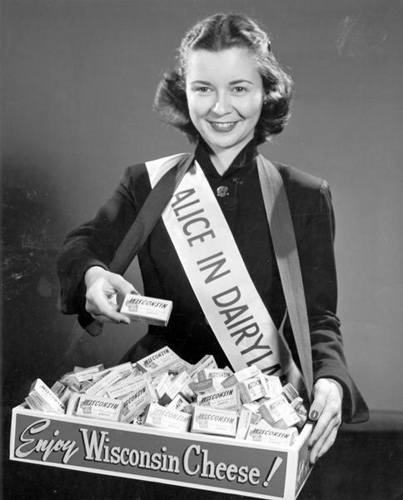
June in Wisconsin means June Dairy Month. That’s right, “America’s Dairyland” has a special month devoted to dairy. It’s perfectly reasonable to think this unnecessary since isn’t every month about dairy in a state that has chosen to label itself as such? Well, no, apparently it’s not enough. We need to have dairy farm breakfasts all over the state, to put cows up by the state capitol, and to have the opportunity to meet Alice in Dairyland, Wisconsin’s dairy royalty.

Alice in Dairyland peddles cheese

I recently recorded an essay for “Wisconsin Life” about Alice, linking these agricultural queens to fertility goddesses of yore (thankfully, I didn’t actually use the word “yore” in my story). Sure, she began as a kind of beauty queen but the role has evolved into more of a marketing job. You can’t just represent dairy anymore–you actually have to work for it.

Talking about Alice at work, a coworker wondered why there’s no male dairy royalty. Perhaps Albert in Dairyland? I wouldn’t want to unseat Alice from her absolute reign so perhaps he could be a consort ala Prince Philip, Duke of Edinburgh?

Food & Think

I had the great pleasure of having one of my pieces featured on the Smithsonian’s fantastic food blog Food & Think on Monday. It’s funny how a prompt– in this case “the most memorable meal of your life”– can bring back memories in a flush of sights, sounds, and smells. And just thinking about my meal made the whole month I spent in England come back in more vivid detail that it might have had someone just asked me to tell them about the time I spent in London 11 years ago.

Something I didn’t include in this piece was my memory of one weekend dinner in the Zebra Club. The thuggish Eastern European chef must have had the night off so dinner that night was both made and served by the regular waiter, whose name I wish I could remember. I do remember that he was from Serbia and that he bore a slight resemblance to Mr. Bean. He took our order–pasta or meat, as usual–and then headed back into the kitchen.

From my place at the table, I could see through the round window to the stove.  Through that portal I saw the Mr. Bean-waiter ignite something that resulted in tremendous flames–they were literally 18 inches high and looked like they could easily singe his eyebrows off. Did I mention I ordered pasta?

Twenty minutes later, he emerged from the kitchen with our bowls of rubbery pasta. Everything looked normal: or as bad as what had become “usual” by this point in the trip.

I never discovered what the flames were about. We tried asking but he seemed confused by the question. Perhaps he had hoped no one had seen. He wanted to keep those flames to himself.

Hair of the Dog

Having a morning drink after a night of too much drinking is one cure for a hangover. Although it’s unlikely that “hair of the dog” works, the idea of treating yourself with what caused the problem in the first place is a homeopathic idea.

One of the primary tenets of homeopathy is that like cures like. The right treatment for an illness is the treatment that produces the same symptoms in a healthy person. So if you have a headache, whatever herb or drug causes a similar headache in a normal person is the right treatment. This idea forms the foundation of homeopathy.

Homeopathy was an extremely popular medical movement in the 19th century, rivaling orthodox medicine for supremacy. A big part of its appeal was its simplicity–you could buy a homeopathy kit that would help you match symptoms to treatment–and the minimal pain inflicted by its therapies.

At the time, many doctors and patients believed that a drug needed to cause a lot of pain to be effective. How else were you to know that it was working if you weren’t bleeding or passing out? Homeopathists proposed an alternative: that drugs don’t have to hurt to work. Homeopathists treated patients with very small doses of medicine diluted at least 30 (and often many more) times. While many critics derided the use of small doses, claiming that they could never treat anyone, homeopathists at least knew that they were causing no more harm. The same could certainly not be said of regular doctors and their regimen of bleeding, puking, blistering, and sweating.

Homeopathy also claimed some successes in treating people during cholera epidemics in 1832 and 1849, leading many regular doctors to defect to homeopathy. Cholera sufferers got small doses of camphor and were urged to seek out clean air and water. While homeopathy may have done little to cure these people, they also didn’t cause more pain to people already suffering as bleeding, blistering, and sweating likely did.

Homeopathy fell out of mainstream favor in the 20th century, but some of its ideas live on in things like “hair of the dog.” Homeopathists didn’t invent or even endorse the idea of treating a hangover with alcohol, but the idea of like curing like is imbedded in that urban myth. Homeopathy also changed our view of what medicine is supposed to feel like. Today, we look for drugs with few side effects, not the painful, visible signs of treatment from the past.

New Domesticity

When you dive into the past, especially the history of women, you won’t go far before you run smack into the idea of domesticity. Domesticity belonged to women–the word encapsulated both what duties women had and the ideal of womanhood in the 19th century. Women were to be pious, pure, domestic, and submissive. A woman’s place was in the home, taking part in tasks and chores that maintained and fulfilled her piety and purity. Housework was one such “uplifting” task.

The idea of domesticity arose in the early 19th century when the growth of new industries, businesses and professions created a new class of Americans: the middle class. This new middle class did not have to make what it needed to survive. Men produced goods and performed services outside the home while women and children stayed home. A man going off to work out in the rough public world served to create the view that a man alone could support his family. Women were far too delicate to be out in the world. They needed to stay home and make the home a refuge for men from the unstable, immoral business world.
Even as more women moved out of the home and into the workplace in the 20th century, many of the ideas of domesticity and the equation of women with domestic work remained.

All of this was on my mind recently when I read a piece by Steph Larsen on Grist about the links between the DIY lifestyle (sewing and preserving food for instance) of today and domesticity of the past. Larsen recounts chaffing at her mom’s declaration of how domestic she’d become after she serves them a meal made up of foods she’d grown, harvested, preserved, and cooked. Many of my female friends preserve and cook for their families.  And I occasionally feel the same sense of unease that Larsen recounts as I happily make dinner for my husband many evenings and pack his lunch in the morning. Am I betraying my feminist forebearers? Or is somehow the fact that this is a choice rather than something women must do make it okay?

My desire to cook comes from a place of real enjoyment. As a kid, my mom hated to cook and so we ate many meals out in restaurants or from a box in the freezer. To my mom, cooking was drudgery. I feel the opposite but not because I feel any pressure to put food on the table. Cooking for me is a reprieve. One of the few things I do in my life that yields immediate results. Writing means waiting months if not years to see your efforts in its final form. Cooking and food are also, for me, a way of supporting local farmers and combatting an agricultural system I think is broken.

So while domesticity continues to include a body of home tasks associated with women and women alone, maybe the doors on the cage are more open now.

Giving Fruitcake a Good Name

There are few gifts more vilified, more dreaded or ridiculed than fruitcake, which is too often mass produced with cheap ingredients. Who doesn’t join the laughter when a coworker opens the gleaming, bejeweled brick of cake at the office gift exchange?

It’s a shame, really, because fruitcake, at its best, is a delicious mix of dried fruits and nuts, bound together by sugar, flour, eggs, and spices. Most of us only know the cake at its worst, rock hard, laced with day-glo candied fruit and bitter citron. Liberally bathed in alcohol, a fruitcake can last more than ten years, a fact that only adds to its supernatural horror. No wonder people in Manitou Springs, Colorado toss them every winter during the Great Fruitcake Toss.

The idea of making cakes with dried fruits and honey dates back to ancient times. Fruitcakes were a means of food preservation. Not only could fruits be conserved, but they could be served out of season, when fresh fruit was unavailable. Egyptians considered fruitcake an essential food for the afterlife (and some of the cakes could outlast you), while the conquering force of the Roman legions was fruitcake-powered.

The fruitcakes we know and… well, love… came from the Middle Ages, when sweet ingredients like honey and spices became more widely available. The arrival of cheap sugar in Europe from the colonies, beginning in the 16th century, resulted in a flourishing of sweet, fruitcake-like breads, including Italian panettone, black cake (common in Jamaica and Trinidad), dreikonigsbrot, king cake, babka, and my personal favorite, stollen.

Stollen… yum

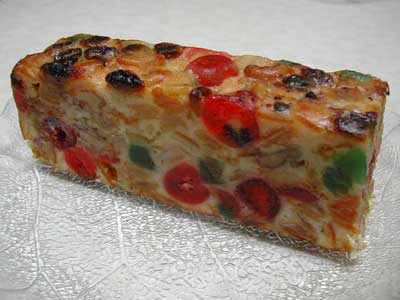
So what makes something a fruitcake? The fruit-to-cake ratio is pivotal. Anything less than 50% fruit is not really a fruitcake. The fruitcakes from Swiss Colony in Monroe, Wisconsin, contain around 75% fruit and nuts.

And despite what you commonly see in grocery stores, candied fruits in colors that suggest some kind of nuclear disaster are not obligatory and should be avoided. Naturally sweet, dried fruits are the key to turning fruitcake hate into love.

The fruit and nut to cake ratio appears right but those colors only
reinforce fruitcake’s poor reputation.

Alcohol allows for long-term storage and also helps to mellow the sweetness of the ingredients. Fruitcakes actually do taste better with age because the dried fruit contains tannins, like wine, that are released over time to create complex flavors and aromas.

Like all things, fruitcake can be great, amazing even, done right. Don’t let the imitations fool you.

Berry Picking

I made a sour cream cranberry pie for Thanksgiving. And it got me thinking about berries…
I started picking blueberries before I ate them. I was a strange kid who loved vegetables far more than fruit. Blueberries were something my mom liked a lot, though, and I happened to enjoy picking them so it worked out well. And I was never tempted to even put one in my mouth. Unlike strawberries, where for every one that went into my box, two went into my mouth, the blueberries went straight from bush to box. Raspberries were a different thing altogether–not only did I hate eating them, I hated picking them, too. In part because my mom would make me get the all the low ones since I was closer to the ground. As an adult, the logic of that set-up makes perfect sense but at the time, it just seemed like she was being lazy. 
The blueberries back in Washington were so large and purpley-blue that you barely had to pick at all to get them to fall into your hand. Even the slightest graze of your fingers and a handful would fall right off. I started going picking with my then-best friend’s family in high school. We went to a farm in the shadow of Mt. Si in North Bend with the most magical name–Bybee-Nims. Who wouldn’t want to pick blueberries at Bybee-Nims? Even if you were like me and hated blueberries, you wanted to go, if for the view of the mountain alone. And so we would go and I would pick 20 to 40 pounds in about an hour and a half with little to no effort.
Now when I live in a place where the berries are few and far between (completely unlike the berry nirvana of the Northwest), I, of course, have learned to love–YEARN even–for blueberries. Figures, doesn’t it?
We do have cranberries, though. Lots and lots of cranberries, but I’m not sure you can ever pick-your-own cranberries from the bog. I’d sure like to try.
Wisconsin’s Cranberry Queen ca. 1947. Harvesting cranberries looks like
fun doesn’t it? Apparently a bikini is required. 

Black Cherry Cheery

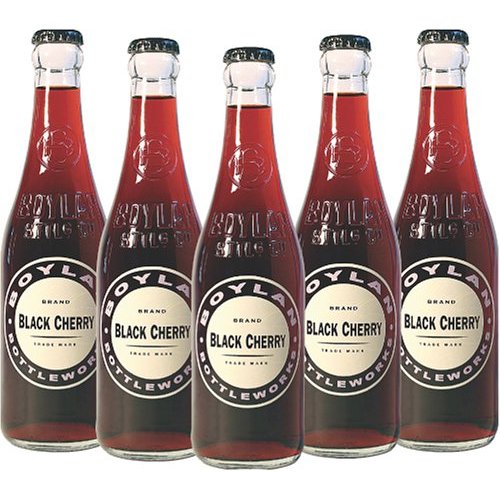
We all have weaknesses and mine is for black cherry soda (I also love black cherry ice cream so there must be something about that flavor). Even after I’ve given up most other sodas, I’ll still happily crack a bottle of black cherry* whenever the opportunity arises. I have standards, though; it has to be in a glass bottle, preferably from a regional manufacturer. Even chemically-flavored water has a taste of place, doesn’t it? Even if that taste of place is just the tastes of the people in that place.


Years ago, my dad and I created a ratings system for these sodas. It wasn’t confined to black cherry–we’d also buy bottles of Nehi Peach, Moxie, KaPow!, and others. But if black cherry was available and we hadn’t tried that particular variety before, that was the first choice. The empty bottles lined the shelves in the laundry room like trophies. The tops of the cabinets were lined with old beer cans, mementos of my dad’s previous tasting adventures. A few still had beer in them for reasons that were always unclear to me. Beer doesn’t get better with age, Dad. Especially if that beer is from the late 1960s as many of them were.

The ratings were taped to the inside of the pantry door. It was a check, check minus, or plus system. Some got a double plus. None were terrible, but some were definitely superior. One of the best was actually not in a bottle at all but on tap at The Pyramid Ale House in Seattle. Fresh, rich, and delicious, it almost makes me wish I still lived there. 
One year, my dad bought the Jones Soda Thanksgiving pack. Filled with sodas tasting of green beans, mashed potatoes, and turkey gravy, it was disgusting and fascinating all at once. Turkey soda tasted just as horrible as you imagine (“meat,” even artificial meat flavor, doesn’t quite refresh like other flavors), though, the corn flavor was oddly delicious. 

The ratings system is still on, even though I’ve moved thousands of miles away. I’ve also branched out to other things, keeping lists of beers, whiskeys, bourbons, and tequilas with my husband. We don’t keep the empty bottles and cans like my dad, but the legacy of lists and tastings lives on.


* Black cherry is an actual fruit, even if it is most commonly seen in artificial products. It’s native to North America and is also known as the wild cherry or wild rum cherry. Straight off the tree, the fruit is often inedible and bitter, which is why it most commonly appears in a highly sugared form.

Not Bitter on Bitters

Are they too cheap to get a label maker that makes the right-sized labels?

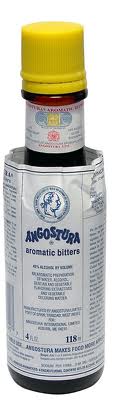
What are bitters? And why is the label for the one I see most often in bars, Angostura, too big for the bottle?

Bitters are a mysterious concoction of herbs and spices used in many cocktails, a mystery far more interesting and intriguing than the Colonel’s blend of seven spices. Sugar and gentian are the only two acknowledged ingredients in Angostura Bitters. The secret recipe was developed in 1824 by Dr. J G B Siegert, a Surgeon General in Simon Bolivar’s Venezuelan army.

Maduro, my favorite bar in Madison has a line of different bottles of bitters, including one with blood oranges and another with peaches. We’ve sometimes ordered one of the specialty cocktails that called for bitters just so we could try one of these unique flavored bitters–all of which also had mysterious origins and ingredients, too. The bottles also mentioned using bitters on food. Food?

Of course, I had to try it.

Despite subscribing to every food magazine and newsletter available, I had never seen a recipe calling for bitters. Angostura’s website has a whole section of recipes, including a pumpkin soup. Being inundated with squash as we are in the fall and winter, soup seemed like the perfect choice.  So I boiled and pureed and then added a few dashes of bitters to the finished soup. To be honest, I’m not sure I could exactly taste the bitters. There was a slight herbal flavor to the soup that may have come from the bitters, but it may also have come from my imagination. I’m highly suggestible. I like the idea of using bitters, though. Besides, it makes everything much more mysterious when you can say it calls for a secret ingredient.


I still don’t know about that label, though.

Living and Loving Lefse

To those without Viking blood coursing through their veins, the fight that ensues over the last piece of lefse at my grandmother’s house likely makes no sense.  How could an admittedly bland potato flatbread tear a family apart? But lefse is no ordinary food; it’s an edible legend.  And it’s a minor miracle that the pointy stick used to turn lefse on the grill has not resulted in injury… yet. 
Although recipes vary, mashed or riced potatoes, flour, sugar, and salt, along with some combination of milk, cream, shortening or butter, are the simple ingredients that turn to magic when rolled flat and grilled. Butter and sugar are traditional lefse fillings but in my family, anything from mashed potatoes and salad greens to green bean casserole are rolled inside like a Norwegian tortilla. The recent acquisition of a small cookbook called 99 Ways with Lefse was nothing too revolutionary for my family.
The pale, golden-brown flecked rounds are a staple of Norwegian grandmothers everywhere, especially in the Midwest, where lefse can be found in restaurants and in the refrigerated case at the grocery store. But the best lefse is homemade and I was fortunate to make lefse many times under the expert guidance of my grandmother.
More than 850,000 Norwegians came to the United States between 1820 and 1875, most to the Upper Midwest. Many left because of the impossibility of farming Norway’s mountainous, rocky terrain, leaving little opportunity for poorer families in a highly stratified society. So the Norwegians came to America, bringing the poverty foods of lefse and lutefisk that sustained them through artic winters and poor harvests with them.
In Norway, lefse virtually disappeared from the culinary landscape, but not in America, where Norwegian women would get together to make enough lefse to last the year. In many communities, a woman’s worth was measured by the thinness and lightness of her lefse.
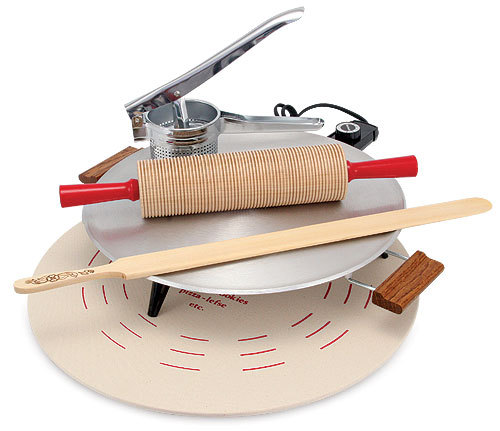
The arsenal of the lefse maker
Lefse appears on the table of nearly every Norwegian-American family during the holidays. Or anytime it was available in mine, holiday or special occasion-be-damned. Everything seems more special when lefse is in the mix.
Like her Norwegian ancestors, my grandmother usually makes lefse once, maybe twice, a year, freezing small packets of lefse to last throughout the year. Truth be told, lefse making is chaos incarnate, which perhaps explains why a year’s supply is made in one fell swoop. The sticky, gummy dough sticks like library paste to the grooved rolling pin and counter tops, while a thin layer of flour covers every horizontal surface in addition to your face, hair, clothes, and the inside of your eyelids.
The dough is no match for my grandmother, though, whose slight frame masks a fierce rolling skill. The dough quickly becomes thin enough to “read the newspaper through,” her constant refrain as she rolls and watches my feeble attempts to match her dexterity. Good lefse requires careful discernment of the right amount of flour, the proper temperature of the griddle or pan, and the perfect temperature of the dough, neither too warm nor too cold. What’s right depends on the cook, however, as a discussion between relatives on whether to place the dough outside overnight before baking quickly grew heated; Garrison Keillor would have had a field day with this material. Skill and know-how are the badge of the good lefse maker, skills that can’t be learned from a cookbook.
The grilling is one area that I’ve managed to master with aplomb, lifting the dough in one swift swoop of my sword-shaped stick, laying down the edge, and rolling it out quickly so it lies flat on the round lefse griddle. Thirty seconds or so later, the lefse needs to be flipped. Timing is everything in achieving the perfect balance of knobby brown flecks and bubbles on the pale rounds. A whole batch can take all day.
The mess, frustration, and hard work are worth it. The foil wrapped packets that emerge from my grandmother’s freezer—and often arrive in the mail if we miss a holiday—taste all the better for the struggle that went into their creation.  Lefse both ties us to the past while simultaneously carrying forth our family’s cultural marker to the future.
These days, good commercial lefse is available in many places, making it a rare family that continues to make their own. But learning from a master like my grandmother, standing shoulder-to-shoulder in the kitchen with floured arms and hands, hot griddles, and melted butter, is the only way to keep the tradition alive.