Cooking up the Past

Lifting weights had not prepared me for the strain of beating eggs to stiff peaks with a hand crank beater. Turning and turning and turning, switching arms every few minutes, until the translucent whites began to froth and then, finally, turn to a foamy mass, a moment my husband and I feared might never come. Making breakfast 19th century-style is hard work.
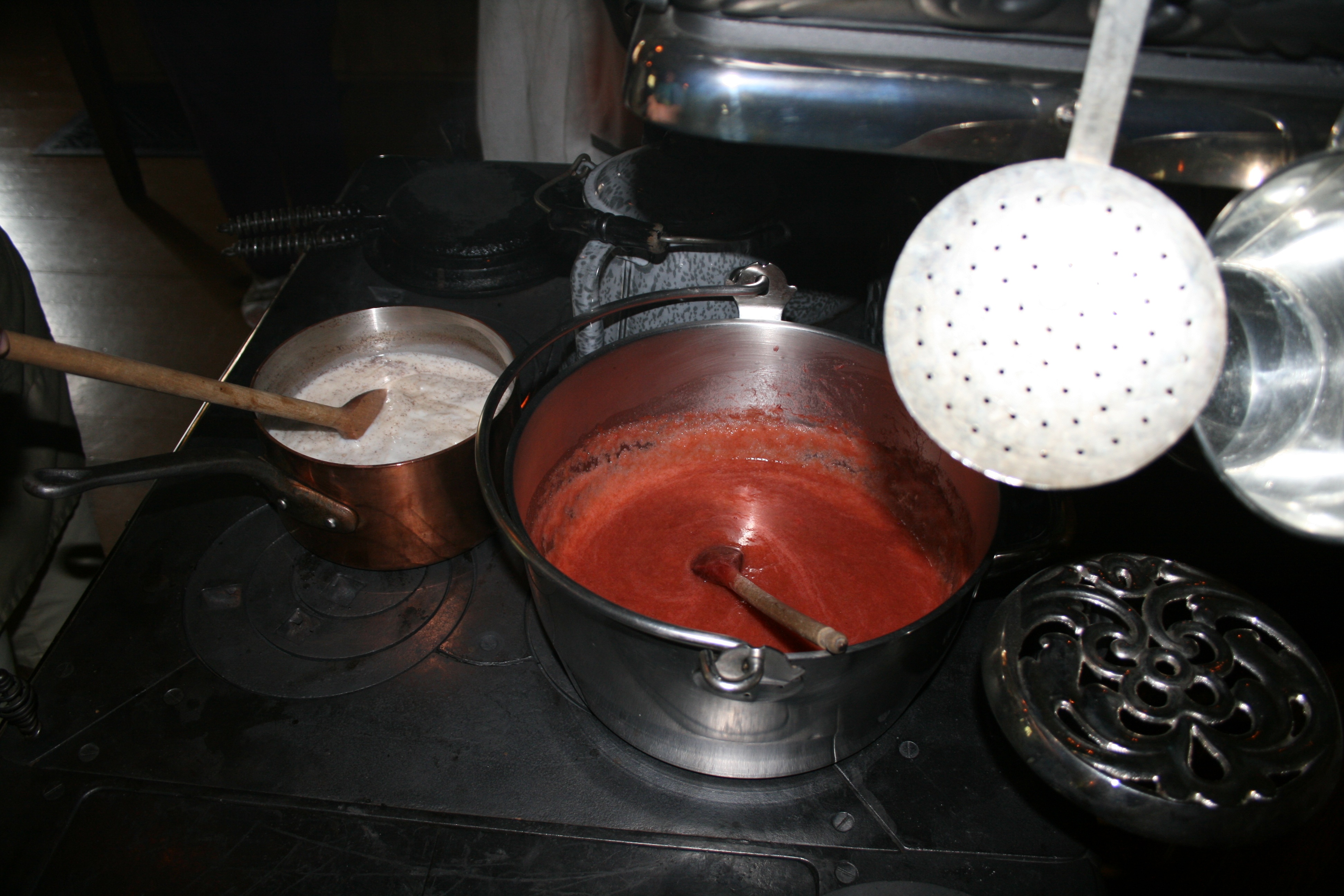
A few Junes ago, we participated in the Breakfast in a Victorian Kitchen program at the Villa Louis estate in Prairie du Chien, Wisconsin. The meal takes you inside the lives of the prosperous Dousman family – or rather the lives of the family’s servants. You don’t just eat the foods of the past – you roll up your sleeves to prepare them using the tools, recipes, and technology of the time. That means hand-crank eggbeaters, wood stoves, and recipes a bit less instructive and a lot more intuitive than today. The jelly omelet team had it far worse than us, though, beating two-dozen eggs, yolks and whites separated, for an hour.

Arriving around 8:30AM, we were quickly divided into teams to take on various tasks. The breakfast menu changes with the seasons, and that June day’s menu included fresh strawberries, bacon fried with sweet peppers, rice waffles served with strawberry-rhubarb sauce, fried Mississippi catfish, a thin bread called Wisconsin cake, and coffee. Some teams worked in the steamy outdoor preserve kitchen, while the rest cooked in the main kitchen with its dim gas lighting and imposing, ornate cast iron wood stove.

Laughter soon filled the kitchen as everyone struggled to complete their assignments. Anxious choruses of “I’m not sure we picked the right job” echoed around the room, followed by encouraging words from fellow participants. You’re never completely on your own, though. The Villa Louis kitchen staff are there to answer questions and to lend a hand to avert a cooking disaster.

About two hours later, breakfast was finally ready. My stomach grumbled fiercely after all this hard work. Everyone sat down to eat at two communal tables adorned with jars of flowers and herbs freshly picked from the grounds in the mansion’s kitchen. Our Wisconsin cakes, which seemed like a sure disaster during the egg beating and mixing process, turned out pretty well, as did everything else that made it to the table. Surveying the breakfast feast before us, all of that hard work definitely paid off: new experiences and a renewed appreciation for electric mixers.
Throwing Stones

On Monday night, I went curling for the first time. Too concerned about falling and knocking myself out on the ice (a very real possibility), I didn’t manage to get any photos of the event. But that’s probably a good thing – it wouldn’t have been a pretty sight.

Curling has a long history in Wisconsin. In fact, the oldest continuously operating curling club in the country is in Milwaukee where they’ve been curling since 1846. Wisconsinites curled on rivers and lakes, anywhere they could find some solid ice to throw stones. While curling is solidly associated with Scotland, it may have actually originated in the Netherlands. Paintings from the mid-14th century show Dutch curlers. The game soon traveled to Scotland, though, where it became a national pastime. Scottish immigrants brought their love of the game with them to North America.

Americans often curled with wooden stones because wood was accessible and affordable. These stones varied in size, shape, and weight. A movement to standardize the game didn’t come until the 20th century.

Curling is a surprisingly challenging sport: something I hadn’t quite appreciated while watching it on TV during the Olympics. A slider fits on over your left shoe (if you’re right handed like me, that is) while your right foot slides back into a “hack” that’s kind of like the starting posts on a track. The basic movement is a long, low lunge with your left knee bent up and your right trailing behind as you push yourself forward on the ice, attempting to simultaneously aim your stone and not kill yourself. It’s a thigh burner and a real balancing act. Sweeping is a lot of fun, though, also requires serious coordination as you run down the ice alongside the stone sweeping, sweeping, sweeping fast and hard.

I left the curling open house with a new appreciation of this centuries old sport. I was also reminded of this charming booklet, the Annual of the Grand National Curling Club of America, 1880, detailing the matches of the 1878 – 1879 curling season that I’d run across years ago at the Wisconsin Historical Society. There’s much talk of “hardy men” braving the harsh winter weather to curl and the sumptuous meals served afterward to renew their strength.

Cider for Dinner

If you think all hard ciders are the same, it’s time to start drinking. Cider (assume I mean hard when I say it) exists in as infinite number of varieties as there are apples in the world. And that’s not even mentioning the countless ways the juice of apples can be distilled and fermented. Technique and ingredients, like in all foods, really matters.

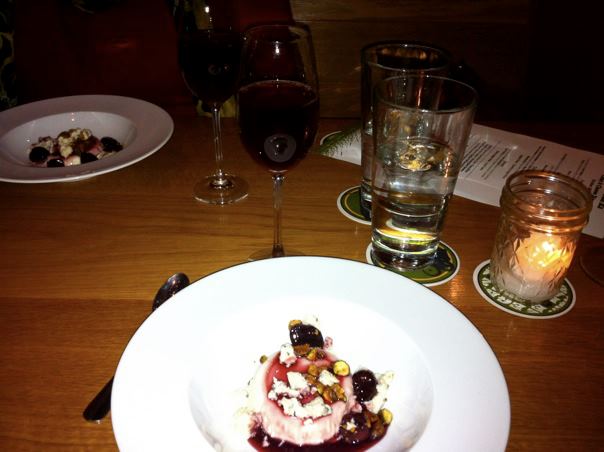
I recently went to a cider and cheese dinner at Graze.  Each course was paired with a cider from Wisconsin’s AeppelTreow. We had everything from a sparkling perry to start, to a draft cider and a berry – apple cider mix for dessert. Each was uniquely different and complimented our meal perfectly.

Dessert course with matched cider

Cider is often made from cider apples – apples specially suited to making cider just as some apples are best for baking. These aren’t the types of apples you find in the grocery store. And that’s probably a good thing since they can be high in tannins and acids that make them rather unpalatable to eat out of hand. But they are perfect for cider.

Most cider is made from a combination of apples expertly blended to yield a balanced mix of sugars, acids, and tannins. Tannins gives the cider its color; the more tannin, the deeper the golden brown. It also gives cider its dryness, the same dryness often found in red wines. The wrong blend of these elements can result an undrinkable cider. While most cider contains a blend of apple varieties, there’s one apple that is often sold as a single varietal: Kingston Black. It’s said to be the rare, perfectly balanced cider apple.

Cider tends to reflect the country of its origin. French ciders, for instance, tend to be light and bubbly like another French specialty, champagne. Local tastes become integral to the cider making process and the cider that is produced.

As much as I love cider, my favorite cider of the night was actually not an apple cider at all – it was the perry, or pear cider. In Europe, cidermakers traditionally made ciders from both apples and pears. This hasn’t been as true in the United States, where cider and perry tend to come from separate makers.  But as cider becomes more popular, I’m holding out hope that pears and apples will be united in alcoholic glory again.


Lutefisk Season

LutefiskFall is lutefisk time in the Midwest. Lutefisk is dried cod that has been rehydrated in a lye solution and then boiled or baked. The finished fish, served with butter, salt, and pepper, has the consistency and jiggly-ness of Jell-O. Needless to say, it’s an acquired taste.

Every fall, churches throughout the Upper Midwest hold special lutefisk dinners where Norwegian – Americans (though not exclusively – these dinners attract a wide fan base) get in touch with their heritage. In some families, lutefisk even takes the place of the holiday turkey. Fortunately, most of these dinners also include meatballs, mashed potatoes, lefse (the best part if you ask me), and salad for the lutefisk averse.

Norwegians probably didn’t invent lutefisk but they certainly have a long history of making and eating it. Various stories and legends tell of Vikings Salting and drying fish was an efficient way to preserve food, and many Scandinavians brought their lutefisk with them to America when they emigrated.

Today, nostalgia plays a big role in the annual lutefisk dinner. More lutefisk is probably eaten in Wisconsin and Minnesota than in Scandinavia where most people have moved on from the gelatinous fish. But it plays an important role in Midwestern culture, both as an emblem and connection to a past shared by many of this region’s first European immigrants and as a social and community event.

I know I’ll be there.

An October Fruit Surprise

Living in Wisconsin, you resign yourself to eating from the small stream of local fruit. Apples, sure. Pears? Check. We have berries – strawberries, blueberries, blackberries, and raspberries – but the season is short and they are often expensive and available in limited supply at the farmers market. There’s a few others (and many wild fruits for foraging if you know where and when to look) but let’s face it: we aren’t Michigan.

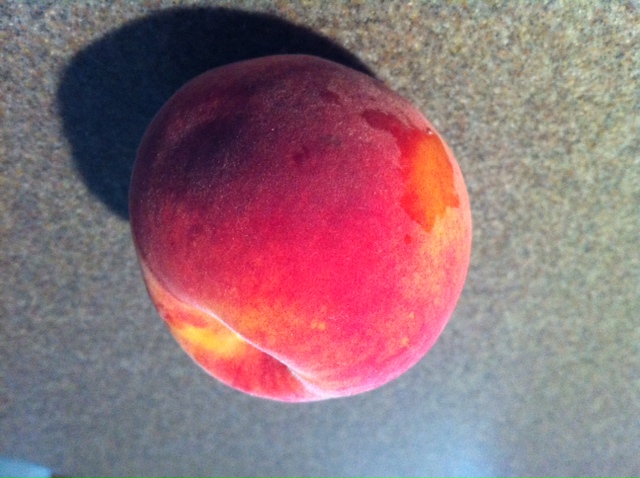
So it was a pleasant surprise to run across bags overflowing with Wisconsin peaches at the farmers market this last weekend. Not only peaches but peaches in October, a month that I tend to associate with the emergence of hardy greens, cabbages, potatoes, beets, and squash. I eagerly bought a sack – and may have elbowed a few people aside in my hurry and delight (sorry, folks) – and rushed back home to dig in.

While I often think of peaches reaching their apogee in southern climates, peaches and apples actually have similar life stories. Peaches are believed to have originated in north China, not all that far from the mountains of Kazakhstan that birthed apple trees. They traveled east, west, north, and south with people and animals. The Romans learned about peaches from the Greeks who had learned about them from the Persians who had first introduced them to the West. In conquering Persia, Alexander the Great took many things from the Persians but one of the most valuable was their love and knowledge of fruit, including apples and peaches.

The Romans even called them “Persian Apples” for the Persians who loved them and likely “apples” for their round shape (many round fruits and vegetables have been called “apples” at some point, from cherries and avocados to eggplant). The Spanish fell particularly hard for the peach and brought it to the Americas, where Native Americans are widely credited with spreading peaches across the continents… and even to Wisconsin, I suppose.

Known Brussels Sprouts Lover

I’ve certainly never hid my devotion to brussels sprouts. But I hadn’t realized how widely word had spread until I crossed paths with the friendly owner of a local restaurant I happen to love. He smiled, said “nice to see you,” and then: “the brussels sprouts salad will be back on the menu very soon.”

Caught.

Lunch today. I may have a problem.


Wild Apples

On a hike this weekend, I picked a wild apple from a tree sagging under the weight of its slightly misshapen fruit. It was a beautiful fall afternoon and the fruit fairly glowed in the golden fall sunlight. Having just written a book on apples, how could I resist grabbing one for a taste?

In my enthusiasm, I forgot to take a picture of the apple. But look at the lovely fall prairie

It goes without saying that wild apples aren’t like grocery store apples. But they also aren’t like the apples you tend to find at u-pick orchards either. They’re gnarled and lumpy, like an apple skin stretched taught over a box of rocks. They often have black spots and hard knobs from hungry insects. These imperfect wild apples reflect the apples of the past, before pesticides and other pest management strategies made it possible to have perfect, unblemished fruit. So picking one with a good spot for a bite can be a challenge – a hunt high and low through the branches for the right one.

Finding one, I took a bite, my husband watching expectantly for my reaction. I winced briefly at the surprising tartness and then relished the sweet aftertaste. The flesh was bright white with a slight green twinge toward the core, and the texture crumbly, more like a cake than a fruit.

Wild apples aren’t always so good. An apple’s agenda is different than our own. For an apple, a big core with seeds is crucial to reproduction and survival. They aren’t concerned about a good tasting or even a big amount of flesh for eating like we want in an apple. Wild apples are often bitter and tannic, too.

The apple I ate may have been the only one of its kind. An apple tree produces offspring completely unlike its parent tree. Each generation looks and tastes different. Only grafting allows us to produce apples of the same variety. The seed of this wild apple in the Baraboo hills may have traveled over many miles in the stomach of an animal. Or maybe it was the offspring of a tree near by.

All I know is that an unexpected apple found on a hiking trail on a beautiful afternoon is one of the purest pleasures of the season.

A Trip to the Water Cure

I just got back from my first water cure.

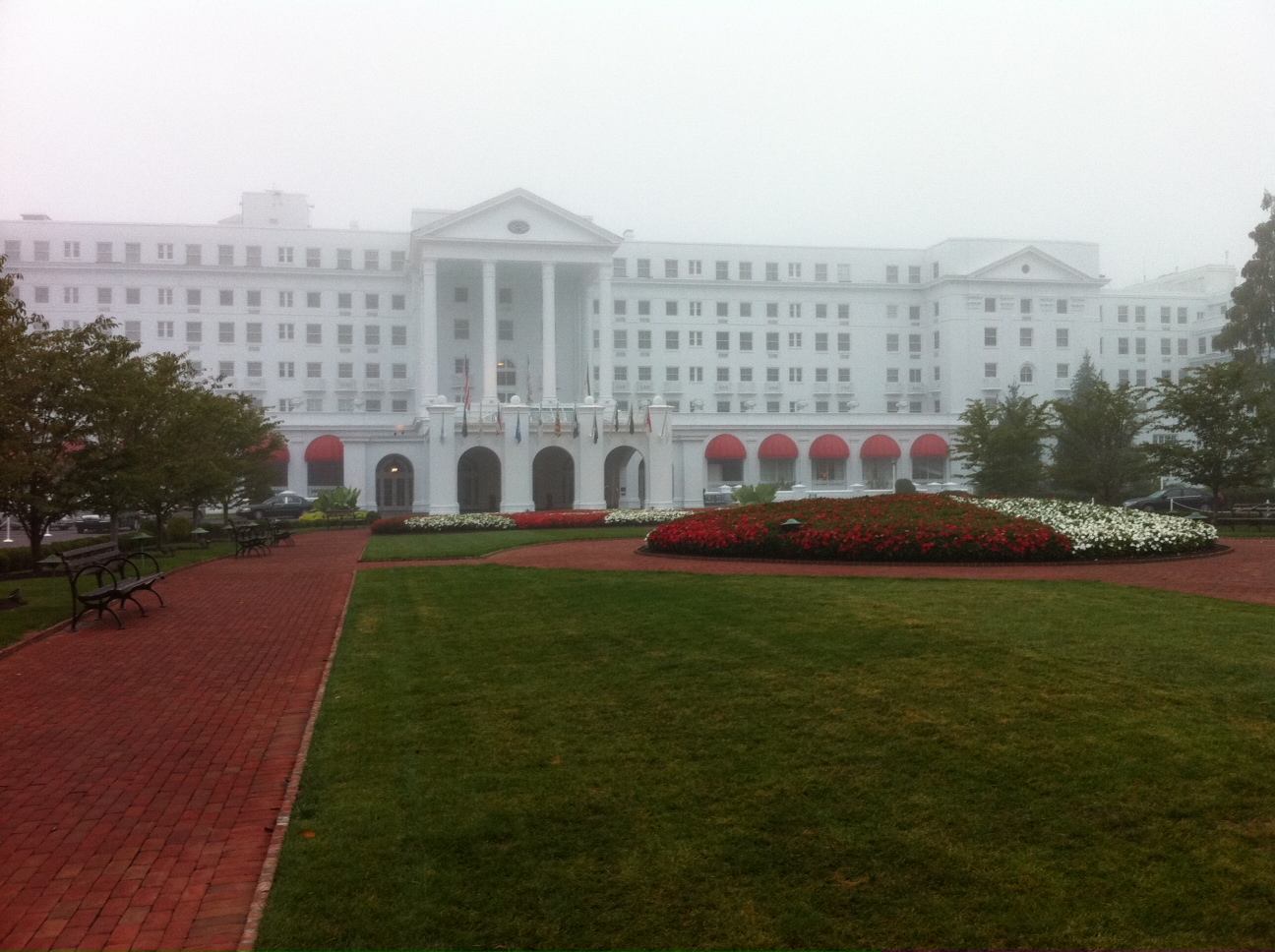
The Greenbrier Resort is a period film brought to life

Okay, so maybe it wasn’t really a water cure of yore, but the Greenbrier Resort in White Sulphur Springs, West Virginia, began as a resort for people seeking the healing power of the sulphur water that bubbled up from its mountainous ground. People first began coming in 1778, and the visitors only increased in the 19th century as people drank and bathed in hopes of curing everything from headaches to arthritis. All of this water bubbles up from a green-domed, white-columned spring house to the side of the main resort. On top is a statue of Hygeia, the Greek goddess of health and medicine. The spa still uses water from the spring house, though, most people probably think of it as spa rather than a medical facility these days.

Presidents came to the Greenbrier. Lawyers, bankers, and others hoping to escape the summer heat came, too. The construction of the large main hotel in 1858 made the White Sulphur Springs not only a place of healing but also the place to be seen for social elites. That seemed about right. Hydropathic institutes attracted many people who were just looking for a break from the city. They tended to be built in beautiful places (West Virginia is gorgeous) and to offer outdoor activities to relax and rejuvenate.

I was there to attend the Symposium for Professional Food Writers, a multiday extravaganza of great food and great food talk. I met some fantastic and talented people many of who (and many of them are already) are sure to be famous. I’ll be sure to remember that I knew them when.

Today, a visit is like a step back in time–and for me, a step into another social class. Famed decorator Dorothy Draper redid the place in outsize florals, massive colored stripes, and bright colors after World War II (I should have taken more pictures. Heidi Swanson of 101Cookbooks took some nice ones). Everything you could ever need is taken care of as employees swirl around you in the lobby and at every meal. Afternoon tea brought live piano music and a well-dressed couple dancing in the lobby before tea sandwiches and cookies were brought out on silver trays carried high above the heads of the servers. It was a little like stepping into the “Be Our Guest” number from Disney’s Beauty and the Beast.

Wow, look at the wallpaper. Our curtains were the same pattern and even the ceiling was wallpapered.


It’s also probably the closest you can get to the hydropathic experience of the past. A well-appointed resort attracting people from all over the country to take in the fresh air, exercise, and of course, as much of that healing water as you could handle.  

Camping for Real

I just went camping for the first time. Have I mentioned I’m 31 years old?

Despite growing up in the Northwest, prime camping area, I never went camping as a kid (I also never skied, but that’s a different, though, I think related story). Sure, I went to Girl Scout Camp for several summers but we slept in our sleeping bags in cabins. Cabins with no real windows or doors but still, under a roof, on a mattress (a gross one), on a bed frame. One night each session, we’d haul our mattresses outside and sleep in the middle of a grassy field, but I don’t think that qualifies as camping. As an adult, I slept outside in a borrowed tent after a concert once. And while biking across Iowa two years ago, we slept in a tent on fairgrounds and parks, surrounded by 10,000 of our closest friends (literally).

So a tent wasn’t completely unknown to me but still… the real camping experience, the ones you see on TV, had never happened until this weekend when we hiked a short ways on the Ice Age Trail and found a beautiful spot to set up our tent above the Wisconsin River.

While it seems strange now that I’d never really camped before, little more than 100 years ago, I was perfectly normal. Camping is a new phenomenon in the scheme of things. Getting away to nature was not something many people wanted to do because some had probably only recently escaped a more rustic existence for the city, while others were still living there.

The conservation movement that gained currency in the late 19th century with people like Theodore Roosevelt and John Muir celebrated nature as an escape and worked to preserve tracts of land from development. They celebrated the virtues of being outdoors and helped to introduce people to the idea of leaving their modern conveniences (and urban squalor) for time spent in nature. Manuals for outdoor skills and camping began appearing with increasing infrequency in the 1890s, many geared at white boys for whom many feared that modern life was making them soft. Summer camp also provided a place for middle and upper class schoolchildren to go in the summer as the idea of a break from school unconnected to farm chores was still a new idea. Camps for girls were slower to develop, in part because girls often had home chores still to do and some fear about the dangers of sending women off to the woods.

Many of these first campsites (not unlike today) provided a simulation of nature. The environment was planned and organized to provide everything people needed so the transition from city to pastoral relaxation wasn’t too jarring.

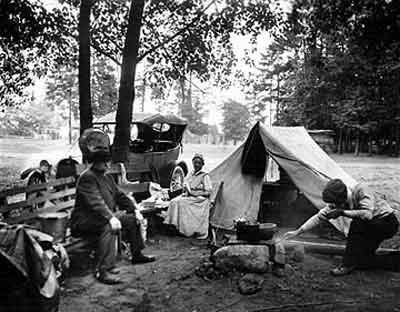
As cars became more common, people began taking family camping trips, setting up tent alongside the car. Not everyone was so pleased to have people indiscriminately camping along every roadway so cities and towns began building more campgrounds, and towns began advertising themselves as car camping destinations.

The triumph of camping has become so complete, in just a century or so, that it can seem strange to meet someone who has never been camping. Well, it’s not me any longer.

Polka Till You Puke

Polka is the law in Wisconsin. Or so they tell you in Pulaski, home of Polka Days, a weekend celebration of the Wisconsin state dance near Green Bay. It draws a serious polka crowd, both young and old, as well as some of the country’s most popular polka bands.

Polka pride is evident on the many funny t-shirts worn by attendees

Polka began as a Czech peasant dance in the early 19th century. It spread to ballrooms in Prague and then Paris in the 1830s and 1840s. The French loved to polka and their enthusiasm for the dance helped increase its popularity. Polka soon spread to England and then to the United States where Polish-Americans adopted it as their national dance in the early 20th century. The name ‘polka’ is derived from the Czech phrase for ‘half-step’ in reference to the dance pattern of lightly stepping from one foot to the other.

Polka emerged at roughly the same time as its signature instruments: the accordion and concertina. These squeeze boxes became the 19th century’s most popular mechanical musical innovation because one person could play the part of an entire musical ensemble, playing melodies and harmonies with one hand and chords and bass in the other hand. These instruments became prized possessions that many immigrants brought with them to the United States.

A variety of polka styles developed in different sections of the country, particularly the Midwest. The styles became associated with particular ethnic groups, such as Polish, Slovenian, and Dutchman, based on the ethnic heritage of the musicians or composers.

Radio brought polka to an even wider audience in the 20th century. After World War II, polka joined, for a brief time, popular culture, in large measure due to the accordion stylings of Frankie Yankovic of Cleveland, Ohio. Rock ‘n roll eclipsed polka in the 1960s but polka has remained popular in many communities throughout the Midwest.

Polka is clearly still big in Pulaski judging from the huge, cheering, and dancing crowds. It’s an impressive sight–two tents with wood dance floors packed with people, polka-ing with abandon, and not a little skill.