The End of the World

Some believe the world is coming to an end today.

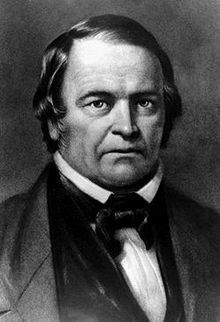
We’ve thought this before. In 1844, William Miller saw the apocalypse predicted in scriptures. A farmer in upstate New York (a center of the revivalist spirit), Miller used Biblical prophecies to calculate the second coming. He offered a new interpretation of the Book of Revelation, arguing in contrast to others that the events it described had yet to happen (earlier readings had seen these events happening in the past). Further reading led him to believe that Christ’s Second Coming was “near, even at the door, even within twenty-one years, – on or before 1843” (Sylvester Bliss, Memoirs of William Miller, Boston: Joshua V. Himes, 1853, 79).

Miller gained a following through his book, Evidence from Scripture and History of the Second Coming of Christ, About the Year 1843,  and lectures. At its peak, his followers, known as Millerites, numbered more than 50,000. Some of his most zealous followers fixed a precise date for Christ’s return: March 21, 1844. When that date passed uneventfully, they recalculated and put forth a new date: October 22, 1844. That day, too, passed anticlimactically and came to be known as “The Great Disappointment.”

The Millerite movement mostly broke up after these events. Many returned to their former churches while still others formed the new Advent Christian and Seventh Day Adventist churches. And another group under the leadership of Benjamin Hall migrated west from Massachusetts and founded a successful religious colony

William MillerSource: http://en.wikipedia.org/wiki/William_Miller_(preacher)

William Miller
Source: Wikipedia

in Germania (Marquette County), Wisconsin. It thrived for more than fifty years.

Why Your Ancestors Settled in Cold Places

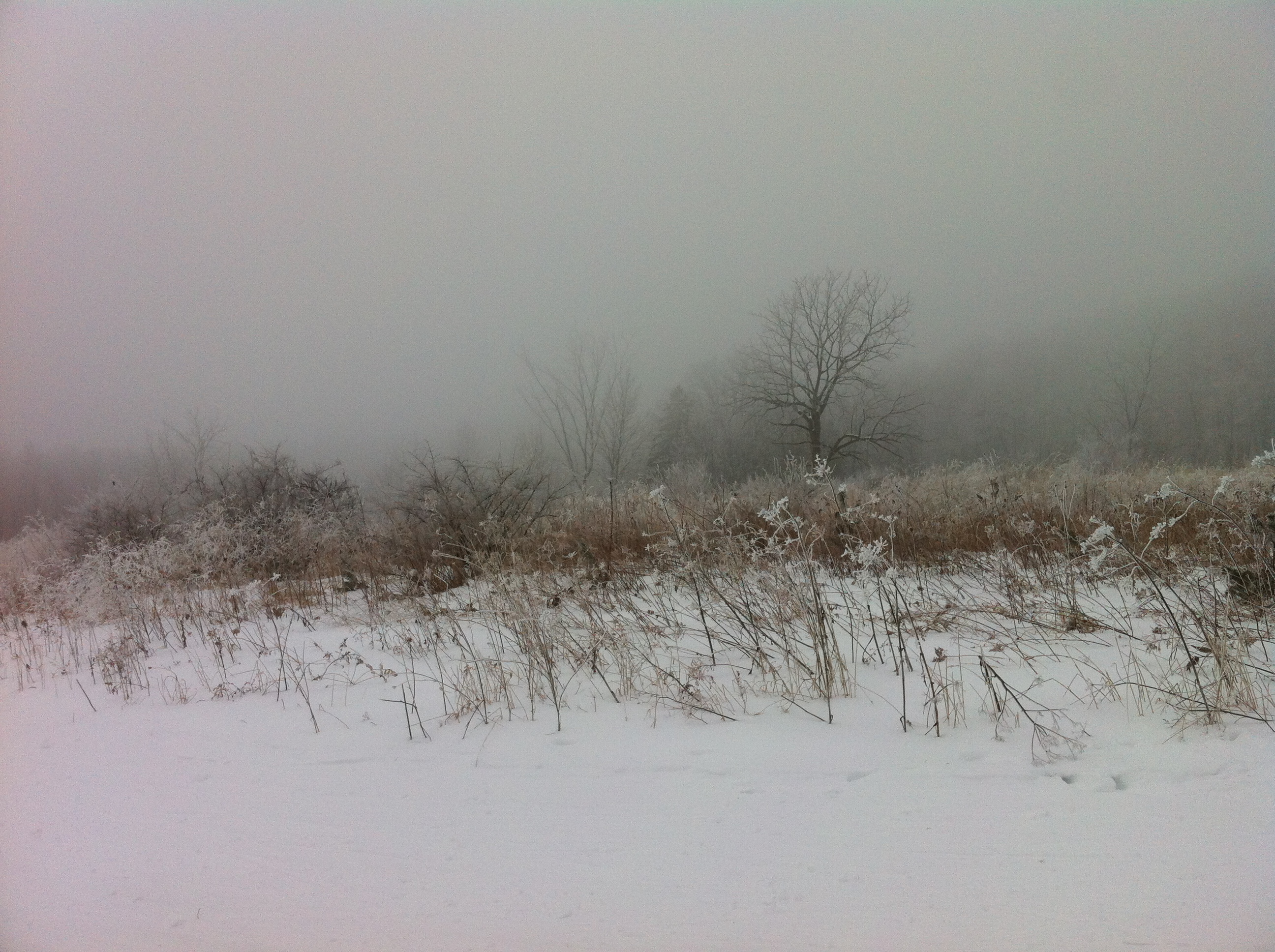
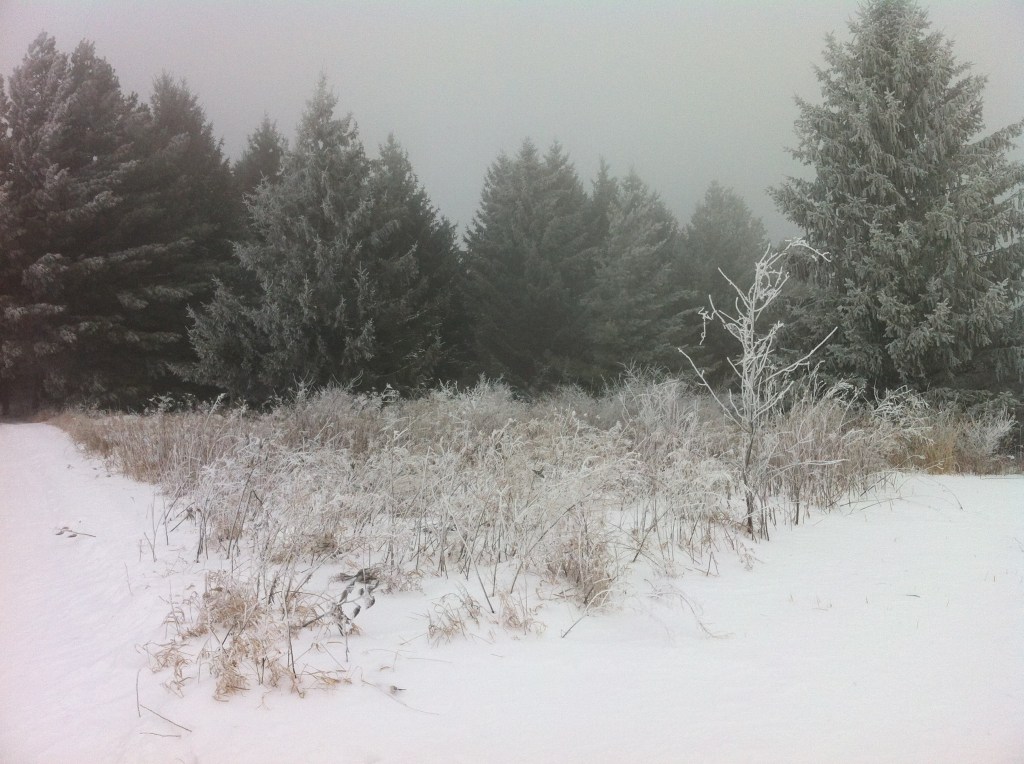
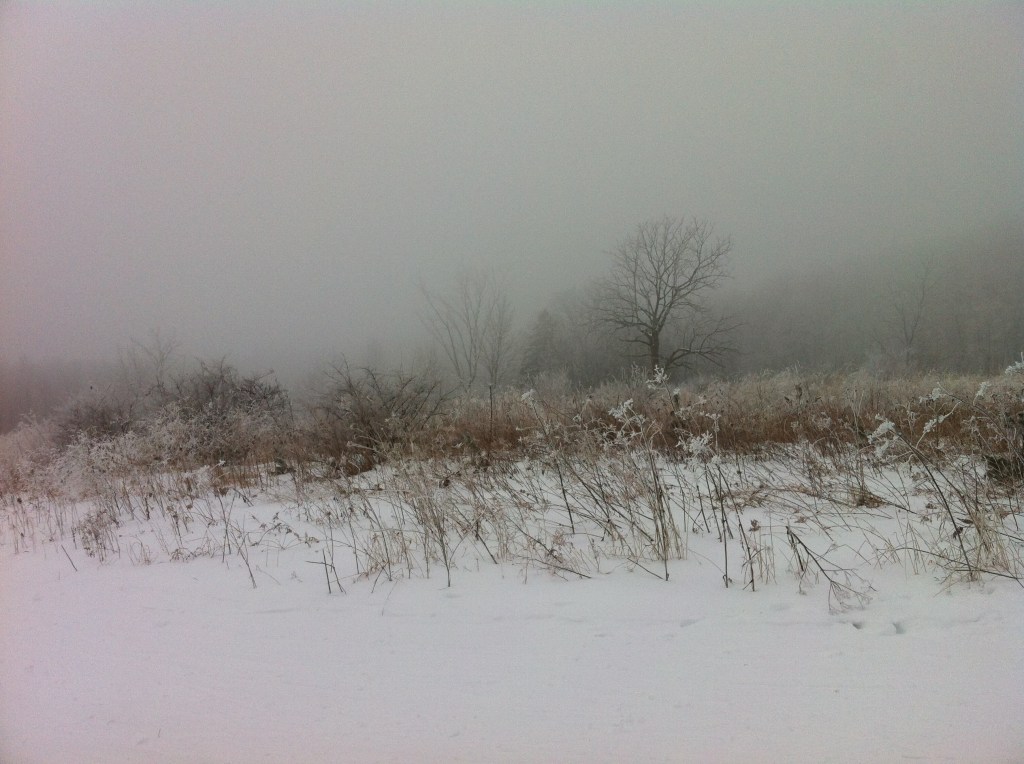
Hoar frost at Blue Mounds State Park last winter

Hoar frost at Blue Mounds State Park last winter

The earliest account of a Wisconsin winter was written by fur traders. In 1659, Pierre Esprit Radisson and his brother-in-law Sieur de Groseilliers spent the winter near Lac Court Orielles with the Hurons and the Ottawas. With the ground frozen solid and the snow six feet deep, food was scarce. They first ate tree bark that they boiled for 2 hours to make it soft. Then, they ate their dogs. It was so cold that several of them died from exposure. Ten years later, Jesuit Father Claude Allouez complained of bitter cold that he said literally almost froze his nose off. This certainly wasn’t Wisconsin’s first – or last – harsh winter, though.

The winter of 1881 was also really bad. That’s the year Laura Ingalls Wilder made famous in her book The Long Winter. In February, train service in and out of Milwaukee stopped, stranding city residents for four days. Snow cut Pewaukee off from the rest of the state for two weeks and snow in New Berlin reached 11 feet in open fields. The only people who got in or out were hardy young men known as the “Snowshoe Express” who carried news on foot from town to town.
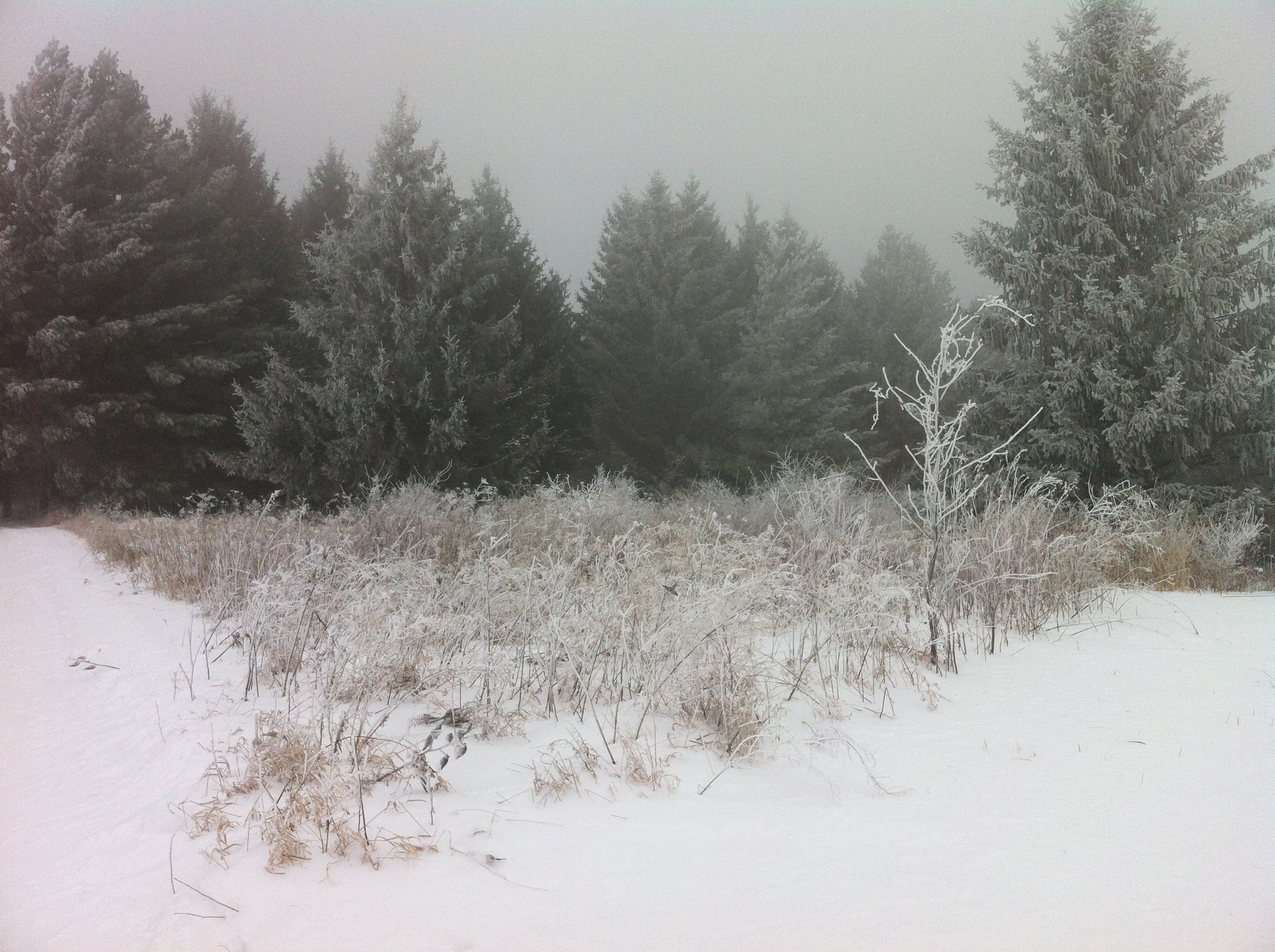
2012-01-22 13.54.45

And yet despite all this, people still came to Wisconsin to live. Hundreds of thousands of them. After one winter, wouldn’t you have kept going?

It certainly helped that most of Wisconsin’s early settlers and immigrants came from cold places themselves. Was the winter in Wisconsin really any worse than the winter in Norway or Germany? Or how about upstate New York?

The warmer options were also a bit more limited until the late 19th century. Arizona, that favorite state of snowbirds, didn’t even become a U.S. territory until 1863. Texas wasn’t sure if it wanted to be a state or an independent republic until the mid-19th century. Things were a bit more settled in the north.

And the south had its own dangers, too.  You might freeze your nose off in Wisconsin, but at least you wouldn’t die of yellow fever or malaria. So there were actually a few advantages to living in a climate cold enough to kill off the mosquitoes that carried deadly diseases.

Most important of all, though, Wisconsin had the right look. The rolling hills west of Madison attracted Norwegians who were struck by the area’s resemblance to southern Scandinavia. The Swiss loved the green hills of what is today Green County.  Of course, anyplace might look inviting to people who’d been crammed on the lower decks of a ship for six weeks. But countless letters home described a new Wisconsin place that recalled a beloved landscape back home.

Some immigrants were foolishly optimistic about the weather, though. In 1848, German immigrant Dr. Bock predicted that since Wisconsin was at the same latitude as Italy, he was sure the sun would melt all the snow in his new home in just a few days.  Bock’s illusions were quickly shattered his first winter.

Others, like Albert G. Tuttle of Connecticut, who came to investigate Wisconsin for a possible move, found January to be bitterly cold but assured his wife that December had been the “pleasantest month of that name he had ever seen.”

And maybe that optimistic view of winter—that this one won’t be so bad—is part of what brought people here and why they stay. Winter is part of what it means to live in Wisconsin (and all northern places). We take a certain amount of pride in our ability to survive it. We thrill in our experiences getting home in blinding snow. And laugh at other places in the country where an inch or two of snow incites panic and citywide shutdowns (looking at you, my hometown of Seattle).

So thank your ancestors for settling somewhere cold. They may have kept your bloodline safe from yellow fever, and they’ve given you plenty of reasons to feel superior to those who live in wimpier climates.
 

Feasting on Lutefisk

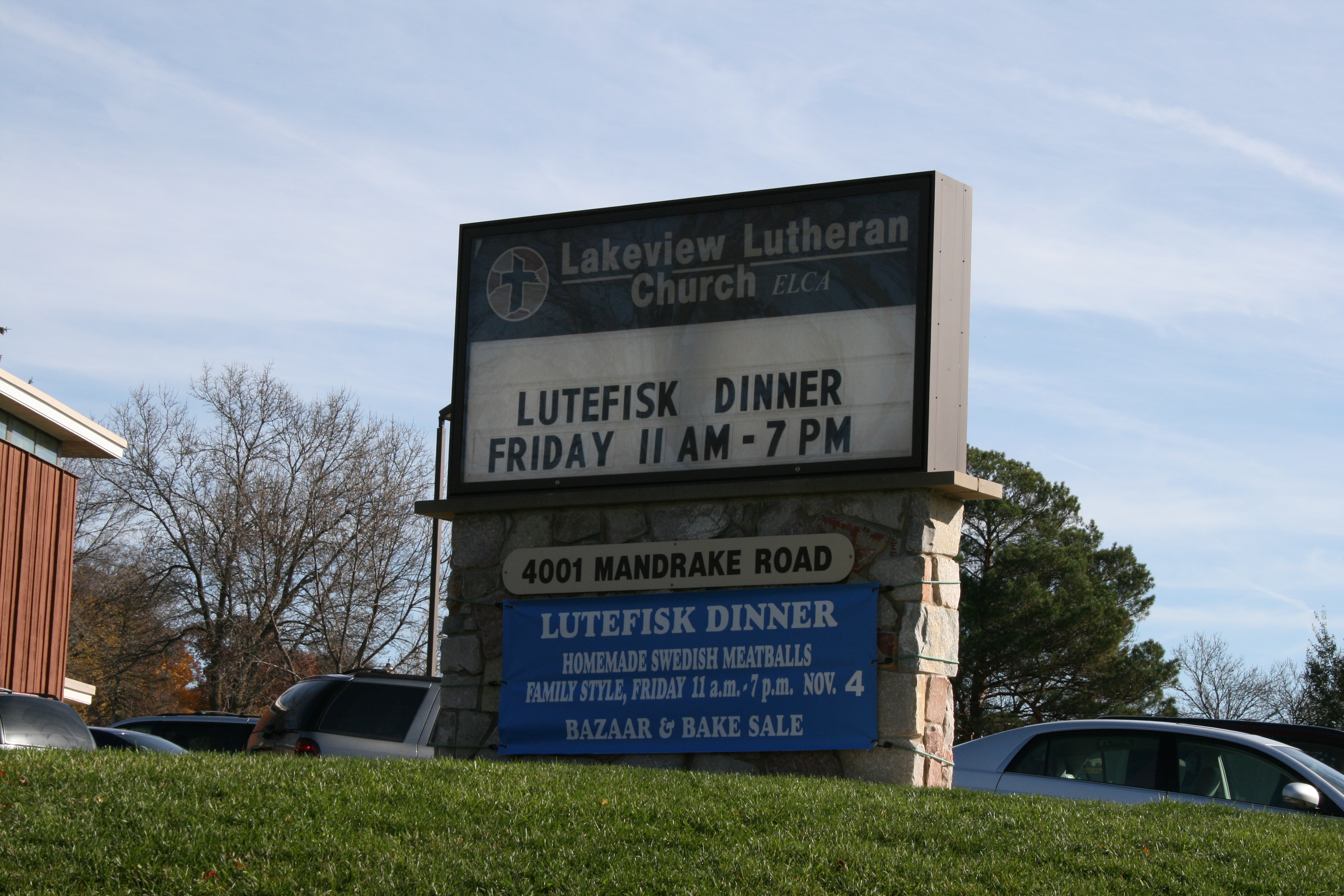
You may think there’s only one traditional fall feast … but you’d be wrong. Meet the lutefisk supper, a fall and early winter tradition in the Upper Midwest. You can find these pungent fish meals in church basements, community centers, and unsurprisingly, at Sons of Norway lodges all over Wisconsin and Minnesota.

2011 Madison-102

Lutefisk chef - a very smelly job

Lutefisk chef – a very smelly job (note the plastic-covered walls – this is a smell you don’t want to linger)

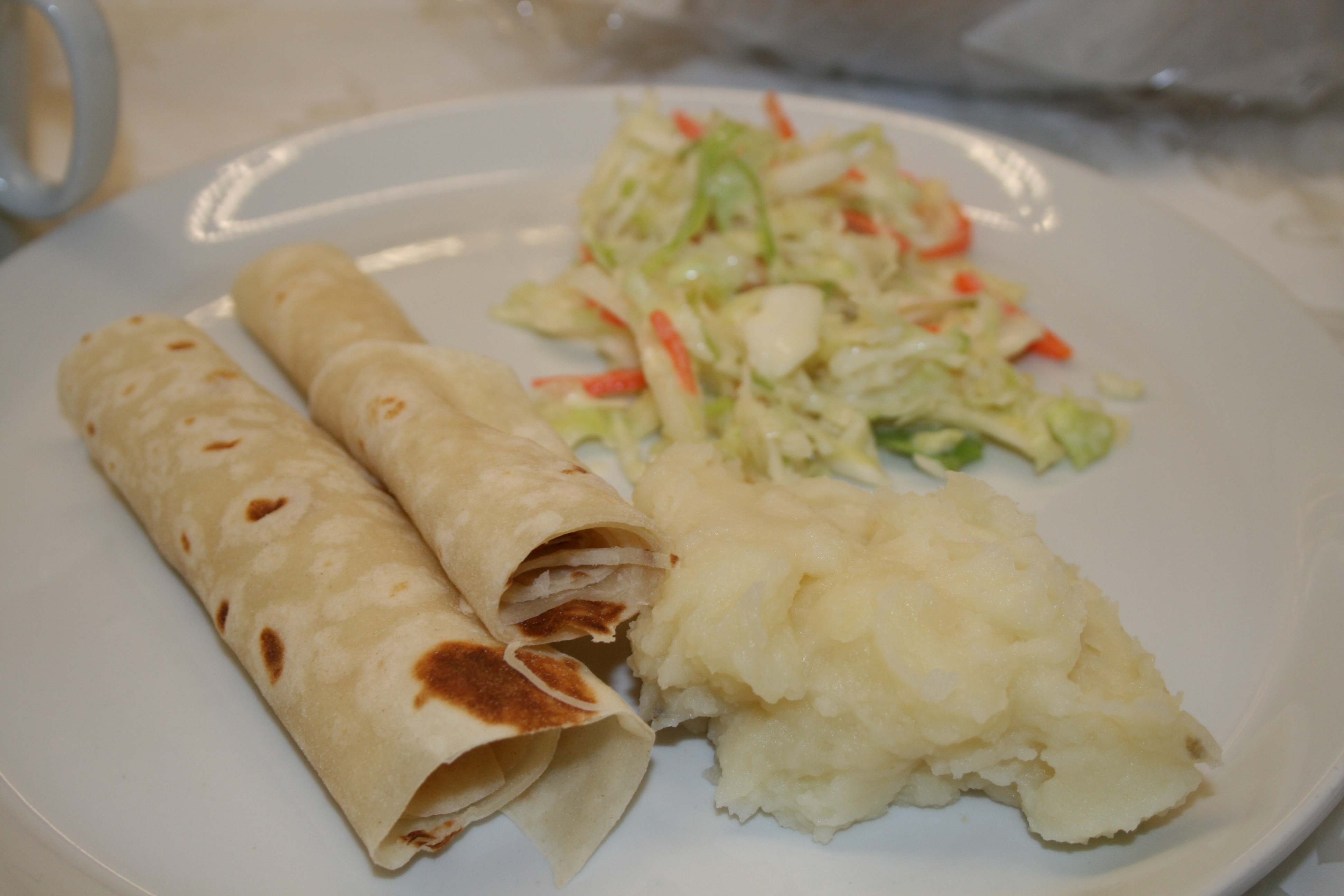
Personally, and despite my Scandinavian heritage (don’t tell anyone), I don’t go in for the jiggly lye-soaked cod drenched in butter. Some might say it’s an acquired taste. I’m just there for the lefse. Rolls of it, piled high in pyramids on plates at both ends of the table. A little cranberry sauce spread inside or some butter and sugar, and I’ve got all the tradition I need.

Lefse! Now we're talking!

Lefse! Now we’re talking!

Read my story on the culinary tradition of the lutefisk supper on Smithsonian.com

A Neurologist and a Spy

Olympian, gardener, and book lover. German immigrant and proud American citizen. German military medic and American scientific spy. Syphilis researcher and American Indian history buff. Check out my story on the fascinating neurologist Hans Reese in the fall issue of On Wisconsin.


Ten Years On

Ten years ago yesterday, I packed up my car and moved 2,000 miles away from my home state. I was off to grad school in a new state, knowing no one, and not really quite sure what I was going to do in grad school but it seemed like the right thing to do. I liked to read and to write and to think about the past – what more did I need?

Wisconsin wasn’t a complete unknown. My parents grew up in Illinois, and like all good Illinois residents, they often spent their summers in Wisconsin. Even after they moved far away, to a town just outside Seattle, Wisconsin remained a summertime destination.

As a kid, my Wisconsin was rolling hills, fireflies, farm fields, blaring tornado sirens (though I had no idea what they were – being bookish, I liked to imagine it was an air raid and that we would soon need to darken the windows with our blackout curtains), and lightning that cut across the sky in an angry gash. My Wisconsin was Wisconsin Dells, Taliesin, House on the Rock, Lake Geneva, and the truly bizarre Don Q Inn. It was water towers with town names painted on the sides as though they were staking a claim to a piece of land and proclaiming it to all the surrounding fields and towns. And it was unlike anything I knew back home.

And while I came from a place rich in natural beauty – Mount Rainier, Puget Sound, towering evergreens – it was this more humble Wisconsin landscape that few would call magnificent that grabbed me and never let go.

Perhaps that’s why I now call Wisconsin home.

Home is a funny word, though. What does it mean and how do we know when we’ve found it? Is it the place where we grew up or the place we find ourselves as adults? Is it people or place or something else completely?

A Wisconsinite now for ten years, I still startle slightly to hear people refer to me as a “Wisconsinite” or a “Madisonian.” I’ll still tell people I’m not originally from here but at ten years and a third of my life spent here, what does that even mean and why does it matter?

I’ve heard people say that home is “wherever [insert loved one] is,” which sounds lovely and true. And while I don’t doubt their sincerity, I can’t help but want to shout “but place also matters!” Or at least it does to me, to my definition of home.

Everything I do and can do is a product of this place and its past. Everyone who lives here is a beneficiary of its people, traditions, and landscapes – all the elements that make a dot on a map a real place. Reading and writing Wisconsin’s history has taught me about Wisconsin but also about myself. And it’s helped me to feel at home here even if I’m not yet ready to call this place “home.”

That’s something I’m still working out.

Wait Five Minutes

Every place has its local sayings and phrases, the regionalisms known to those on the “inside” and potentially bewildering to those on the “outside.” Where I grew up near Seattle, it’s common to hear people comment that “the mountain is out,” or perhaps more often, that the mountain “is not out” since overcast is the sky’s perpetual shade. The mountain is Mt. Rainier and on a clear day, its looming visage is hard to miss all over the Seattle area. So when the mountain is “out,” you can see it and when you can’t see it, it’s “in.”  It never seemed strange until I moved away to say that a 14,000 foot mountain could be “in” or “out,” but there you have it. And once I’m back in town, the words fall easily from my lips once again even ten years on (gulp! I moved away a decade ago!?!).

Here in Madison, we have our own words – though nothing is “in” or “out” as far as I know. There’s “hippie Christmas” and “coastie,” as well as the general prefix “Mad,” which attached to any word means it is somehow tied to Madison: Madcity, Madrollin’, Madcat, Madtown, Mad, Mad, Mad.

Orkney mainland, Scotland

But then there’s this: “If you don’t like the weather, then wait five minutes and it will change.” Have you heard this? Have you heard it applied to your town or city? Does it seem like 90% of the world seems to believe this about where they live? Mark Twain supposedly wrote, “If you don’t like the weather in New England, wait a minute.” I’ve heard it said in Seattle, Portland, Madison (all over Wisconsin, really), Minneapolis, San Francisco, Cape Cod, Chicago, and Boston. On a recent trip to Scotland, I heard it again from a man in Glasgow bar. He said it was an old Scottish saying – maybe but it appears to be just as “old” all over the place so perhaps it’s only old in the sense that people have been saying it for a long time.

What is it about that phrase? And what does it tell us about our meteorological feelings? Maybe we say it as a way to excuse bad weather, as though we’re embarrassed about the current conditions but something better will be along shortly – really! Or maybe it’s a reflection on the impermanence of everything, even the weather – that this too will pass, that nothing stays the same, that change is unavoidable. Or maybe we all just live in really tempestuous places.

Eating and Drinking in the Badger State

All this month (red-faced about my delayed posting of this since May is half over!), I’m curating entries on the “Wisco Histo” blog from Wisconsin Heritage Online (WHO). WHO is a collaborative project to digitize the resources of libraries, museums, historical societies, and archives across Wisconsin. It’s a fantastic resource for discovering the history of Wisconsin through photos, letters, diaries, newspaper articles, and objects.

Flipping pancakes at an open house in the Paul Bunyan Room in the UW-Madison Memorial Union.

Every so often, they invite historians and others to highlight selections from the collection around a particular theme. Usually, they ask you to do one week – but, being the indecisive person that I am, I bullied them into letting me pick an entire month’s worth of entries!

So May is food history month on Wisco Histo! I had a great time picking images (mostly – a few articles) from this fantastic collection.


Homeless Book Club

On Tuesday morning, I had the honor of speaking at Madison’s Homeless Book Club.  I give a lot of talks, mostly on Wisconsin history but also on writing, being a writer, apples, and whatever else someone somewhere thinks I know anything about. And while I’ve learned to enjoy giving talks, this one was particularly fun.

The group meets once a week to discuss a book in a local church. It’s a respite, an escape from the hardships of daily life. Everyone in the group had read my book, A Short History of Wisconsin. It’s always a different experience going in to a group already familiar with your work rather than trying to “sell” them on it through the caliber (really, how entertaining you are ) of your talk. They asked great questions about the choices I made as a writer in selecting what to include and exclude, and for more detail about certain topics. One person even suggested that the conclusion should have been the introduction, which was fascinating to me since the introduction and conclusion are the most handwringing parts of any writing project in my mind – it was also the first time in what must be more than 100 talks about this book that anyone has suggested that structural change.

The group has had an impressive roster of guest authors, including Michael Perry (Population 485, Coop, Truck: A Love Story), Luis Alberto Urrea (The Devil’s Highway, Queen of America) and Garth Stein (The Art of Racing in the Rain), so it was a pleasure to be asked and included among this group. I had a great time and I hope they did, too!

Read about my visit on the “Streets of Madison” blog.

Silver Award for eHistory

My book A Short History of Wisconsin recently (in the last few months anyway) became available as an ebook. And it’s digital self just won a silver prize in the history category from eLit Awards, which, according to their website, recognizes the “very best of English language digital publishing entertainment.” That’s right – my history book has ceased to be just a book and is now “digital publishing entertainment.” Awesome. Thanks eLit!

Mushroom Hunter

I’ve only found one. “Found” might be too generous of a term for what happened. Tripped is probably more accurate even if it makes me sound like the klutz that I probably am.

Miraculously, the morel mushroom survived the impact with my foot, its top cut clean off the stem but still whole and undamaged. I carefully picked it up and stuck it in the netting pocket of my backpack. Please don’t get crushed now, I thought, imagining what I would do with this single mushroom when we got home from our hike.

Warm spring weather sends morels popping up through the dried leaves of a Wisconsin woods. They are a wily bunch – resisting easy detection with their brown spongy heads. Accomplished morel hunters zealously guard their mushrooming grounds. I know a few of them. “Maybe I’ll take you sometime,” says a friend. “But you’ll have to be blindfolded.” I laugh but then realize she’s not joking. Morels are the truffles of Wisconsin. Now if only I could get a morel sniffing pig…

Advice on how to find morels is plentiful. Look by dead or dying elms, they say. Old apple orchards, pine trees, old ash, or old poplar. The advice all assumes I can easily identify these trees, particularly when dead or dying. I look at pictures and study tree guides.

Ferns but no morels yet...

But out in the woods, I just walk and scan, walk and scan, hoping to spot that elusive brown cap. No luck yet. I’m not yet worthy of the shirt I spotted in the window of a Czech Village store in Cedar Rapids: Morel Mushroom Master. The store boasted a full line of mushroom lovers gear and even had two 18 inch carved wooden morels in the window.

My one morel made it home safely from the hike. I carefully washed it and then sauteed it in butter. Divided into two servings, the small slices equalled about a teaspoon of food each for me and my husband. But it was an intoxicating taste of a hunt that I’ve only just begun.

Check out this great morel mushroom poem from poet Jane Whitledge.