Apples as Muscular Action Heroes

What does Rambo have to do with fruit?

Long before Rambo was a muscular pop culture hero, Rambo was an apple – but not just any apple. Big, juicy with a blush of red when ripe, the Rambo apple was said to be the favorite of Johnny Appleseed, a man who certainly knew his apples. Originating in Sweden, the Rambo apple came to North America with colonist Peter Gunnarson. Gunnarson arrived as a laborer for the New Sweden Colony on the Delaware River in 1640. Among the things he brought with him was a cask of his favorite Swedish apple seeds.

Along with a new home, Peter Gunnarson soon took a new name: Peter Rambo, named for a mountain near his hometown in Sweden. Obviously, he had no idea how big his name would later become.

The apple thrived in North America. Apples are particularly skilled at making themselves at home anywhere. So much so that we often think of apples as native American fruits. But they aren’t from here at all. Apples originated in the mountains of Kazakhstan and traveled the world in the bags and stomachs of humans and animals. They are a canny and prodigious fruit.

The Rambo apple entered American folklore through Johnny “Appleseed” Chapman. Chapman is rumored to have called the Rambo his favorite apple. He planted them (and thousands of other apple seeds) throughout the mid-Atlantic and Ohio Valley, including the Rambo tree that still grows in Ashland County, Ohio, planted by Chapman around 1830. The Rambo was beloved in the 19th century and thousands of these juicy apples were planted around the country.

But while the Rambo apple flourished in its new home, back in Sweden, the Rambo apple had gone extinct. The harsh winter of 1709 led to the death of the Rambo apple and several other old Swedish apple varieties.

It wasn’t until 2008 that the Rambo apple returned to Sweden as a living memorial to the millions of Swedish Americans who crossed the Atlantic for a new life in North America. Some of those Swedish immigrants came to Wisconsin where Rambo apples have also been planted at Old World Wisconsin.

The Rambo apple became part of popular culture in the 1970s when writer David Morrell named his action hero for the apple. His wife had brought home a bag of them from the store. Seeking a “strong sounding name” for his hero, Morrell pounced on the name Rambo after taking a bite of these delicious apples.

The poor apple’s name was never the same again.


Wild Apples

On a hike this weekend, I picked a wild apple from a tree sagging under the weight of its slightly misshapen fruit. It was a beautiful fall afternoon and the fruit fairly glowed in the golden fall sunlight. Having just written a book on apples, how could I resist grabbing one for a taste?

In my enthusiasm, I forgot to take a picture of the apple. But look at the lovely fall prairie

It goes without saying that wild apples aren’t like grocery store apples. But they also aren’t like the apples you tend to find at u-pick orchards either. They’re gnarled and lumpy, like an apple skin stretched taught over a box of rocks. They often have black spots and hard knobs from hungry insects. These imperfect wild apples reflect the apples of the past, before pesticides and other pest management strategies made it possible to have perfect, unblemished fruit. So picking one with a good spot for a bite can be a challenge – a hunt high and low through the branches for the right one.

Finding one, I took a bite, my husband watching expectantly for my reaction. I winced briefly at the surprising tartness and then relished the sweet aftertaste. The flesh was bright white with a slight green twinge toward the core, and the texture crumbly, more like a cake than a fruit.

Wild apples aren’t always so good. An apple’s agenda is different than our own. For an apple, a big core with seeds is crucial to reproduction and survival. They aren’t concerned about a good tasting or even a big amount of flesh for eating like we want in an apple. Wild apples are often bitter and tannic, too.

The apple I ate may have been the only one of its kind. An apple tree produces offspring completely unlike its parent tree. Each generation looks and tastes different. Only grafting allows us to produce apples of the same variety. The seed of this wild apple in the Baraboo hills may have traveled over many miles in the stomach of an animal. Or maybe it was the offspring of a tree near by.

All I know is that an unexpected apple found on a hiking trail on a beautiful afternoon is one of the purest pleasures of the season.

Apple: A Global History

My new book, Apple: A Global History, is out this month!

Apple: A Global History explores the cultural and culinary importance of a fruit born in the mountains of Kazakhstan that has since traversed the globe to become a favorite almost everywhere. From the Garden of Eden and Homer’s Odyssey to Johnny Appleseed, William Tell, and even Apple Computer, Erika Janik shows how apples have become a universal source of sustenance, health, and symbolism from ancient times to the present day.

Featuring many mouthwatering illustrations, this exploration of the planet’s most popular fruit includes a guide to selecting the best apples, in addition to apple recipes from around the world, including what is believed to be the first recorded apple recipe from Roman gourmand Marcus Apicius. And Janik doesn’t let us forget that apples are not just good eating; their juice also makes for good drinking—as the history of cider in North America and Europe attests.

A Trip to the Water Cure

I just got back from my first water cure.

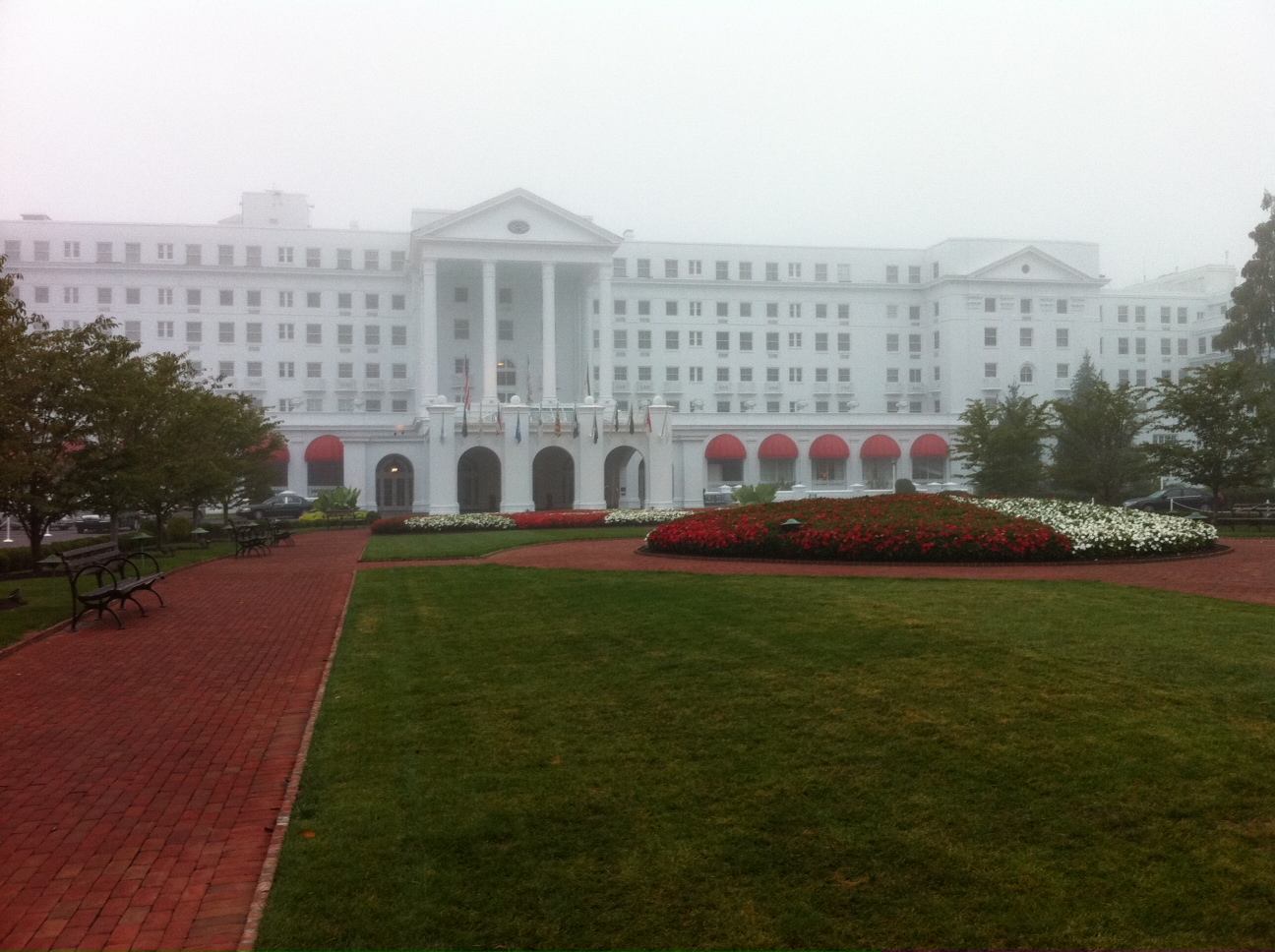
The Greenbrier Resort is a period film brought to life

Okay, so maybe it wasn’t really a water cure of yore, but the Greenbrier Resort in White Sulphur Springs, West Virginia, began as a resort for people seeking the healing power of the sulphur water that bubbled up from its mountainous ground. People first began coming in 1778, and the visitors only increased in the 19th century as people drank and bathed in hopes of curing everything from headaches to arthritis. All of this water bubbles up from a green-domed, white-columned spring house to the side of the main resort. On top is a statue of Hygeia, the Greek goddess of health and medicine. The spa still uses water from the spring house, though, most people probably think of it as spa rather than a medical facility these days.

Presidents came to the Greenbrier. Lawyers, bankers, and others hoping to escape the summer heat came, too. The construction of the large main hotel in 1858 made the White Sulphur Springs not only a place of healing but also the place to be seen for social elites. That seemed about right. Hydropathic institutes attracted many people who were just looking for a break from the city. They tended to be built in beautiful places (West Virginia is gorgeous) and to offer outdoor activities to relax and rejuvenate.

I was there to attend the Symposium for Professional Food Writers, a multiday extravaganza of great food and great food talk. I met some fantastic and talented people many of who (and many of them are already) are sure to be famous. I’ll be sure to remember that I knew them when.

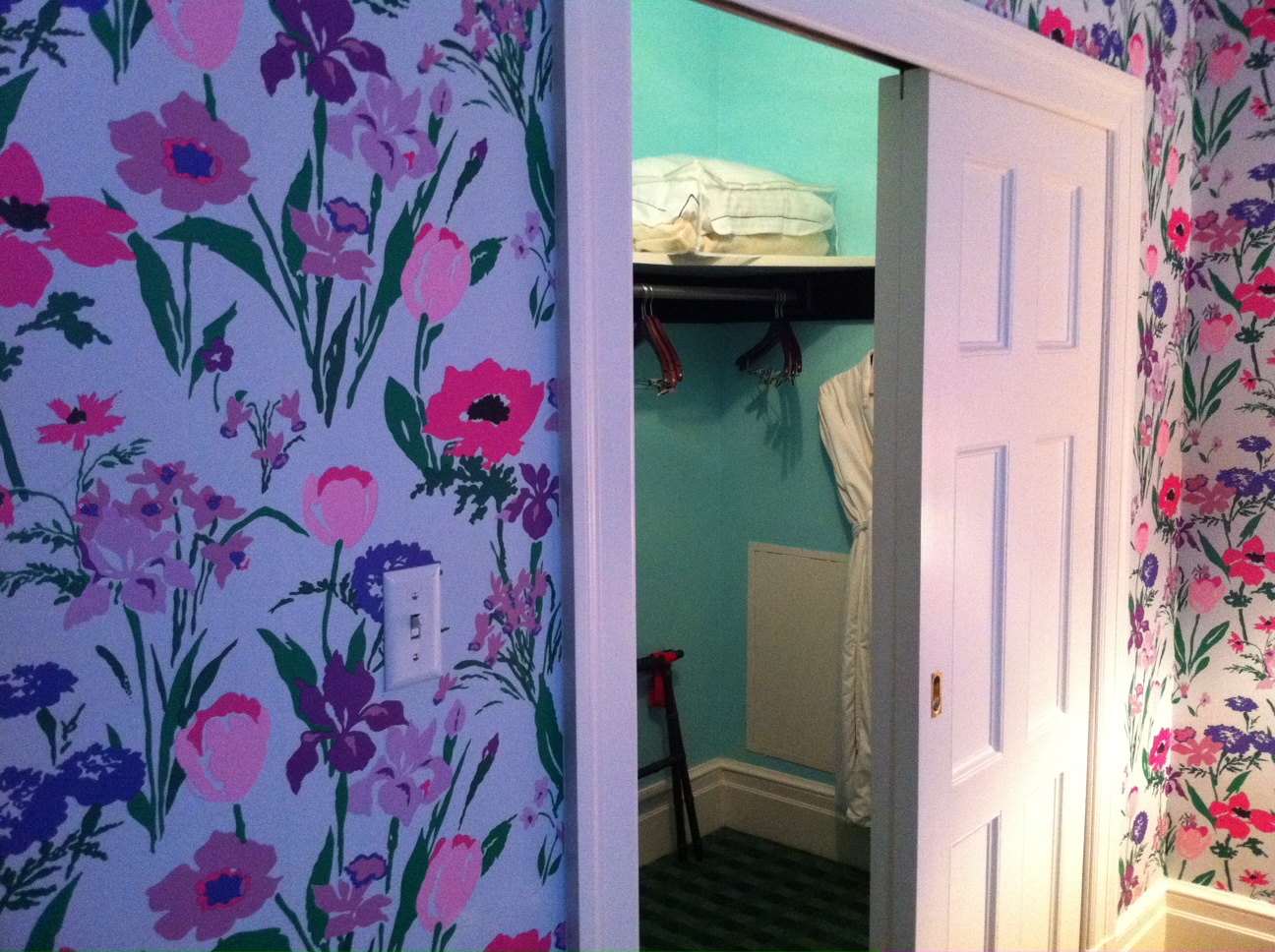
Today, a visit is like a step back in time–and for me, a step into another social class. Famed decorator Dorothy Draper redid the place in outsize florals, massive colored stripes, and bright colors after World War II (I should have taken more pictures. Heidi Swanson of 101Cookbooks took some nice ones). Everything you could ever need is taken care of as employees swirl around you in the lobby and at every meal. Afternoon tea brought live piano music and a well-dressed couple dancing in the lobby before tea sandwiches and cookies were brought out on silver trays carried high above the heads of the servers. It was a little like stepping into the “Be Our Guest” number from Disney’s Beauty and the Beast.

Wow, look at the wallpaper. Our curtains were the same pattern and even the ceiling was wallpapered.


It’s also probably the closest you can get to the hydropathic experience of the past. A well-appointed resort attracting people from all over the country to take in the fresh air, exercise, and of course, as much of that healing water as you could handle.  

Taste Lost and Found

One Memorial Day weekend, I lost my sense of smell.  Bad colds sometimes do that to you. But this was different. Two weeks later, my cold was gone but it had apparently delivered a knockout punch to my nose.
A ten-beer sampler at a local microbrewery tasted like ten variations of faintly flavored water. Ice cream was cold but nothing more.
A month later.  Still nothing.
There’s no good time to lose your sense of smell, but summer is the worst. I’d waited all year for the short window that yields tender stalks of my favorite vegetable, asparagus. Juicy corn and chin-dripping tomatoes awaited me finally, after months of what I refer to each year as our “orange period:” dinners consisting of sweet potatoes, squash, rutabagas, and carrots, the upper Midwestern winter staples, in dozens of iterations.
For me, summer is a smorgasbord of flavor and variety. Our weekly CSA box brims with vegetables that appear, like a Broadway star, for but a few weeks only. But without my nose, it became the year without summer.
Anosmia is the medical name for loss of smell. It affects millions of Americans, some temporarily and others permanently.
Taste is dependent on smell. When food is chewed, odors travel to the back of the mouth where a properly functioning olfactory system translates them into flavor. A malfunction can cause taste to remain intact—that is, the mouth can distinguish temperature, texture, and among sweet, salty, sour, and bitter. What’s missing is flavor—the sense that lets you savor the chocolaty undertones of your stout beer and the tang of tomato salsa. Sometimes the smell and taste loss can be restored if it is linked to a specific problem like diabetes. But if the loss resulted from olfactory-nerve damage from a head trauma or, in my case, a viral infection, there is no reliable cure, save for time and hope that the nerves will regenerate.
Slowly, my sense of smell came back. An overall blandness yielded to subtle shades of salty and sour. By early fall, eating had become almost fun again.
But not everything was right. The rewiring of my olfactory nerves had a faulty connection.
Washing my hair with some orange-scented shampoo one morning, I felt nauseated by the smell. Citrus, but particularly oranges, had become disgusting in my newly reordered brain. After months of not smelling them at all, oranges came rushing back at me with a vengeance.
I avoided them at first. It’s easy to do when you live in Wisconsin and try to eat locally. But orange-scented products and orange wedges in drinks and garnishes appear in a surprising number of places and had me running for the door.
I thought maybe I could retrain myself to like oranges. I’d “trained” myself to eat other things by introducing them regularly into my meals, like raw tomatoes. I drank small sips of orange juice for a week, screwing up my face in disgust with each swallow and shoving the glass across the table to my husband to finish. I ate orange wedges and garnishes, choking them down one bite at a time and chasing them with water to drown out what had insensibly become a horrible flavor.
And it actually worked. Almost a year later, I could drink a small glass of orange juice and eat an orange wedge without feeling nauseous. I still don’t order orange juice for breakfast and I can’t remember the last time I ate a whole orange, but I know that I can now. And maybe someday, I will.

Camping for Real

I just went camping for the first time. Have I mentioned I’m 31 years old?

Despite growing up in the Northwest, prime camping area, I never went camping as a kid (I also never skied, but that’s a different, though, I think related story). Sure, I went to Girl Scout Camp for several summers but we slept in our sleeping bags in cabins. Cabins with no real windows or doors but still, under a roof, on a mattress (a gross one), on a bed frame. One night each session, we’d haul our mattresses outside and sleep in the middle of a grassy field, but I don’t think that qualifies as camping. As an adult, I slept outside in a borrowed tent after a concert once. And while biking across Iowa two years ago, we slept in a tent on fairgrounds and parks, surrounded by 10,000 of our closest friends (literally).

So a tent wasn’t completely unknown to me but still… the real camping experience, the ones you see on TV, had never happened until this weekend when we hiked a short ways on the Ice Age Trail and found a beautiful spot to set up our tent above the Wisconsin River.

While it seems strange now that I’d never really camped before, little more than 100 years ago, I was perfectly normal. Camping is a new phenomenon in the scheme of things. Getting away to nature was not something many people wanted to do because some had probably only recently escaped a more rustic existence for the city, while others were still living there.

The conservation movement that gained currency in the late 19th century with people like Theodore Roosevelt and John Muir celebrated nature as an escape and worked to preserve tracts of land from development. They celebrated the virtues of being outdoors and helped to introduce people to the idea of leaving their modern conveniences (and urban squalor) for time spent in nature. Manuals for outdoor skills and camping began appearing with increasing infrequency in the 1890s, many geared at white boys for whom many feared that modern life was making them soft. Summer camp also provided a place for middle and upper class schoolchildren to go in the summer as the idea of a break from school unconnected to farm chores was still a new idea. Camps for girls were slower to develop, in part because girls often had home chores still to do and some fear about the dangers of sending women off to the woods.

Many of these first campsites (not unlike today) provided a simulation of nature. The environment was planned and organized to provide everything people needed so the transition from city to pastoral relaxation wasn’t too jarring.

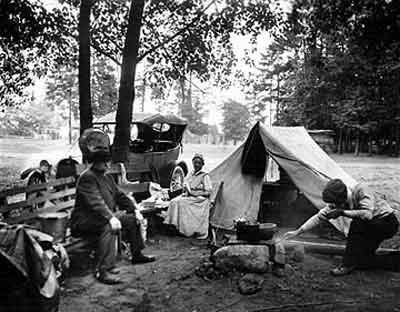
As cars became more common, people began taking family camping trips, setting up tent alongside the car. Not everyone was so pleased to have people indiscriminately camping along every roadway so cities and towns began building more campgrounds, and towns began advertising themselves as car camping destinations.

The triumph of camping has become so complete, in just a century or so, that it can seem strange to meet someone who has never been camping. Well, it’s not me any longer.

Women Doctors and Healers

Nearly all of the medical sects that emerged in the 19th century gave unprecedented professional and leadership opportunities to women. Women had long been responsible for their family’s health, growing medicinal plants in kitchen gardens, tending to the sick, and serving as midwives for family and neighbors. Home healing was part of her domestic responsibilities: caring and tending being largely female character traits.

But for the most part, women couldn’t be doctors. That was a role for men who could enroll in medical schools or apprentice with trained doctors. For various reasons, it wasn’t deemed suitable for women, and women were mostly kept out of mainstream medicine until the 20th century.

Medical reformers had a different view of women, though. Most not only welcomed female practitioners, they allowed them to attend their medical schools and training programs. Women became leaders of alternative medicine associations and opened their own private medical offices. Mary Gove Nichols opened her own water cure, and Lydia Folger Fowler, only the second woman to graduate with a medical degree in the United States, had a private medical office in New York City.

Hydropathy, or the water cure, took a particularly liberating view of women. Contemporary medical theory viewed being female as a disease in of itself. Women were irrational and ruled by their wombs. The natural processes of a woman’s life–menstruation, pregnancy–were seen as diseases that needed to be controlled, usually by men. To be female was to be a problem in need of a solution. Hydropaths took a different path, choosing not to medicalize women. They instead viewed women’s life events as natural and normal, and argued that hydropathy gave women control over their bodies; something they rarely had in any part of their lives. This was an empowering and radical idea that attracted a large number of women eager to exert control over their own bodies and their own lives.

Hydropath Mary Gove Nichols

Homeopathy, osteopathy, Thomsonism, and phrenology were among the many others that welcomed women into their fields. And doing so, allowed their movements to grow exponentially.

Many women wouldn’t talk about health issues with a male doctor. Women in alternative medicine discussed topics and introduced health concepts that many women would never have learned about otherwise. These women doctors gave lectures on women’s and children’s health, and wrote books geared specifically toward women. At water cures, women were needed to serve as attendants and doctors to female visitors.

This more open attitude toward women was, in part, a reflection of the times. Middle class reformers of all kinds worked to make the world a better, cleaner, safer, free-er, happier place in the 19th century. Women played a particularly active role in reform efforts, as they were one way that women could be politically active and still maintain their womanly “virtue.” Many of the same people that were attracted to abolition and woman’s rights were also attracted to medical reform. The lines between all these reformers blurred and overlapped in innumerable ways, so it wasn’t too surprising that women would become such prominent players in alternative medicine.

Perhaps it’s just more surprising, and disappointing, that it took so long for mainstream medicine to come around.

Mark Twain’s head reading

Everyone had their head examined in the 19th century. Phrenologists read the heads of common people and famous people, from President Ulysses S. Grant and poet Walt Whitman to nurse and Red Cross founder Clara Barton. Even Mark Twain, who was never quite sure what to make of phrenology.


Visiting London in 1873, Mark Twain saw an advertisement for the services of a fellow American who had hung his shingle on Fleet Street. Inspired and not a little skeptical, Twain appeared under a fictitious name in the offices of Lorenzo Niles Fowler, “practical phrenologist.”
Phrenology wasn’t new to him. It had captured the imagination of millions of Americans and made everyone a little head conscious. Twain remembered the itinerant phrenologists from his years in Hannibal, Missouri, giving demonstrations and offering advice.
Entering, Twain “found Fowler on duty, amidst the impressive symbols of his trade…all about the room stood marble-white busts, hairless, every inch of the skull occupied by a shallow bump, and every bump labeled with its imposing name, in black letters.”
Twain paid Fowler for a reading. It’s not clear whether he attempted to disguise his physical appearance or if he at least chose to wear something other than his trademark white suit. Either way, Fowler gave no indication that he recognized Twain.
The reading was fairly typical, a balanced stew of mostly generic, positive traits, save for one spot particularly galling to the famed humorist. “[H]e found a cavity, in one place; a cavity where a bump would have been in anyone else’s skull,” recalled Twain. “He startled me by saying that that cavity represented the total absence of the sense of humor!”

Polka Till You Puke

Polka is the law in Wisconsin. Or so they tell you in Pulaski, home of Polka Days, a weekend celebration of the Wisconsin state dance near Green Bay. It draws a serious polka crowd, both young and old, as well as some of the country’s most popular polka bands.

Polka pride is evident on the many funny t-shirts worn by attendees

Polka began as a Czech peasant dance in the early 19th century. It spread to ballrooms in Prague and then Paris in the 1830s and 1840s. The French loved to polka and their enthusiasm for the dance helped increase its popularity. Polka soon spread to England and then to the United States where Polish-Americans adopted it as their national dance in the early 20th century. The name ‘polka’ is derived from the Czech phrase for ‘half-step’ in reference to the dance pattern of lightly stepping from one foot to the other.

Polka emerged at roughly the same time as its signature instruments: the accordion and concertina. These squeeze boxes became the 19th century’s most popular mechanical musical innovation because one person could play the part of an entire musical ensemble, playing melodies and harmonies with one hand and chords and bass in the other hand. These instruments became prized possessions that many immigrants brought with them to the United States.

A variety of polka styles developed in different sections of the country, particularly the Midwest. The styles became associated with particular ethnic groups, such as Polish, Slovenian, and Dutchman, based on the ethnic heritage of the musicians or composers.

Radio brought polka to an even wider audience in the 20th century. After World War II, polka joined, for a brief time, popular culture, in large measure due to the accordion stylings of Frankie Yankovic of Cleveland, Ohio. Rock ‘n roll eclipsed polka in the 1960s but polka has remained popular in many communities throughout the Midwest.

Polka is clearly still big in Pulaski judging from the huge, cheering, and dancing crowds. It’s an impressive sight–two tents with wood dance floors packed with people, polka-ing with abandon, and not a little skill.

Eavesdropping

Sometimes I think it might be fun to start recording everything I hear while walking around town or waiting in line at the store. At the farmer’s market this morning, I heard a man tell his friends: “I think I slept on my kidney wrong. It’s really sore this morning.” I’m pretty sure that’s not possible.

Sleep is a common prescription for good health today. Getting enough of it, that is. In the 19th century, many alternative health movements promoted things we now think of as common sense: eating a heathy diet, drinking water, getting fresh air, and exercising. But few health reformers actively promote sleep. It seems that sleep wasn’t the same issue that it is today. Scientists and doctors speculated on what sleep was for and what happened while you slept (especially what you were dreaming) but didn’t seem to worry so much about the amount of sleep people were getting.

In part, this may be due to technology. Electricity wasn’t widespread until the 20th century so working late into the night or before dawn wasn’t an issue in many cases. There were certainly many other things to keep people up at night, however, from lice and other bed bugs to stinky chamber pots.

Or maybe it was, as historian Roger Ekirch suggests, that sleeping through the night wasn’t expected. He proposes that interrupted sleep was the norm and that it’s only now that we equate a good night’s rest with uninterrupted sleep. He says–and many others seem to agree–that artificial lighting has changed us. Harvard chronobiologist Charles A. Czeisler has compared artificial lighting to a drug in its physiological effects. Among other things, it alters our levels of melatonin, the hormone that regulates our circadian clock. In the past, we may have slept in segments, sleeping for a few hours, waking and doing something, and sleeping some more.

It’s certainly always been possible to sleep in an awkward position and wake up with sore muscles. I’m just not sure that extends to body organs.