What foods do you hate?

My mom is picky. Really picky. So guess what I was? A really picky child.

What your parents eat have a really profound effect on what you will eat… at least as a child. The list of things I refused to eat as a kid was far greater than the list I would eat. A sampling of my no-way-in-hell- eating list: salad dressing, Mexican food (more than just a food–a whole culture of food!), fish, french toast, eggs, bananas (my mom actually liked them–I just hated them), and mustard. The last one is particularly amusing in hindsight since I got married at a Mustard Museum. Clearly, I’ve grown.

It wasn’t until I was a teenager and eating dinner at a friend’s house that I began to try more foods. And I think the only reason I did try them was because I had also grown up to be a pleaser. I had no idea how to say “no” to anything or anyone so how in the world would I say no to someone serving me dinner?

And so, I soon discovered that salad dressing is actually pretty good, that Mexican food is delicious, and a whole new world of spice and flavor in Thai, Chinese (I’d only had Chinese from Safeway), and Indian food. I’ve actually introduced my parents to new foods, though, my mom has continued to resist most of them.

Despite the opening of my food world, though, there are still foods I just don’t like. Watermelon is one. I know that makes me un-American but I just don’t like it. I’ve tried. I even went to a watermelon tasting at a farm that grows more than 10 varieties and none tasted of anything more than dirty water to me. I should say that I will eat watermelon… I just won’t enjoy it.

The object of my primary animus, however, is fennel. That anise flavor is a no go in any form, from black jelly beans to black licorice and raki. While I pride myself on my vegetable love, I just can’t muster any love for fennel no matter what I do.
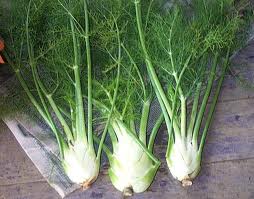
I’m sorry, fennel. I hate you.

I’m happy to leave you my share of the fennel.

When Toast Tastes Better

Why does food taste better when someone else makes it for you? Case in point (at least for me): toast.

At home, I rarely toast–at least to eat plain. I’ll toast bread for a sandwich, but rarely do I just eat it with butter or jam. But take me out to brunch or to a bed and breakfast in the UK and toast is all I want. This makes even less sense when you consider that the toast often served is made from the cheapest bread that I would never buy at home and usually arrives cold and rather limp on the table. But I will eat every piece with relish, as though it’s the most delicious thing you could possibly eat for breakfast. Or even dinner given the opportunity.

Toast has been around for centuries. No one liked eating stale bread so toasting became common in Rome as way to preserve bread. The word comes from the Latin tostum, which meant scorching or burning. Most early toast was held over the fire like a marshmallow or laid on hot stones. The toaster didn’t make its appearance until 1893 when Cromptin and Company introduced the first toaster in Great Britain. It didn’t reach America until 1909.

This early toaster only toasted on one side at a time. It took another decade for a two-sided toaster with a pop-up feature to appear. We still had to cut our own bread to make toast, though. Sliced bread didn’t appear until 1930 when Wonder introduced this modern marvel, which made toast even more popular. Today, nearly 90% of Americans have a toaster in the their home.

So why does toast taste better? Maybe it’s the familiarity–the comfort of something simple–that makes toast so powerful when I’m away from home. Or maybe I’m just hoping to see Jesus or the Virgin Mary appear in my bread.

Brussels Sprouts Appreciation Club

I have a, perhaps, unnatural love of brussels sprouts. A whole stalk can easily become my dinner when roasted in olive oil and lightly salted (my husband loves them too, though, so I try to share). And I seriously think many times while eating them, “these are way better than any candy.” Seriously. I do.

Many people hate brussels sprouts. And I used to be one of them.

As a kid, my parents would buy bags of frozen sprouts and steam them, topping the whole lot with butter. My mom, despite being incredibly picky about food, happened to love brussels sprouts. I would eat them, but always quickly and sometimes covered in parmesan cheese (the sawdust from the green can, that is). I could never imagine that there would be day when I would voluntarily eat them, much less look forward to their appearance at the market.

But then, about 7 years ago, for reasons still mysterious, I woke up CRAVING them. Having moved out of my parents’ house nearly five years earlier, I’m not sure I had eaten even one in that time. Nor had I ever thought about them. So I’m not sure why I needed those tiny cabbages so badly that day. Maybe its my Polish blood craving some cabbage-y goodness. I went to the store and purchased the same bag of frozen sprouts my mom had bought so many times. And I ate them all in one sitting. I loved them. I had to have more.

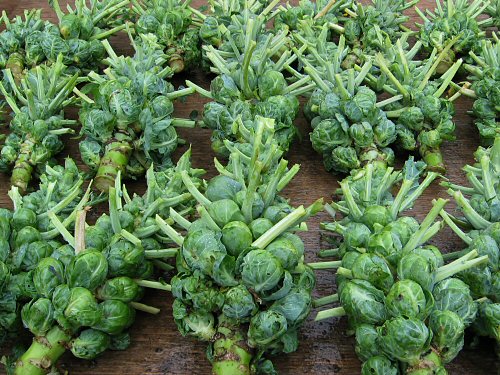
Forsaking frozen for fresh, I now eagerly await the appearance of the mutant stalk at the farmers market. One vendor had them labeled “Wisconsin Palm Trees” a few weeks back and they did look kind of tropical, with their nubby stalk and oversized leaves flopping over the top. I popped them off the stalk and roasted them for 35 minutes. I ate so many I nearly gave myself a stomach ache. I might be the first person to overdose on brussels sprouts.

To join my brussels sprouts appreciation club,  cook this from 101Cookbooks and see if you can resist.

Rediscovering Apples

Even though I grew up in a state known for its apples, I’d never really loved an apple until I moved 2,000 miles away—to a place known more for its cheese, beer, and brats, than its delectable fruit. And yet, even though images of apples were plastered all over any mention of Washington state, the apples of my childhood were tasteless, boring, almost cottony in my mouth. 

Oh my god, look at that interior!

Red Delicious, the virtual symbol of the state, was never delicious. It was the apple you got in the school lunch line while desperately wishing you had brought something from home. Or sometimes, even the apple your own mother put in your lunchbox, clearly a sign of aggression. So I never ate them unless forced to by mother who was too busy to notice that they were really terrible. These Washington apples weren’t the fruit of kings as apples once were, but rather the fruit of mediocrity.

The apples I discovered in Wisconsin, however, were altogether different. They weren’t uniformly dark red or bright green or buttery yellow but were mixes of all of those shades and more. They snapped when you bit into them, releasing a shower of juice that the skin could barely contain, rather than sagging and finally giving way under the pressure of your teeth like those so-called Delicious.

My first transcendent apple experience occurred in the fall of 2002. I remember it like other people remember their first kiss. It was called Pink Pearl, though there was nothing pink or pearly about its skin which was a homely yellow-brown. Its flesh was like nothing I had ever experienced before, marbled pink and white like those Pilsbury birthday cake mixes I’d always begged for as a kid. And the taste? The taste literally brought tears to my eyes it was so incredible and unknown to me.

It was also slightly embarrassing, as I was standing in front of the farmers’ booth, surrounded by other shoppers at the farmers market. I had no idea apples could taste like this—that really any
fruit could be that perfumed, sweet-tart, and delicious. And that that fruit could grow in Wisconsin rather than the Apple State.


I’ve since learned that thousands of apple varieties exist around the world. Someday I hope to try them all.