Collective nouns have got to be one of the strangest and most interesting aspects of English. All of the words mean “group” and yet are specific to the particular thing you are grouping. Examples include a crash of rhinos, an exultation of larks, a knot of toads, and a pride of lions.
Author: eljanik
Who’s a Quack?
![]() |
| Quack or man with a different idea? |
Genius or Madness?
They say there’s a fine line between genius and madness. Some of our foremost thinkers and artists have also suffered from mental illness and/or lived really tumultuous, troubling lives. A recent New Yorker cartoon featured a teenage girl blaming her parents for sinking her writing career by giving her a stable, happy childhood.
It turns out, we’ve been thinking this way for a long time.
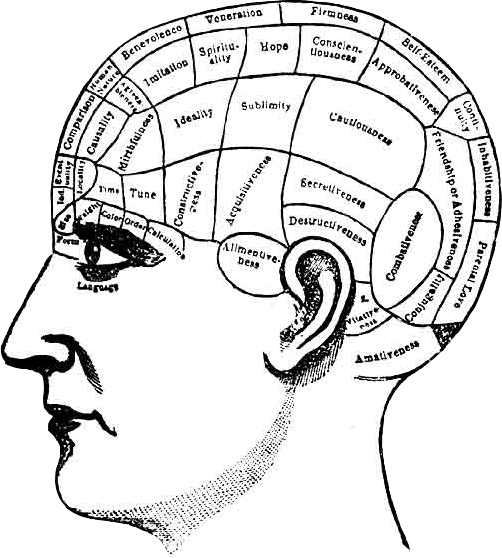
In the mid-19th century, French doctor Jacques Joseph Moreau attributed genius and madness to an overexcitation of certain parts of the brain. Moreau was a follower of phrenology, a system developed by Franz Josef Gall (1758-1828), that attributed various human attributes to specific areas of the brain. These attributes were mapped on the brain and could be used to measured to determine certain things about a person. An overly emotional person probably had a larger emotion section of the brain, for example.
![]() |
| A phrenology map of the brain |
Moreau took this idea a step farther and applied it to nervous disorders. He believed that nervous energy could become more concentrated and active in certain people, causing an overexcitation in one part of the brain that could either result in insanity or genius. A build of energy in the thinking part of the brain could lead to raving madness or it could lead to a great work of literature or a whole new philosophical system. Moreau believed that an exalted state of mind could allow genius to spring forth! But it didn’t work for everyone.
In his book Morbid Psychology, Moreau wrote that “the virtue and the vices [of overexcitation] can come from the same foyer, the virtue being the genius, the vice, idiocy.” That is, the genius was in constant danger of crossing the line because, according to Moreau, creative energy exhibits all of the reveries, trances, and exalted moments of inspiration that madness often has.
Moreau also did a lot of work with the effects of drugs on the central nervous system, writing a book called Hashish and Mental Alienation that has made him a hero of sorts for the marijuana crowd.
Moreau’s work, along with several other doctors and scientists, greatly influenced late 19th century interpretations of neuroses and its causes. It may also have helped popularize the notion of madness as an antecedent to the creative process.
Living and Loving Lefse
![]() |
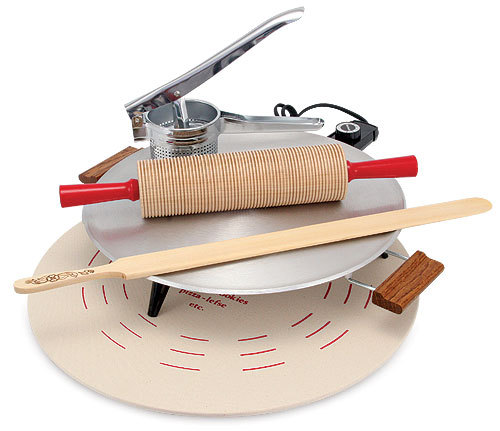
| The arsenal of the lefse maker |
All Leaders Are Men… or so I hear
One of the best parts of my job at the radio station is receiving books in the mail. It’s like Christmas every day when I go in and find a big stack of books from publishers waiting for me below my mailbox. Even the bad ones–and many of them are really bad–are still fun to open because you just never know what will be inside.
The other day I got a book called Profiles in Leadership: Historians on the Elusive Quality of Greatness edited by Walter Isaacson. Being of a historical mind, I thought “great!” And then I opened it and looked at the table of contents. Ugh. Seriously?
George Washington…
Charles Finney…
Ulysses S. Grant…
Herbert Hoover and FDR…
Wendell Willkie…
Robert Kennedy…
And finally the one that I was looking for: Pauli Murray. The ONE token woman who counts as great (not to diminish Murray in any way. She was a champion for civil and human rights and she deserves our attention). I couldn’t believe it. I mean, I could believe it because it isn’t uncommon to find books heralding our nation’s great men with nary a mention of the other half of the population. But it makes me sad that these books continue to be published, especially from Isaacson who’s previous work I’ve enjoyed.
It’s easy to find male leaders. The position of “leader” has throughout much of our history only been open to men. But that’s taking a very narrow view of leadership. If leadership is only open to those holding a high political office or leading big companies then women and people of color can be hard to find in history. But why is that our definition of leadership?
Where’s Elizabeth Cady Stanton and Susan B. Anthony? Stanton helped organize that world’s first women’s rights convention. The first convention in the world proclaiming that half of the human race had rights. Anthony worked tirelessly until the day she died speaking and writing and traveling for women’s rights, particularly suffrage. She spoke on stages with armed guards to protect her. Can you imagine? Is that not greatness and leadership?
How about Sojourner Truth? Or Wilma Pearl Mankiller? Dorothea Dix? Frances Perkins? Fannie Lou Hamer? Ida B. Wells? The list goes on and on (and if you want to see more, look at Equal Visibility Everywhere’s list of 100 Great American Women).
I’m not saying the men included in the book are not worthy of attention and consideration for their leadership skills and greatness. I just don’t think another book profiling mostly men–and nearly all white men at that–is the real story of leadership and greatness in this country or any country.
Hiking the Ice Age Trail
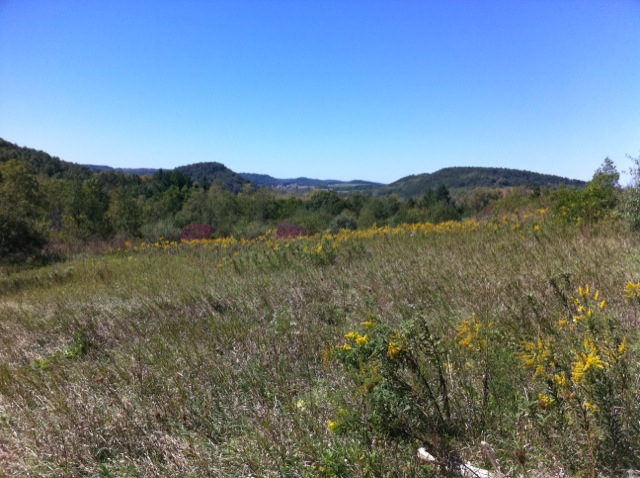
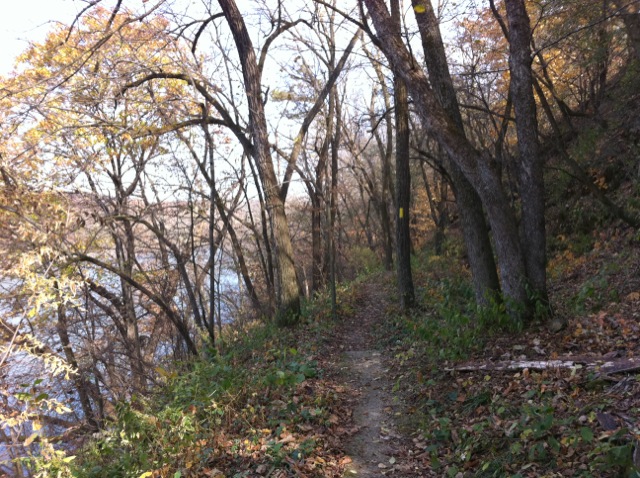
The death throes of the last Ice Age are clearly visible along a path not far from a busy stretch of highway near Madison, Wisconsin. Standing in the parking lot of the Ice Age National Scenic Trail, stands of oaks covering rock-strewn moraines and areas of crater-like kettle ponds are clearly visible. The trail preserves and celebrates the state’s geologic past as it courses like a u-shaped river through Wisconsin.
![]() |
| Ice Age Trail segment in the Lodi Marsh |
![]() |
| The Devil’s Staircase in Janesville |
Defining an "academic diaspora"
Do you have a graduate degree(s) and work in a cultural institution? Then you may be part of the academic diaspora.
My husband, an academic, and I often talk about academia vs. the rest of the world. But in the course of our conversations, it soon became apparent that there was a big category of working people that seemed to straddle the lines between these two, admittedly simplistic, divisions, especially in a place like Madison, Wisconsin: it’s the periacademic. And I happen to be one of them.
The periacademic or member of the academic diaspora (take your pick, we haven’t decided which term is best) has a Masters degree or even a Ph.D. and works in a library, historical society, art museum, or public broadcasting (ding ding ding! That’s me). They have the expertise and training of an academic in many cases but have, by choice or circumstance, ended up outside the ivory tower in some kind of bridge institution. Many of the stereotypes of academia exist in the diaspora, too, particularly the insularity, ego, competitiveness over seemingly small stakes, and the know-it-alls.
The primary difference between the two, though, seems to be related to audience and the use of knowledge. The role of an academic is to create and disseminate knowledge, while the periacademic curates knowledge. Most of the knowledge created by an academic is for other academics and maybe their students. Some periacademics also create knowledge, but their primary role seems to be taking the information created by the academic and synthesizing, arranging, and packaging it into a form that is accessible and useful to the general public. So in public radio, where I work, for example, we create programs by assembling the academics or other spokespeople who can verbally communicate some segment of information. Historical societies and museums create exhibits and displays by arranging knowledge. And so on.
Despite a symbiotic and seemingly important relationship to each other, the academic and periacademic don’t always get along, unfortunately. In my training as a historian, the public historian, the person who works in a museum or some other public historical institution, was derided as lesser and not serious. But the periacademic is the direct conduit to the public that the academic often wants to reach but doesn’t necessarily know how. To use the hip science term, periacademia is translational, bringing information and research out of the lab and into the community for, hopefully, the benefit of all.
The academic diaspora seems to be particularly large in college towns. There’s a lot of people who want to engage with big ideas but do so in a way that’s more outwardly focused. As academic jobs become harder to come by, especially in the humanities, it seems that the diaspora will only get larger. I’m not sure where all these people will end up, particularly since the periacademic jobs tend to be financially perilous as well. Both play essential roles in knowledge creation, interpretation, and dissemination.
What foods do you hate?
My mom is picky. Really picky. So guess what I was? A really picky child.
What your parents eat have a really profound effect on what you will eat… at least as a child. The list of things I refused to eat as a kid was far greater than the list I would eat. A sampling of my no-way-in-hell- eating list: salad dressing, Mexican food (more than just a food–a whole culture of food!), fish, french toast, eggs, bananas (my mom actually liked them–I just hated them), and mustard. The last one is particularly amusing in hindsight since I got married at a Mustard Museum. Clearly, I’ve grown.
It wasn’t until I was a teenager and eating dinner at a friend’s house that I began to try more foods. And I think the only reason I did try them was because I had also grown up to be a pleaser. I had no idea how to say “no” to anything or anyone so how in the world would I say no to someone serving me dinner?
And so, I soon discovered that salad dressing is actually pretty good, that Mexican food is delicious, and a whole new world of spice and flavor in Thai, Chinese (I’d only had Chinese from Safeway), and Indian food. I’ve actually introduced my parents to new foods, though, my mom has continued to resist most of them.
Despite the opening of my food world, though, there are still foods I just don’t like. Watermelon is one. I know that makes me un-American but I just don’t like it. I’ve tried. I even went to a watermelon tasting at a farm that grows more than 10 varieties and none tasted of anything more than dirty water to me. I should say that I will eat watermelon… I just won’t enjoy it.
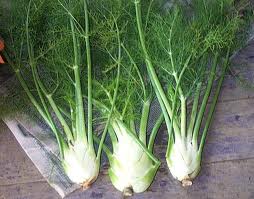
The object of my primary animus, however, is fennel. That anise flavor is a no go in any form, from black jelly beans to black licorice and raki. While I pride myself on my vegetable love, I just can’t muster any love for fennel no matter what I do.
![]() |
| I’m sorry, fennel. I hate you. |
I’m happy to leave you my share of the fennel.
Songcatchers
Did you know that the government once paid people to record our nation’s musical heritage? In the years before World War II, fieldworkers, evocatively known as “songcatchers,” traveled around the country recording, collecting, and transcribing folk music from everyone from lumberjacks to American Indians and recent immigrants. Many of the recordings ended up in the Library of Congress in its folk music collection, along with photographs and other ephemera from our nation’s singers and musicians.
![]() |
| A great picture of some Wisconsin women playing the Swiss bells. WHI-25191 |
The urge to collect this music came from many sources. One was technology. As electricity spread and more people bought radios, many folklorists and other songcatchers worried that people would sing along with the radio rather than their traditional music, spelling the end to the rich and vital music of our nation’s ethnic heritage.
Another was employment. During the Depression, several New Deal programs, including the Federal Music Project, the California Folk Music Project, the Wisconsin Folk Music Project, and the Resettlement Administration, gave unemployed men and women jobs collecting music. One goal of the Federal Music Project was to record and define the American musical scene in all its variety.
Interestingly, many of the people given the task of collecting folk music were women. Frances Densmore, for instance, devoted her life to the study of American Indian music, visiting Indian communities across the Upper Midwest to study and transcribe their music. Another woman, Helen Heffron Roberts traveled to Jamaica, Hawaii, California, and the American Southwest collecting music and other ethnographic materials.
At the time, music, like many other professional fields, was largely closed to women. Many did not believe women possessed the bodily strength or presence of mind to play music in professional orchestras, conduct, or compose complete pieces. Yet these women became the first to go out in the field and live among their informants, studying and recording music. They truly were pioneers in American ethnomusicology and in pushing women forward into new careers.
This music truly is great stuff. It’s nice to think that we once thought it was so important to invest in our culture.
Here’s a verse from a song collected in Wisconsin called “Fond du Lac Jail:”
“In the morning you receive a dry loaf of bread
That’s hard as stone and heavy as lead
It’s thrown from the ceiling down into your cell,
Like coming from Heaven popped down into Hell.”
My story on Wisconsin songcatcher Helene Stratman-Thomas will appear in the winter issue of the Wisconsin Magazine of History.
The Mismatch of Writing and Speaking
I have a new book out, A Short History of Wisconsin, so I’ve been on the speaking circuit once again. Public speaking is never something that has come easily to me, though it has certainly gotten easier with time and experience. Being out on the road, driving to libraries and bookstores across the state, always reminds me of how disparate the skills of writing and speaking really are–and how rare it is the person who can do both and do them well.
As a writer, I think many of us think that we’ll write something and hopefully get it published, all from the safety of our garret. Speak about it? Oh no, that’s why I’m a WRITER. I express myself much better on paper than in the open air.
But then you actually get something published, particularly a book, and you learn that hiding away just isn’t really an option. You must speak and you must learn to do it pretty well to help promote your work and to, hopefully, keep the work coming. I just don’t think that being a good speaker and being a good writer involve the same skill set. So it can cruel indeed to discover that you have to cultivate both of these skills if you want to be a writer. Your readers want to hear you… and see you.
While I’m sure I would vigorously deny it as I’m shaking and sweating in the sidelines before each of my talks, public speaking has been good for me. Talking to readers help make you a better writer because you can get a better sense of the people you are trying to reach through your words. It’s also made me more confident and able to think–and speak–on my feet, a skill that I think can be difficult to learn other than by throwing yourself into the experience you are so desperately trying to avoid.
I’ll never be an amazing speaker. I’m a writer and researcher first. But I am getting better.